

It was supposed to be one of the largest transit expansion projects anywhere. Seven new light rail lines along the streets of Toronto’s major transit corridors. Older buses replaced with modern, cost effective, environmentally friendly light-rail vehicles.
But in his first day in office, mayor Ford cancelled Transit City light rail lines and ordered TTC chief Gary Webster to develop a new transit plan that included subways and more buses.
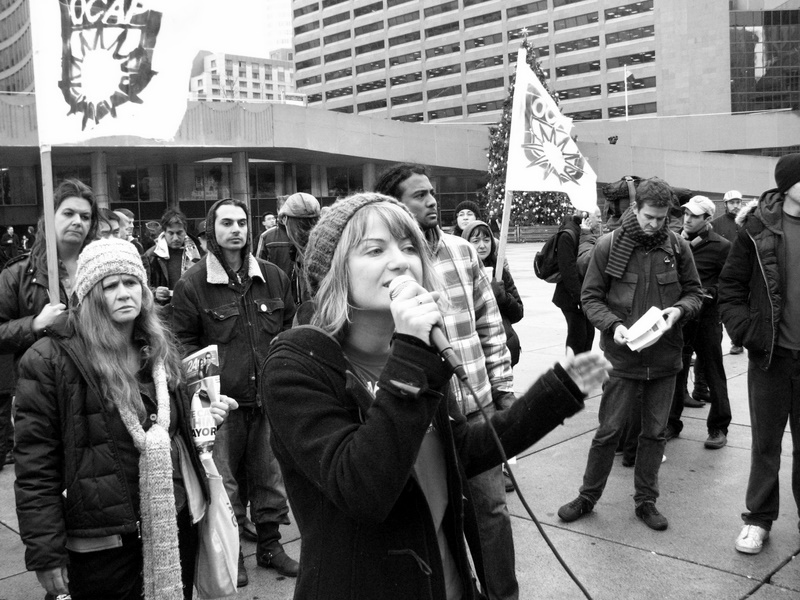
“He says that light rail aggravates traffic,” said Kamilla Pietrzyk. “Well, Rob Ford aggravates me.” Pietrzyk is a member of the Greater Toronto Workers’ Assembly that started a campaign back in early October to win free and accessible transit for the Greater Toronto Area (GTA).
The York University PhD candidate pointed out that streetcars are cheaper to operate and adding buses will only boost the city’s congestion problems. And don’t forget the penalties for backing out of signed streetcar contracts or the cost of walking away from a multimillion dollar investment in streetcars the city has made in the last few years.
“I think it’s pretty clear that accessible, affordable public transit is not exactly high on his list of priorities for this city,” said Pietrzyk at an anti-Ford rally in Nathan Phillips Square last Wednesday.
When the newly elected mayor of Ottawa cancelled plans for a light rail system in 2006, it cost the taxpayers $100 million dollars. That doesn’t bode well for Ford who ran on a ‘Respect for Taxpayers’ platform.
The No Fare is Fair campaign not only wants to save Transit City, it wants a better, safer, more accessible public transit system in downtown Toronto and the suburbs.
“So that people with disabilities don’t have to wait for hours for the Wheel-Trans bus to finally come or be barred from a subway station or an entire transit line because there are no accessible public transit routes nearby or because the elevator has been in disrepair for the past three months,” she said.
In other large cities around the world, public transit systems are heavily subsidized yet here in Toronto our fares have increased to $3.00 for a single trip. It’s the poor, the students and the disabled, (who have no other alternative) that are forced to pay fares they cannot afford.
“That represents a form of regressive taxation and we will not stand for it.”
So the Greater Toronto Workers’ Assembly is building a movement to demand free and accessible public transit in Toronto. They claim it will reduce congestion and improve the air quality.
Since July 1, 1997, the city of Hasselt in Limburg, Belgium has provided free public transit. Within a year, ridership had increased 800 per cent.
“So if anyone says that free public transit is pie in the sky tell them that it wasn’t that long ago that we won the right for free healthcare, abortions, women’s rights and the right to unionize,” said Pietrzyk.
“And with all of these fights people said it was pie in the sky. And it took the political will and the mobilization of people like you and me to make it happen.”
Support rabble today!
We’re so glad you stopped by! Thanks for consuming rabble content this year.
rabble.ca is 100% reader and donor funded, so as an avid reader of our content, we hope you will consider gifting rabble with a donation during our summer fundraiser today.
Whether it be a one-time donation or a small monthly contribution, your support is critical to keep rabble writers producing the work you’ve come to rely on as a part of a healthy media diet.

Whether it be a one-time donation or a small monthly contribution, your support is critical to keep rabble writers producing the work you’ve come to rely on as a part of a healthy media diet.
Become a rabble rouser — donate to rabble.ca today.
Nick Seebruch, editor
