Change the conversation, support rabble.ca today.
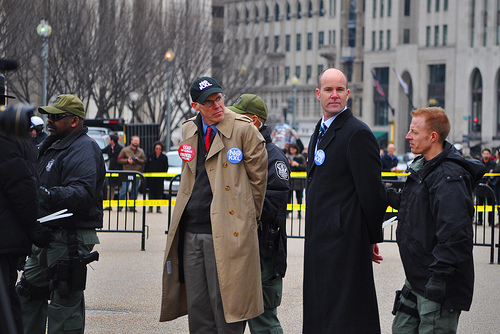
For the first time in its 120-year history, the Sierra Club engaged in civil disobedience, the day after President Barack Obama gave his 2013 State of the Union address. The group joined scores of others protesting the proposed Keystone XL pipeline, which awaits a permitting decision from the Obama administration. The president made significant pledges to address the growing threat of climate change in his speech. But it will take more than words to save the planet from human-induced climate disruption, and a growing, diverse movement is directing its focus on the White House to demand meaningful action.
The Keystone XL pipeline is especially controversial because it will allow the exploitation of Canadian tar sands, considered the dirtiest oil source on the planet. One of the leading voices raising alarm about climate change, James Hansen, the director of the NASA Goddard Institute for Space Studies, wrote of the tar sands in The New York Times last year, “If Canada proceeds, and we do nothing, it will be game over for the climate.” New research by nonprofit Oil Change International indicates that the potential tar-sands impact will be even worse than earlier believed. Because the proposed pipeline crosses the border between the U.S. and Canada, its owner, TransCanada Corp., must receive permission from the U.S. State Department.
Among those arrested outside the White House was Julian Bond, former chair of the NAACP. Bond said, “The threat to our planet’s climate is both grave and urgent. … I am proud today to stand before my fellow citizens and declare, ‘I am willing to go to jail to stop this wrong.’ The environmental crisis we face today demands nothing less.”
Two weeks of protests at the White House in the summer of 2011 led to the arrest of 1,252 people. Later, in November, thousands more joined to encircle 1600 Pennsylvania Ave., calling for denial of the Keystone XL permit. Days later, President Obama announced he would delay the decision until 2013, after the election. He later granted permission to build the southern leg of the pipeline, from Oklahoma through Texas. That decision sparked protests from landowners and environmentalists, including a nonviolent direct-action blockade campaign in Texas, with people chained to pipeline equipment and occupying land with tree-sits to halt construction.
Early in the permit process, then-Secretary of State Hillary Clinton said she was inclined to approve the pipeline, even though the State Department’s mandatory review was incomplete. Controversy erupted when The Washington Post reported that TransCanada’s lobbyist for the pipeline in D.C., Paul Elliott, was a senior staffer on Hillary Clinton’s 2008 presidential campaign. The U.S. Environmental Protection Agency, headed by Obama-appointee Lisa Jackson, had been critical of the pipeline. When Jackson resigned unexpectedly late last December, the New York Post reported, based on an unnamed “Jackson insider,” “She will not be the EPA head when Obama supports it [Keystone] getting built.” Jackson’s spokesperson denied the allegation.
Obama’s new secretary of state, John Kerry, weighed in on Keystone XL after his first official meeting with a foreign dignitary, Canadian Foreign Minister John Baird. Kerry said: “Secretary Clinton has put in place a very open and transparent process, which I am committed to seeing through. I can guarantee you that it will be fair and transparent, accountable, and we hope that we will be able to be in a position to make an announcement in the near term.”

In his State of the Union address, Obama gave hope to those concerned with global warming, saying, “For the sake of our children and our future, we must do more to combat climate change. … We can choose to believe that Superstorm Sandy, and the most severe drought in decades, and the worst wildfires some states have ever seen were all just a freak coincidence. Or we can choose to believe in the overwhelming judgment of science — and act before it’s too late.”
This Presidents Day weekend will see what is expected to be the largest climate-change protest in history, called Forward on Climate. One hundred thirty-five organizations are participating, including the Sierra Club, the Indigenous Environmental Network and 350.org. The Sierra Club is one of the world’s largest and most powerful environmental organizations. Its decision to participate in civil disobedience signals a major escalation in the movement to stem climate change, reviving the words of the Sierra Club’s first president, John Muir, who wrote in 1892, “Hoping that we will be able to do something for wildness and make the mountains glad.”
Denis Moynihan contributed research to this column.
Amy Goodman is the host of Democracy Now!, a daily international TV/radio news hour airing on more than 1,000 stations in North America. She is the co-author of The Silenced Majority, a New York Times best-seller.
Photo: Michael Brune, Sierra Club Executive Director and Bill McKibben, founder of 350.org, arrested outside the White House Feb. 13, 2013. Rainforest Action Network/Flickr
Support rabble today!
We’re so glad you stopped by! Thanks for consuming rabble content this year.
rabble.ca is 100% reader and donor funded, so as an avid reader of our content, we hope you will consider gifting rabble with a donation during our summer fundraiser today.
Whether it be a one-time donation or a small monthly contribution, your support is critical to keep rabble writers producing the work you’ve come to rely on as a part of a healthy media diet.
Whether it be a one-time donation or a small monthly contribution, your support is critical to keep rabble writers producing the work you’ve come to rely on as a part of a healthy media diet.
Become a rabble rouser — donate to rabble.ca today.
Nick Seebruch, editor