Change the conversation, support rabble.ca today.
Let's begin with a little Latin. Terra nullius means land belonging to no one. That's what the Europeans claimed the Americas were back when they "discovered" them.
A papal bull (really) invented something called the "Doctrine of Discovery" to validate the European claim over terra nullius. It said pagan souls don't count as human; therefore their lands are uninhabited and can be discovered and claimed by Europeans.
Neat, huh?
All you have to do is make up some bull to say that other people aren't human and you can take their land. Well, at least according to the laws of the people who made up the bull. Of course, they didn't ask the non-people already living here about their own laws.
Fast forward 500 years and one finds, rather unsurprisingly, that the doctrines of discovery and terra nullius have been thoroughly discredited and disavowed at international law. They have been rejected firmly by the United Nations as a legal basis for the assertion of sovereignty. The UN Special Rapporteur for Indigenous Peoples called the doctrines "racist," which is obvious from the definitions.
Australia's highest court said the same thing. But the U.S. still relies on the doctrine, as does Canada, although Canada usually tries not to admit that’s what its doing.
The Supreme Court of Canada has approvingly cited the Australian rejection of the doctrine as fundamentally racist, and Indigenous rights and title are recognized in Canada's constitution. However, Government of Canada lawyers keep using the doctrines of discovery and terra nullius in court and at negotiating tables.
And this is more important than it should be, but Tom Flanagan supports the doctrines. In his book, he says that European society was "civilized," with real governments, unlike Indigenous peoples who were "uncivilized." He does not assert that they had no souls, but he comes to the same conclusion regarding sovereignty based on European superiority. As the prime minister's teacher, mentor, campaign manager, and guru of the far right in this country, his unsupportable opinions matter.
We need a little more Latin. There is a difference between something being true in law, de jure, and something being true in fact, de facto.
You will hear people sometimes suggest that Indigenous people were conquered. That is untrue both de facto, as there was no conquest in Canada, and de jure, as conquest doesn't create a legally valid claim to land.
Where people get confused is that wars often lead to peace treaties and treaties do create law.
For example, exactly 250 years ago, the colony of New France was ceded in both land and governance to the British through the Treaty of Paris (1763). That made the sovereignty issue clear between those parties (even if it remains an issue for many in Quebec), but it does not affect the pre-existing Indigenous rights in that territory.
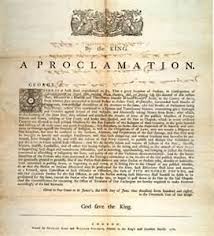
Subsequent to the Treaty of Paris, George III issued the Royal Proclamation of 1763, which does speak to Indigenous sovereignty. And as the Proclamation is now part of the Constitution of Canada Act, 1982, it is valid domestic law.
Also important to note is that none of the treaties signed with First Nations extinguishes the sovereign right to self-governance.
The 18th century Peace and Friendship treaties were non-aggression pacts, granting no exclusive rights to land and no rights of governance over Indigenous peoples to the Europeans.
The pre and post-confederation treaties discuss land, but do not confer subjugation to colonial governance.
And parts of Canada have no treaty at all -- Newfoundland and Labrador, the majority of British Columbia, portions of Quebec, the Algonquin in Ontario and the Lubicon in Alberta -- are some of the most significant areas untreated.
In the end, there is no de jure doctrine at international law by which Canada can assert sovereignty over Indigenous peoples.
As the continued existence of the Indian Act shows, there remains conflict in domestic law, although it is almost exclusively politically rather than legally driven now, and constitutional law has supremacy.
The clarity of international law on the topic, the acceptance by Canada of the United Nations Declaration on the Rights of Indigenous Peoples, the primacy of constitutional documents such as the Royal Proclamation and the treaties, and Canadian court decisions point in only one direction.
What we have is de facto governance exercised over a long period of time by Canada, which has the force of customary law. And we have de facto governance by First Nations exercised over an even longer period that also has the power of customary law.
How is the situation to be resolved?
We could continue to battle it out in court for several more generations, or First Nations could declare secession and fight out the terms thereof, or Canada and Indigenous peoples could both benefit by establishing constructive terms of cooperation.
When people talk about nation-to-nation dialogue, they are talking about cooperation between sovereign entities to the mutual benefit of both, as the treaties were intended to function.
Last week, the New Democrats and Liberals endorsed this approach, as did the Assembly of First Nations and most Indigenous leadership.
It is time the Harper Conservatives -- completely isolated in their insistence on a moribund worldview -- adopt the only path to harmonious relations in respect of basic human rights, for the benefit of all citizens.


Rene is confused. The sources of [English] Canadian law are English and Canadian common law, Canadian statute law and regulations, and the Constitution Acts. Reliance for information on crackpot websites like the one he linked to explains whence his confusion arises.
Captain Cook's Secret Instructions have been known for many many years. They were only "secret" until Cook himself opened the sealed envelope that contaned them.
Rene uses the word "cede" in its exactly opposite meaning - as a synonym for "acquire", instead of a synonym for "give", which is its correct meaning. It was the native populations who did the "ceding", not the settlers. When we talk about "unceded territory" we mean it was never formally given to us by the indigenous population.
And by the way, no treaties were ever made with the indigenous populations of Australia.
The words native, indigenous, and aboriginal are all perfectly good English words used to describe people who have lived in a particular place since time immemorial. They are not "inhuman names". Changing the vocabulary is not going to advance the cause of colonized peoples one iota.
And one final area of confusion: there is nothing about common law that makes it inherently more in keeping with principles of "freedom" than any other system of laws.
Ryan - thank you for your kind words. Your father sounds like a good man.
Creative thinker - To clarify, I didn't actually say the papal bull said pagans and heathens had no souls, but that their souls didn't count as human, which is the effect of calling land that is not populated by Christians uninhabited. By contrast, to be "occupied", lands must have Christian souls on them.
I think the description from the Anglican Church you provided (thank you for that) is a little too kind in its interpretation. Here is a quote (in translation) from the actual document: "We [therefore] weighing all and singular the premises with due meditation, and noting that since we had formerly by other letters of ours granted among other things free and ample faculty to the aforesaid King Alfonso -- to invade, search out, capture, vanquish, and subdue all Saracens and pagans whatsoever, and other enemies of Christ wheresoever placed, and the kingdoms, dukedoms, principalities, dominions, possessions, and all movable and immovable goods whatsoever held and possessed by them and to reduce their persons to perpetual slavery, and to apply and appropriate to himself and his successors the kingdoms, dukedoms, counties, principalities, dominions, possessions, and goods, and to convert them to his and their use and profit". This does a little more than bestow first right to receive the local inhabitants' allegiance.
Overall, a good article, but with a few inaccuracies. While the doctrine of terra nullius is indeed deplorable, the Papal bull did not assert that pagans had no souls. "The papal bull, Sublimis Deus, promulgated by Paul III in1537 recovered some of the teaching of Innocent IV regarding the legitimate 'dominium' of non-Christians by affirming Amerindian rights to private property and personal freedom, sovereignty was reserved to the colonizing Christian powers. In other words, the discovering power had the first right to receive the allegiance of the new people in question." For more information, see http://archive.anglican.ca/gs2001/rr/presentations/terranullius.html
My Dad worked for Indian Affairs in the 60's. He once said that if we honoured the committments made through the treaties; it would change the nature of our country and change the balance of power in Canada. He attributed the vairous legal and illegal abuses of First Nations people to the need to keep them so subjugated that they couldn't fight for what was theirs. Dad frequently said, "The Indians are being shafted. Again."
Thanks for the great article, Daniel.
Thanks, Daniel. I did "try" reading Joffe's opinion, and in fact succeeded in doing so.
He makes an eloquent argument. Let me know when a Canadian court agrees with him.
Canada voted against the Declaration. There is no UN mechanism, nor international court, to force Canada to comply with the Declaration. The bottom line is that no Canadian law will be struck down by a court of law for failing to comply with the Declaration.
ETA: Romeo Saganash has introduced Bill C-469 to require the government to comply with the UNDRIP. If passed, the Declaration would become the law of Canada. Unfortunately, it won't pass.
Sorry, you are simply wrong in stating that United Nations Declarations are not international law. And suggesting that international law must become domestic law to be law is also wrong. All international law is "morally binding" until other States choose a mechanism to enforce it on others (or the document includes a description of the enforcement mechanism). Enforcement is usually through sanctions or military action, all of which require resolutions, which are also votes in the General Assembly. Try reading this on UNDRIP http://quakerservice.ca/wp-content/uploads/2012/09/UN-Decl-Not-merely-aspirational-.pdf.
General Assembly declarations are not legally binding on anybody, in the sense that there is no sanction for ignoring them. In that sense, your statement that "Canada is as bound by it as any other State" is absolutely true (except that the declaration could be seen to be more "morally" binding on those states that voted for it in the GA than on those who voted against it).
As I have noted, there are no sanctions for such failure. General Assembly declarations are not part of international law. Nor has Canada agreed to apply this Declaration to itself. The government expressly stated that the Declaration "does not reflect customary international law nor change Canadian laws", which means it is of no force or effect in law.
To become the law of Canada, it would have to be passed by Parliament.
BTW: A Convention is very different from a General Assembly declaration. An international convention is an agreement between different countries that becomes legally binding on the contracting states that have ratified it. Typically, some kind of international monitoring body is established to ensure compliance with a convention. The UN Convention on Torture has not been ratified by Iran, and is thus not legally binding on it. A declaration of the General Assembly, by contrast, is not subject to ratification by countries that support it, and there is no international body that enforces compliance.
Two points might help clarify the issues. First, there is no need for the Declaration to prevail over the Constitution as there is nothing in the Declaration inconsistent with s. 35 of the Constitution. Second, the discussion of what is legally binding at international law is widely misunderstood. It is described as "aspirational" (the phrase "not binding" is political spin). Like any international law, it depends on States to apply it to themselves or other States to sanction a failure to do so. To suggest that it does not bind Canada is the equivalent of suggesting that Iran doesn't have to respect the Convention Against Torture. By the way, formal ratification of the Declaration occured at the General Assembly of the UN and Canada is as bound by it as any other State, grudging or not.
There is a difference in terminology here. The courts may well look to the UN Declaration and other documents as an aid in interpreting Canadian statutes and the Constitution itself, where there is any suggested ambiguity in the meaning of the latter. But there is no way that the Declaration would prevail over Canadian law (and especially the Constitution, which is "supreme") if they are found by a court to be in conflict.
I disagree that the Declaration is "valid law", for three reasons: The Declaration itself does not even purport to be legally binding; it was never formally ratified (signed) by the Canadian government; and the Harper government's grudging statement "supporting" the Declaration has no force of law.
M. Spector, everything you say is true about the Conservative attitude toward the Declaration, but your comment that Canadian law will apply where the Declaration is seen to conflict is inaccurate. The Declaration is valid law, it has been accepted by every nation in the UN, and it will is already being used to interpret Canadian law, such as s. 35 of the Constitution, by the Courts. Harper's negative attitude toward it doesn't change that fact, and can't.
That statement has to be heavily qualified.
After voting against the Declaration in the United Nations in 2007, Canada waited a further 3 years to finally give in to pressure, and grudgingly "supported" the Declaration in a statement that called the Declaration an "aspirational" document, and a "non-legally binding document that does not reflect customary international law nor change Canadian laws".
The statement essentially amounted to self-congratulation on the federal government's impeccable relations with the aboriginal people of Canada, thus implicitly dismissing the idea that the UN or anyone else had any business lecturing them on the rights of indigenous peoples. The statement grudgingly promised to "interpret the principles expressed in the Declaration in a manner that is consistent with our Constitution and legal framework." In other words, if anything in the Declaration is seen to conflict with Canadian law, Canadian law will apply, and the Declaration will be ignored.
As Doug Cuthand said, "The indication is that the government adopted the declaration under duress and hopes it will just go away."
See also Pam Palmater's analysis.