Murray Dobbin's blog

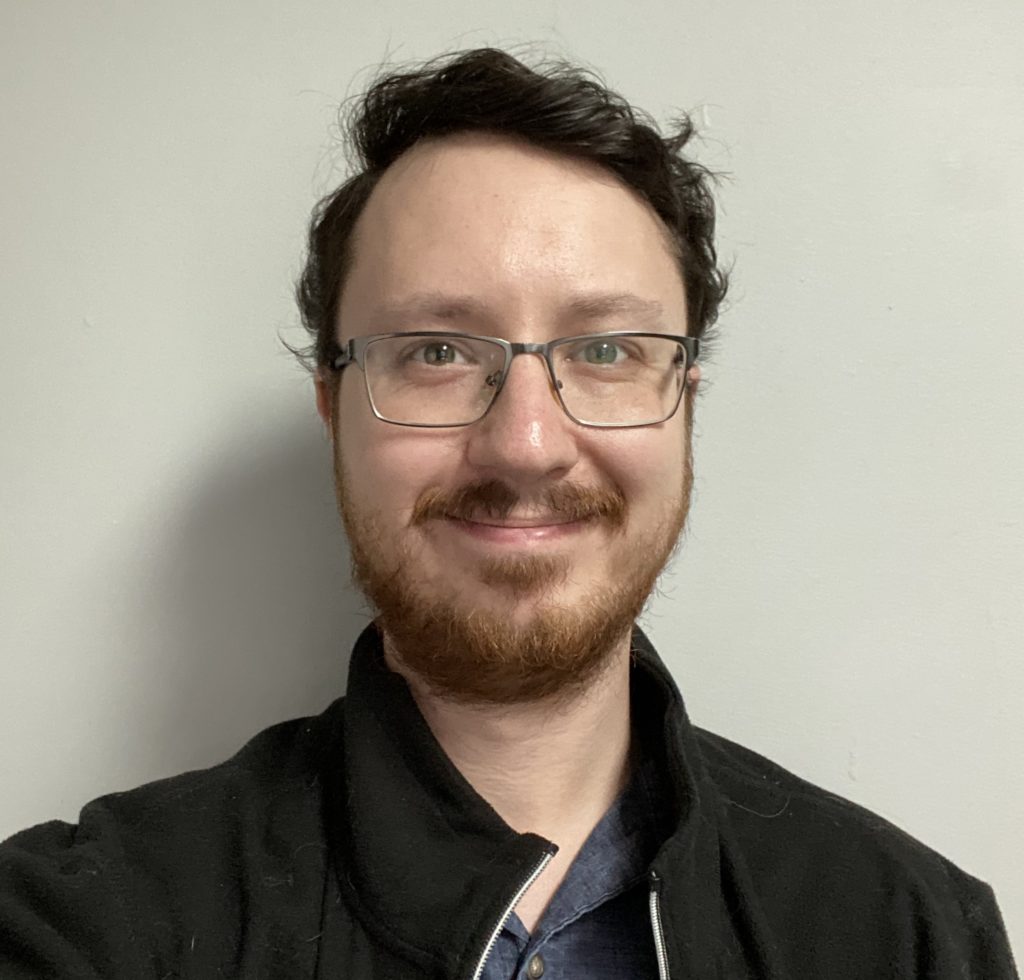
murray dobbin's picture

Murray Dobbin is a guest senior contributing editor for rabble.ca. Murray has been a journalist, broadcaster, author and social activist for 40 years. A board member with the Canadian Centre for Policy Alternatives, he has written five studies for the centre including examinations of charter schools, and "Ten Tax Myths." Murray has been a columnist for the Financial Post and Winnipeg Free Press and contributes guest editorials to the Globe and Mail, the Toronto Star and other Canadian dailies. He writes a regular "State of the Nation" column for the on-line journal TheTyee.ca which is published simultaneously on rabble.ca. His blog is murraydobbin.ca.

Is this what a police state looks like?

| June 30, 2010
Photo: Ariel Estulin

Police states don't appear full blown, over night. They are, like any other social phenomenon, part of social and political process -- the end result of a long-term corruption of the political culture and the incremental diminishing of democracy. This is a process that has been taking place for at least 20 years in Canada and it should come as no surprise that the police in Canada are now willing to take actions -- at the direction of the politicians -- that escalate the threats to democratic expression and the intimidation of ordinary citizens.

The corporate security state is not static; it will keep filling more and more space to the extent that those in charge are allowed to by civil society. It is not a process that will suddenly arrest itself. There is no "enough" in this plan.

But in that incremental process there are seminal moments -- sort of qualitative leaps in the continuum of anti-democratic moves that momentarily reveal to everyone willing to look what is actually happening. The police actions in Toronto are one of those key moments, one that we will look back on as a time when the authoritarian governments we now endure tested our resolve.

They know exactly what they are doing. There was no spontaneous "over-reaction." There were no cops "out of control" -- the obvious fact is that they were always in control. This was a very strategic operation from beginning to end. The decision to allow the Black Bloc to do its destructive work without any intervention at all was strategic as the police and their political masters knew the media would play their pre-assigned reactionary role and focus on the destruction of property. The mass arrest of 900 people was a message to those willing to take a stand: you could be next, and a criminal record is no laughing matter. There is no question that amongst the mob of window-breakers and car-burners were a significant number of agents provocateurs. How many we will likely never know as this time around none were exposed as they were in Montebello at the SSP Summit.

The black-clad activists have a lot to answer for -- they provide the cover for the provocateurs and they are totally responsible for the media frenzy about the damage to a few shops. Perhaps next time the real social activists should swarm these people and stop them if the police refuse. They are the enemies of social change -- we should treat all of them as agents provocateurs and plan to deal with them accordingly. In the process we might catch a few more cops in the act.

But in the bigger picture they are a side show. The crisis in democracy itself is developing quickly as the security state apparatus and its political committee -- Harper and his handful of operatives obviously, but provincial governments as well -- plan for the future. It is a future that promises to be increasingly grim.

There is a clear connection here between the obscene amount of money spent on security, the completely unnecessary shut-down of Toronto, the nine foot fences, what the police did -- and what the "leaders" talked about. We could call them the austerity summits: an agreement to make working people and the poor pay for the crisis. In the next year -- unless Harper can actually be forced from office -- Canada will witness the second wave of huge cutbacks to the social democratic state.

Advertising

The set up is in place: the enormous tax cuts implemented by Flaherty in 2007 (and still being implemented) and the resulting huge deficits (party due to the "stimulus") are the perfect useful crisis to justify massive cuts to social spending and the radical downsizing of the federal state (with the military intact and growing). In effect, Harper wants to download everything onto the provinces and distribute the political responsibility for downsizing to all senior governments.

These cuts will have a severe impact on hundreds of thousands of Canadians, individuals and families already facing an economic crisis of unsustainable personal debt, and over-work at mostly low wages. High unemployment is the other useful crisis, a key part of the strategy of "labour flexibility" aimed at lowering the share of the economy achieved by workers, and thus decreasing their political power at the same time.

Will this increasing pressure on Canadians' quality of life and economic security be the trigger that creates the conditions for social unrest? There is no way of knowing that ahead of time but it will certainly present the conditions for a rejuvenation of social movement efforts to mobilize against the corporate state. Labour will be forced from its self-imposed slumber and have to take a real stand -- and not just show up a single demonstration.

When resistance does increase, that corporate state hopes to have created a new normal where demonstrating is seen as vaguely threatening, the demand for civil liberties is the recourse of scoundrels and criticism of governments naïve at best and dangerous at worst.

Economic insecurity does not necessarily lead to greater resistance. It can also lead to passivity out of fear that things could get even worse. That passive part of the population is the classic ground for fascist politics and the desire for a "strong" leader, in the mode of a father figure. Harper, of course, has always played that role. For the moment at least it has had limited appeal as his party's 30 per cent in the polls shows. But he always polls higher than his party and leads the leadership stakes in part because of this strong leader--image.

We have a decidedly different political culture in Canada than they do in the U.S., but what is happening there can also happen here, though not in exactly the same way and not as quickly. But in the absence of a vigorous mass movement, based on hope for the future, there is only one other possibility: things will inevitably get worse as the capitalist crisis deepens.

Now what? What will the 25,000 people who participated in the demonstrations do in the face of the assault on their fellow-citizens? Will they become active in organizations fighting for a better world? Will they donate $100 each to those organizations critical to defending democracy? ($2.5 million would make a difference.) Will the labour movement -- still the sector of civil society best equipped to put resources into the struggle -- finally take the situation seriously? Will they come together, call for a coalition to rid the country of the most dangerous prime minister in its history? Will enough people demand of the NDP that it actually defend democracy, instead of denouncing the violence as its only statement on the events did? Is the NDP even capable under its current leadership of understanding where we are and how to address the crisis?

I can't think of a better wake-up call for all of us than the wanton violation of civil liberties and democracy that happened on the weekend. Calling for an independent investigation, demanding civil liberties be respected, denouncing the governments involved, raising money to defend those falsely charged -- all of this is necessary.

But it is not nearly enough.

Photo: Ariel Estulin

embedded_video

Comments

Murray I agree with everything you said.  Except for the part about basically taking the role of the police when dealing with protestors who want to break stuff.  Sorry but I'm not going to stop someone who is about to break a window, yes I understand that it doesn't look very good on the corporate media, because it would put myself at risk and make me into the role of the police.  All for just a window. 

If a protestor was about to attack another a protestor then I would jump in.  But who the hell cares about a window.

I disagree with you kjamytruk - it is precisely that part of Murray's article that I agreed with most. Unfortunately, participation in any protest is a risk. Those who hijack the peaceful motives of others should be made aware that they are not welcome. True, self-policing is not the answer but there are non-violent means to stop anything. Allow the media to see this conflict, if it is conflict they are looking for. Regardless, peaceful organisers should let these groups know they are not welcome - well ahead of time - and make more efforts to engage the media before protests begin so they can state their objectives and who they represent. Whether the media will choose to listen or report this is another thing, but the bottom line is - the state is far more organised than we are, and take advantage of this continually.

If people like Ghandi and MLK were successfull, than can we can be too. Their lives may have been sacrificed but their cause was not.

I'm with kjamytruk on this. The infatuation that many people on Rabble seem to have with somehow trying to exclude the Black Bloc folks from participating in protests is becoming almost hysterical. If someone who takes the position that they don't want to condemn their actions (which, by the way, were targeted at corporate property) they are immediately accused of tacitly condoning them and being less moral than those who express their outrage at the actions. I do not understand what purpose it serves to condemn the actions. Are we going to convene some kind of court of the anti-globalization movement to throw these folks out?

It seems to me that the only reason we are able to see the face of the police state that Murray talks about is because these people took these actions. Yes, of course, it gave the police the pretence to carry out the anti-democratic actions they did. But, these are actions that they wanted to take. But it is only by provoking them to do it that we can see their true nature. If the Black Bloc hadn't played their part, then the cops would have had to be satisfied with just having overwhelming numbers in the street and preventing people from exercising their democratic rights. No matter how much that  may offend us, unless the police beat some people up or arrest enough apparently innocent people, they can always justify it to the majority of the population. And I am not completely convinced that they would have done this without the Black Bloc doing their thing.

I am not arguing that these actions should be taken by everyone or that they should even be considered as a key element of future movement building. I am just saying that I cannot bring myself to openly condemn them with the assumption that the bulk of the population and the powers that be will listen to a message that is basically anti-capitalist just because we give it a sense of respectability. We have to be provocative.

When I say provocative, I mean in the true sense of Hohatma Gandhi and Martin Luther King. They practiced non-violent non-cooperation, which in most cases prompted a violent response from the forces of repression and oppression. They knew that everytime they took these actions they would almost certainly be arrested and in many cases put themselves in physical danger. For us, this means marching on non-approved routes, refusing to disperse just because the police say we have to and refusing to show identification when it is requested under some arbitrary and unjust regulation. We need to undertake more acts of civil disobedience.


mikelikesocialism: "But it is only by provoking them to do it that we can see their true nature." I disagree again. Their true nature was revealed by their excessive numbers, the walls, and the "midnight-legislation" that was secretly passed.

Your last paragraph I agree with fully. But it is precisely non-violence which illuminates the violence of the state - and shows it to goes beyond anything any protestor has done. This would have been obvious (to the general public) recently if not for the Black Bloc. However, I do not condemn them, but the use of violence in general to make any point. The Blac Bloc still have a right to protest how they see fit - I just wish that their views would not be allowed to subjicate those of the other protestors.

Mitchy, I must say that while I applaud all efforts towards positive change in society often peace and love are used in place of action to the detriment of the movement.  Not that they are not important but some sort of direct action is necessary.  Non-cooperation is important and without it, non-violence is nothing more than cowardice, a way to feel good about oneself while ensuring the status quo remains strong. 

It is worth noting that MLK didn't succeed by himself.  There was much action happening at the time.  Many non-cooperation movements as well as Malcolm X and the Black Panthers, not to mention the Weather Underground and others like them.  To say that civil rights movement succeeded with non-violence is to be ignorant to history. Yes non-violence played a part, but so to did direct action.

While I am not advocating violence, I do believe all options should be considered when OUR police use violence against US.  and we should not divide ourselves into preventing others, who hold the same goals but employ different means, from taking action. While we have all been taught in school that the best way to make change is peaceful protest, it is worth looking at these beleifs and seeing if they are as valid as we have been taught to believe.  Read 'Pacifism as Pathology' as a balancer.  While I did not agree with everything it was an eye-opener.


Yes, non-cooperation is essential, but it is not explicitly violent. Do you mean to say that demonstration and protest without viloence is not "direct action"? It is debatable whether or not MLK was exclusively successful. I'm not really intersted in that debate as much I wanted to express my right to peaceful protest.

Frankly, I find it cowardly to use peaceful protestors as cover, bringing hellfire upon them in order to express one's own distinct opinions. I do not wish to stop the Bloc or any other protestor from using violence if that is what they feel is necessary, but they can do that on their own terms at a place of their own choosing. We should all respect each other's right to protest and dissent in the way we see fit. Lumped in together - and without effective communication - the lines get blurred and the points we each try to make get lost or manipulated.


I also agree with kjamytruk.

I think Murray fell off the deep end when he characterized the black bloc tacticians as "the enemies of social change". This kind of binary thinking holds that if you're not a peaceful, cop-obeying, property-respecting protester, you're automatically on the side of the war-mongers and oppressors.

Such a position reflects an inability to distinguish between agents of oppression and social hegemony on the one hand and expressions of violent rage against it on the other.

It's also particularly ironic that Dobbin suggests that damaging property is inconsistent with fighting for social change, given the role such forms of violence (and indeed many more extreme forms of it) have played in movements for social change throughout history - even in Canadian labour history.


Indeed Spector such labels as "thugs" and "anarchists" have an illustrious history--used for other enemies of social change including among others as The Red Shirts, the Punks (with "no future"), the Metis People, the Hippy movement, the Chicago Hay Market massacre, the Chicago Seven, the May '68 riots, the Situationists, Kent State, Nelson Mandela et al., ad nauseam.

I was intent on marching peacefully with like-minded people to the 15 meter security zone around the fence but the intimidation by some bicycle cops started at University and Queen by 9:00 am. Later, when rounding the corner at Queen and Spadina we were faced with a phalanx of police armed to the teeth...and they were twitchy.

Furthermore see http://www.flickr.com/photos/heesters/ indeed Murray a police state.

More to come--one way or another.


Login or register to post comments