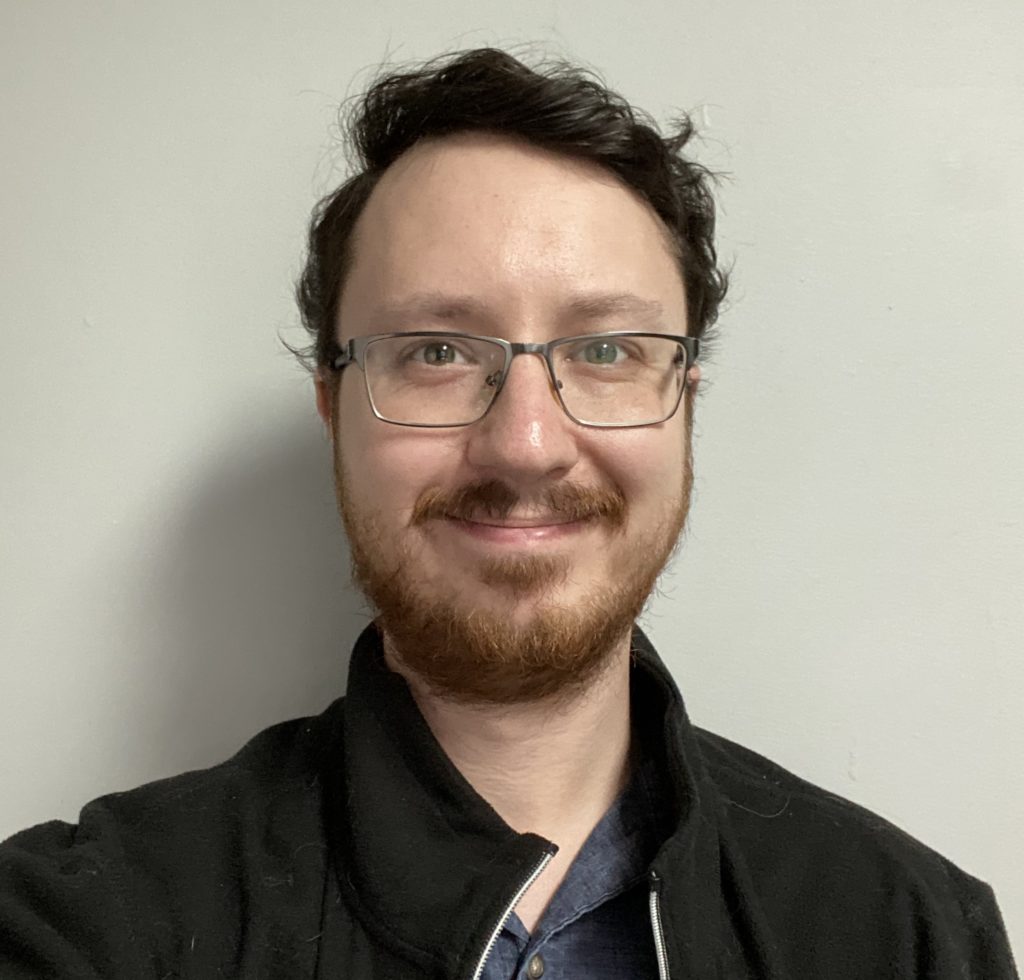


On Tuesday, Montreal-based community organizer Jaggi Singh handed himself over to Toronto police custody due to an outstanding warrant for his arrest concerning resistance to the G20 in Toronto.
He will be charged with several serious counts of criminal conspiracy, including alleged conspiracies to commit mischief to property, assault police and obstruct justice. He is currently in custody along with other G20 political prisoners who are awaiting bail hearings.
Others have had their bail refused and Singh’s situation is still unclear. He could remain in custody for some time.
The following is the last blog posting by Singh before he handed himself in. It is co-written by Robyn Maynard. Both Singh and Maynard are members of No One Is Illegal-Montreal and the Anti-Capitalist Convergence.
TORONTO, June 26, 2010 — The intersection of King and Bay is the financial capital of Canada. Within blocks of these infamous cross-streets, amidst iconic skyscrapers, are the headquarters of the banks, corporations, public relations companies and law firms that help drive global capitalism. King and Bay in Toronto is the heart of Canadian colonial capitalism, which projects its misery all over the world, through mining, forestry and other resource extraction companies.
While the G20 leaders planned to meet behind a steel cage and an unprecedented $1-billion security operation, a contingent of thousands-strong protesters gathered to defy Stephen Harper’s Fortress Toronto.
An over 1,000-person strong contingent, representing diverse movements of community-based struggles in Toronto, Ontario, and across Canada converged in a bloc entitled “Get Off the Fence.”
Activists and community organizers represented rank-and-file labour, migrant justice, indigenous solidarity, anti-police brutality, ecological justice, anti-war, anti-occupation, queer and trans justice, anti-poverty, anti-capitalist, feminist, anarchist, and many more struggles and campaigns. We are united together, learning from each other and inspired by each other. We are rooted in our communities.
Today’s radical contingent separated from the “People First” Labour March (which would march in a circle from Queen’s Park, a police-designated and permitted “protest zone”). Led by the Chaotic Insurrection Ensemble street band of Montreal, the contingent took the streets, and occupied a large bloc within the labour march. Several times along Queen Street, protesters attempted to break through police lines, only to be met with riot police who hit and bloodied protesters with their batons and shields.
Undeterred, protesters waited for the People’s First march to continue its march up Spadina Avenue, the radical contingent doubled-back, and headed east along Queen Street, with some protesters engaging in corporate property destruction, including Starbucks and Nike stores along Queen Street. At times running, at other times waiting to gather together, the protest was able to march south onto Bay Street, and down to Canada’s financial capital at Bay & King.
Chanting “No G20 on stolen native Land”, and “No borders, no nations, stop the deportations”, there were cheers of support amidst the sounds of glass smashing, as targeted property destruction of well-known corporate criminals continued down Bay Street. The demonstration continued east on King until Yonge, and then marched up Yonge Street to Dundas Square.
Commenting on the property destruction, one Toronto Star reporter wrote: “For the most part, their targets are specific and symbolic: As the crowd tore across Queen St., they hammered police cruisers, attacked banks and other corporate companies. Yet they left a record store, a local tavern and an independent hardware shop untouched.”
Most of the targets are symbols to many of the ethical backwardness of a society in which wealth is systematically stripped from poor and racialized people who produce it, and remains concentrated in the hands of a few corporations, banks, and global elites. Several police cars were destroyed by protestors as well, many of whom felt anger over a week of unlawful searches, arrests, and arbitrary violence that had hurt many, even on the peaceful demonstrations of Friday.
Earlier in the day, key community organizers and activists from anarchist and anti-capitalist groups were targeted for early-morning arrests (including at least two members of No One Is Illegal based in Toronto and Montreal, as well as organizers with the Toronto Community Mobilization Network). Despite the preventative arrests and the downpour of rain, organizers and activists regrouped and improvised together to take the streets of Toronto.
The repression of billion-dollar “Police State Toronto” has showed that civil liberties can be suspended at whim. They have been officially suspended within five metres of the G20 steel cage, but unofficially suspended everywhere else. Stephen Harper’s G20 police state has seen arbitrary arrests, beatings, searches and seizures (including a confiscated umbrella, now dubbed the “billion-dollar umbrella”).
The steel cages of Fortress Toronto are a microcosm of global apartheid, where the elite gather behind police lines, while the rest of us survive in a police state. Toronto has seen a taste of what much of the rest of the majority world experiences on a daily basis.
We live in a world which is defined by, and maintained by violence, a violence which self-interested G8/G20 leaders both perpetuate and deny. This violence is lived daily by those in the Global South. It is lived by indigenous people in “Canada” and worldwide, who face continued destruction of their cultures and environments by mining companies, mega-dams, and other forces of on-going colonization. It is lived by racialized people who are harassed by the police. In the face of this extreme social violence that is day-to-day reality, there can be no tears shed for the cars and windows broken by those who have had enough with the forces profiting from their exploitation.
The fence did not come down today, but the interests that the G20 protects on Bay Street were attacked. We organize, daily, in our communities. But those community-based struggles also came together today, for a few hours, to courageously defy Stephen Harper’s billion-dollar Fortress Toronto and the G20 agenda.
This article was originally published by No One Is Illegal Montreal.
Jaggi Singh’s support team can be reach by emailing No One Is Illegal.
Jaggi Singh speaks at the G20 protest here.
Hours before he was taken into custody, Singh spoke to the Toronto Star. Read that interview here.
Support rabble today!
We’re so glad you stopped by! Thanks for consuming rabble content this year.
rabble.ca is 100% reader and donor funded, so as an avid reader of our content, we hope you will consider gifting rabble with a donation during our summer fundraiser today.
Whether it be a one-time donation or a small monthly contribution, your support is critical to keep rabble writers producing the work you’ve come to rely on as a part of a healthy media diet.
Become a rabble rouser — donate to rabble.ca today.
Nick Seebruch, editor