Forty years ago on Thursday, an old halibut long liner departed from Vancouver harbour.
Rechristened the “Greenpeace” for the voyage, the aging wood boat sailed past the First Narrows on Sept. 15, 1971, bound for a restricted zone off Amchitka Island in Alaska’s Aleutian Islands with the aim of interrupting an underground nuclear test by the U.S. military. Those on board were arrested before they got there but this single courageous act of civil disobedience hastened the end of the U.S.’s nuclear weapons testing program, gave birth to the environmental organization Greenpeace, and helped propel the emerging ecology movement into the fore.
Today, Greenpeace is a global organization operating in over 45 countries. With 2.9 million supporters and a global budget of over $350 million, Greenpeace campaigns on climate change, oceans, forests, sustainable agriculture and toxics. With science labs at the U.K.’s Exeter University, a fleet of three ocean-going ships (the new Rainbow Warrior III will be launched next month), UN observer status, an Amazon-based aircraft and literally thousands of campaign victories big and small to its credit, Greenpeace might bear little resemblance to the motley crew of activists who set sail some 40 years ago — but that would be a perfunctory view.
The success of the organization has been in its ability to move with the times and remain one step ahead of the curve. As the organization began to expand, the international headquarters were moved from Vancouver to Amsterdam, providing a more global base outside the sphere of a Washington or Bonn.
When the hole in the ozone was the most pressing global environmental problem, Greenpeace worked to develop the UN’s “Montreal Protocol on Ozone Depleting Substances” while simultaneously raising the alarm of impending global warming and funding new technologies to combat both. And as Time magazine began to herald the emerging economies of China and India, Greenpeace had already established working offices there, expanding further to address the emerging BASIC economies.
Also paramount to Greenpeace’s success was its relatively simple campaign formula of “expose the problem, present the solution, and campaign for implementation.” This is an easily understood concept that is adaptable to different circumstances and cultures and has withstood the test of time to date.
But what has particularly made Greenpeace successful and unique among environmental organizations is our independence (take a look at how few NGOs don’t take corporate and government money) and the continued spirit of the founders to think big and, when necessary, use civil disobedience to advance the campaign and build the movement.
Maintaining that spirit is not easy in a global organization the size of Greenpeace: it is an almost daily rigour and an organizational imperative. When it comes to “thinking big,” we are reminded daily that our job is not to better manage or simply minimize environmental destruction — it is to stop it.
As for the spirit of civil disobedience, our campaigns employ a broad range of tactics from research reports to lobbying but we are acutely aware that historically, major and fundamental change comes from confronting existing norms and the status quo.
By engaging in non-violent direct action we draw public attention to environmental problems, promote public debate and challenge decision makers. By engaging in civil disobedience, we do not place ourselves above the law; rather, we challenge the legitimacy and justness of the actions which we are protesting and make the argument that sometimes breaking the law is not only justifiable, it should be welcomed.
After all, is it a crime to break down a door in a burning building to put out a fire?
What makes civil disobedience compelling and a cause for the general public to reflect on is the courage of the individual to follow his or her conscience over the law and then submit to the judgement of society, arguing justification for the act but accepting the consequence in law. Over the past 40 years it has been the courage of activists to put their freedom on the line when challenging the status quo that has propelled Greenpeace campaigns forward.
Greenpeace is very proud of its history but our energy and focus remains as it should in moving our campaigns forward. As such, on the occasion of our 40th anniversary we are calling on Canadians of all ages to take action against the tar sands, Canada’s fastest growing source of greenhouse gas emissions and a globally recognized poster child for a world gone crazy for the love of dirty fossil fuels.
More than 500 individuals have already signed on for a sit-in on Parliament Hill on Monday, Sept. 26, including Maude Barlow, Dr. James Hansen, Shirley Douglas, George Poitras, Dr. John O’Connor, Naomi Klein, Judy Rebick, Tzeporah Berman, Bill McKibben, Kai Nagata, Tony Clarke and myself. Many will face arrest. In conjunction with the Council of Canadians, the Indigenous Environmental Network, the National Union of Public General Employees and others, we plan to take our simple message to Parliament Hill and will put our freedom on the line, again.
Martin Luther King Jr. once said that “an individual who breaks a law that conscience tells him is unjust, and who willingly accepts the penalty of imprisonment in order to arouse the conscience of the community over its injustice, is in reality expressing the highest respect for the law.” There comes a time when we need to take a stand on the tar sands. When sending letters and signing petitions isn’t enough. When together we must say, “enough is enough — not on our watch.” Join us on Parliament Hill and be a part of the movement to inspire change. Join us in creating the kind of world that, in another 40 years, with any luck, won’t need Greenpeace at all.
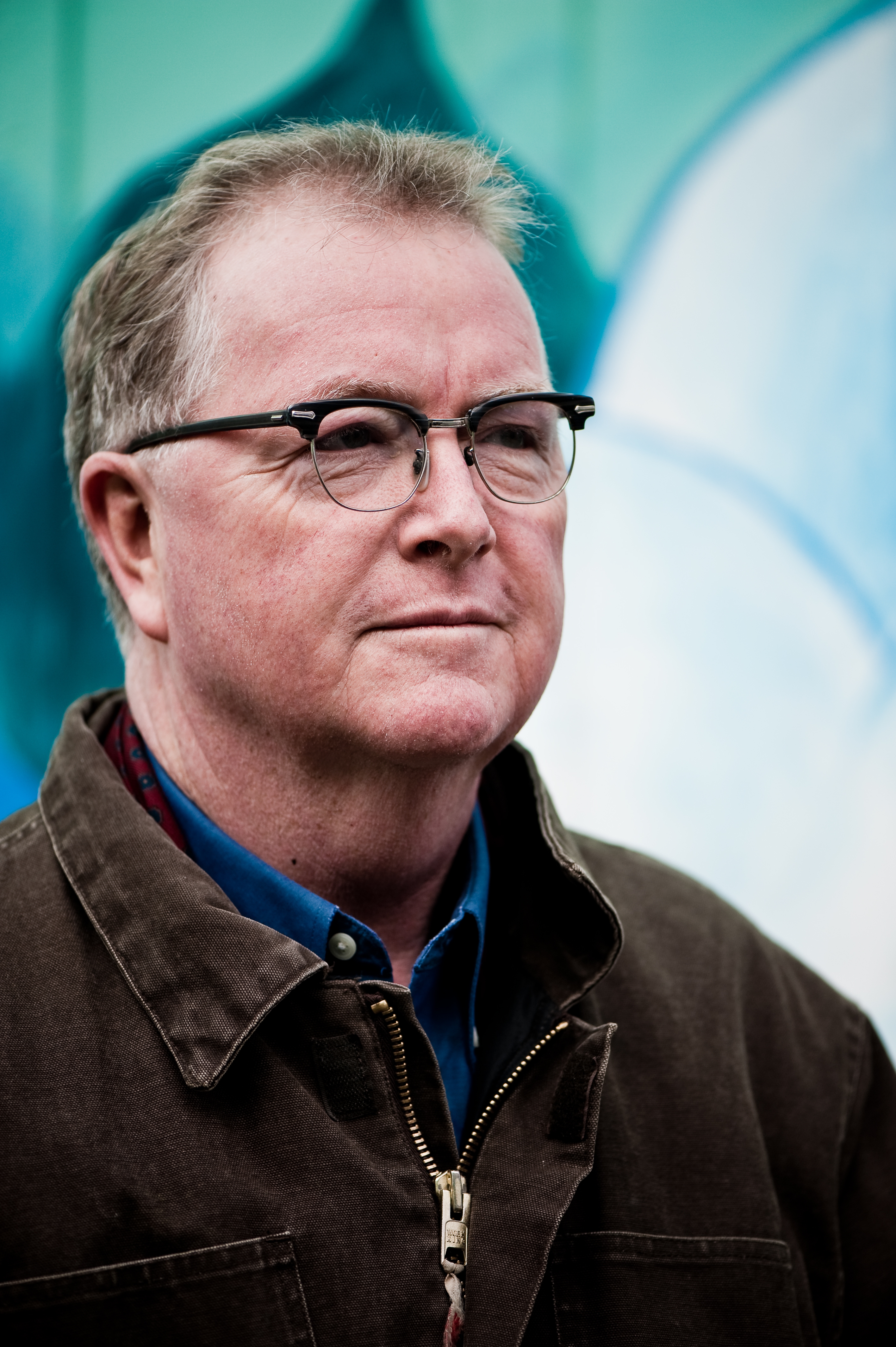
Bruce Cox is the executive director of Greenpeace Canada. Support rabble today!
We’re so glad you stopped by! Thanks for consuming rabble content this year.
rabble.ca is 100% reader and donor funded, so as an avid reader of our content, we hope you will consider gifting rabble with a donation during our summer fundraiser today.
Whether it be a one-time donation or a small monthly contribution, your support is critical to keep rabble writers producing the work you’ve come to rely on as a part of a healthy media diet.
Become a rabble rouser — donate to rabble.ca today.
Nick Seebruch, editor