

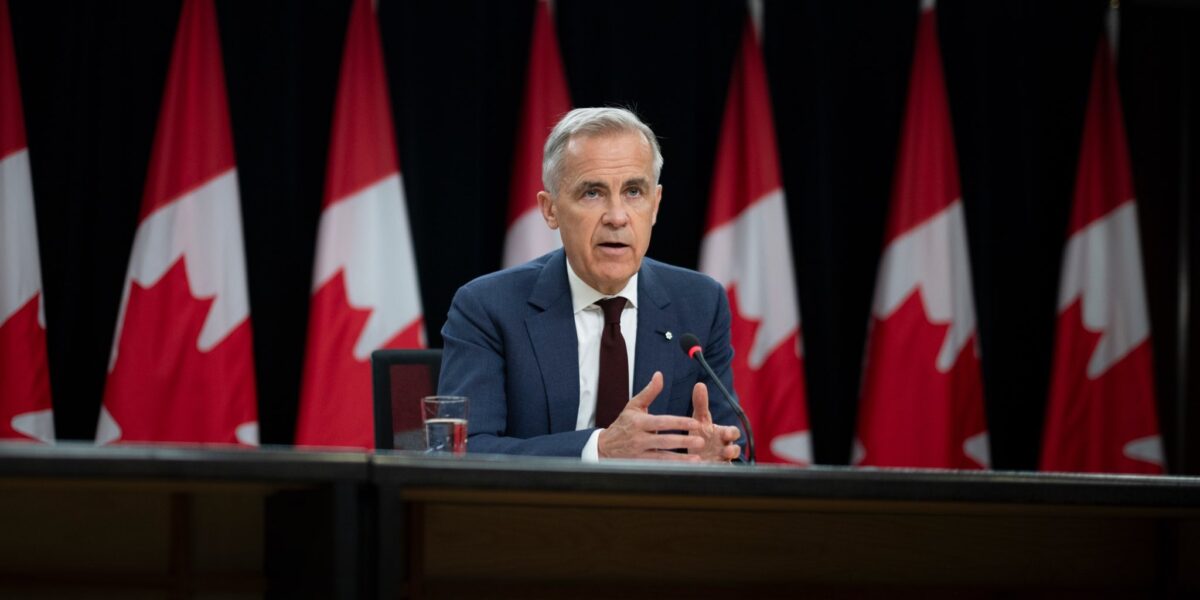
Some who voted for now prime minister Mark Carney are already expressing disappointment. In the name of sovereignty, he is making our economy even more dependent on foreign capital and toxic non-renewable resource extraction, without demonstrating any concern for growing inequality or the escalating climate crisis.
Officially, Liberals claim Carney got a mandate for this in last April’s election. This is a huge stretch. Had Carney been candid about such gargantuan growth in the military-industrial sector, uncritical embracement of nuclear energy and downplaying renewables, his support for a bitumen pipeline to BC’s north coast, along with cuts to social programs and the civil service, he wouldn’t have even won a bare majority.
It is open to debate whether our country would be any worse off, had Poilievre won a minority, for there would likely have still been a strong progressive opposition in Parliament.
Values can obscure interests and outcomes
Carney ran his campaign on “values”, not explicit policies. He appealed to liberal democracy and the rule of law; diversity and human and Indigenous rights, and international law; protecting the natural world; and a communitarian commitment to take care of each other. It sometimes seemed he was advocating us becoming like a Nordic, social democratic country, which added appeal to swing NDP voters.
But projection – hearing what we want – is a big part of politics. And, in the face of Trump’s threat to our sovereignty, it is understandable that Canadians rallied around the flag and embraced Carney’s major projects nation building. Buy Canadian. Create one Canadian economy. Diversify trade. All sounds good.
But, remember, a similar political bandwagon, uncritically embracing continental free trade and neoliberalism in the 1980s, got us into this mess.
Since becoming PM, Carney has been sending clearer messages about where he wants to take us. He brags we have the highest per capita foreign investment in the G7 and that we have an even lower corporate tax rate than under Trump. He may soon lower it further.
He doesn’t brag about our rising carbon emissions or that, with his vision of us as an Energy Superpower, Canada will not reach net zero by 2050.
Several climate advisors have already resigned due to the “climate backtracking”.
Carney’s fragile minority was won with our “elbow’s up”. Yet, recently he ended his speech to New York investors, with “Canada strong can help Make American Great Again”. He emphasized that Canada could be a stable supply for cheap oil, aluminum, and critical minerals. When asked about Canada bringing in China-made EVs, he reassured the American business audience that “they would mostly be Tesla’s”.
How can Carney credibly claim to be upholding our liberal democracy, when MAGA is steadily taking the U.S. into authoritarian disarray? ICE’s violent actions against Americans reflects MAGA’s ethno-nationalism. And “Christian” nationalism isn’t far behind. Protecting Canadian values depends upon effective political resistance and a progressive alternative taking root across the border.
Indigenous consultation for joint-ventures
Carney’s good talk about respecting Indigenous Rights and Duty to Consult also went by the wayside with the bitumen pipeline MOU with Alberta. No consultation with coastal First Nations who support the continuation of the tanker ban.
“Consultations” are more about finding Indigenous partners to expand Canada’s fossil fuel production. Such partners likely believe they are looking out for local interests, even as they ignore the global impacts of what they are doing.
At a time of record-breaking ocean temperatures, the $10 billion dollar, 12 million tonnes a year, American-owned LNG Ksi Lisims project will raise global emissions.
Indigenous leaders may want to see such mega-polluting joint-ventures as decolonization, even reconciliation. It is more accurate to call them “neo-colonial”. There is a long history of involving vulnerable Indigenous communities in projects which have short-term benefits while doing broader, long-term harm. Perhaps the most blatant example was when Dene worked in mining at Port Radium. This was a source of uranium used in the Hiroshima A-Bomb and radiation-related illnesses ended up killing many Dene workers.
Carney’s MOU with Alberta calls for Carbon Capture and Storage (CCS), purportedly to ameliorate environmental damage. But this is still a very costly, unproven technology. In Saskatchewan it has only achieved 60 per cent efficiency, not the 90 per cent promised, when the multi-billion dollar project started. A lot of renewables could have been added to the grid with these public moneys. And the sequestered carbon is used to bring even more oil from underground, which will release further emissions. Even if CCS removes some carbon during production, 80 per cent will still go into the atmosphere where the bitumen is combusted.
Meanwhile the oil industry resists taking on any further expense to expand bitumen production. Elizabeth May and Steven Guilbeault were understandably outraged when Carney went back on his promise to not provide federal subsidies to Alberta’s Pathway Project for this CCS oil recovery.
Continued externalization of costs
There is no climate science here. This is displacement of responsibility to rationalize short term economic benefits for local economies and huge profits for foreign-owned fossil fuel corporations.
Carney’s framework for nation-building is fundamentally flawed. His so-called Sovereign Fund is not at all like other ones, as in Norway, where the state owns a significant part of oil production. There is speculation that this Fund, created with taxpayers’ money, could be used for investing in a bitumen pipeline to the West Coast. Remember what happened with the TMX.
Meanwhile, several countries continue to transition to renewables. This is accelerating since the war on Iran. Yet Carney’s government shows no interest in reducing massive state subsidies to the highly profitable oil and gas industry. Just how does this enhance our independence and sovereignty?
Solar, wind and storage technology are steadily making fossil fuel and nuclear “baseload power” obsolete. Yet, when Carney announced the doubling of Canada’s electrical grid by 2050, natural gas turbines were given priority. Perhaps realizing that there may not be sustained foreign demand for all the planned LNG production, Carney wants to ensure a profitable local market.
If Carney gets his way, it will also be full-steam ahead with 100 AI data centres, which are bound to strain public grids, raise utility costs and compound the emerging water crisis. Carney’s revamped legislation on water quality on First Nations no longer talks of this being a human right. Source water will be protected at the discretion of the resource-extracting provinces.
Carney’s environmental deregulation to accelerate resource expansion will have devastating effects. No mention of all the fracking for natural gas extraction. The deregulations could put some species at greater risk.
And what about the tanker ban? Will this become a red line for the emerging Indigenous-Environmental alliance?
Carney’s plan to centralize authority so cabinet can overrule legislated regulations puts another nail in the coffin of the pledges about sustainability that Carney so eloquently professed a year ago. Apparently even pesticide bans can be overturned.
Conflict of interest with nuclear
Carney has surrounded himself with people from fiscal and asset management. But their perspective is solidly corporate-oriented. There is no credible fiscal justification for embracing nuclear power; not only the most expensive and most subsidized but the riskiest of the technologies.
If full life-cycle costing is demanded, for credible accounting, the costs and emissions from endless nuclear waste “disposal” (management) must be included. These will persist long after any electricity is generated.
More externalization of real costs on real people; for our grandchildren.
First Nations becoming joint-operators of nuclear power plants in Ontario, backed, of course, by huge federal subsidies, will implicate them in being responsible for managing spent fuel (nuclear waste) that remain poisonous for thousands of years.
It is totally unacceptable to refer to Small Modular Nuclear Reactors (SMNRs) as “clean energy” that will enhance Canada’s exports.
The mainstream media has mostly fallen in-line when reporting on Carney policies. No journalist asked about the fuel cycle of SMNRs, that require enriched uranium, for which we will depend on the U.S. Even more continentalism!
Most concerning, there is conflict of interest.
In 2023, when Carney chaired Brookfield Assets Management, it purchased the Westinghouse branch responsible for SMNRs. It controlled 51 per cent, while its partner, Cameco, with origins in Saskatchewan uranium mining, controlled 49 per cent of the enterprise according to reporting from the CBC from this past April. Carney has now committed $2 billion from the Canadian Growth Fund for this consortium to build SMNR’s at Darlington.
Dangers of fortress North America
So many progressive voters would not have switched to Carney had they known what was coming with spending in the military-industrial complex. There remains widespread support for “modernizing” the armed forces and increasing our presence in the North. But there was no talk about buckling under Trump’s pressure and going to five per cent of GDP. If this occurs by 2035, $150 billion a year, or 25 per cent of the federal budget would be in defence.
Federal cuts to essential services are inevitable. The recent economic update shows ending funding for national pharmacare, no new moneys for child care, and, in the midst of our severe crisis in healthcare, serious cuts to healthcare transfers according to reporting in the Toronto Star.
Even with pervasive cuts to the federal civil service, the expected federal deficit in 2025-26 will be $72 billion, double that projected by Trudeau. These cuts have been mishandled, spreading uncertainty, demoralization and degrading public services. There is an exodus of some of the most knowledgeable civil servants. In spite of all Carney’s platitudes about protecting Canada, many programs, both social and environmental, will now decline.
This is not enhanced sovereignty, not greater Canadian independence. Rather, we are going from the pitfalls of branch-plant continentalism to the even greater ones of Fortress North America.
Jim Harding is retired professor of environmental and justice studies and editor of The Long Sixties: Stories from the New Left (Fernwood, 2026).
Support rabble today!
We’re so glad you stopped by! Thanks for consuming rabble content this year.
rabble.ca is 100% reader and donor funded, so as an avid reader of our content, we hope you will consider gifting rabble with a donation during our summer fundraiser today.
Whether it be a one-time donation or a small monthly contribution, your support is critical to keep rabble writers producing the work you’ve come to rely on as a part of a healthy media diet.
Become a rabble rouser — donate to rabble.ca today.
Nick Seebruch, editor