


Human progress, to the extent it is not an oxymoronic phrase, may best be measured by how broadly we define the limits of “we,” those humans seen as having a right to autonomy and the protections of civil law and full human rights. The aspirational goal (not yet fully achieved, it must be said) is a broad, inclusive definition that protects all human beings. This is a fairly new concept in our history, and dates, in a real way, to the work of two Jewish intellectuals from Central Europe, Hersch Lauterpacht and Raphael Lemkin, who contributed to the inclusion of language about genocide (a concept created by Lemkin in his 1944 book Axis Rule in Occupied Europe,) and crimes against humanity, (a concept championed by Lauterpacht.) in the statute associated with the post WWII Nuremberg trials of Nazi leaders.
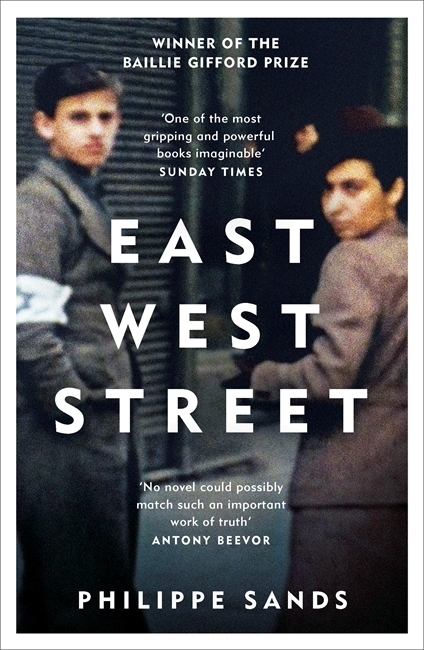
East West Street, published nearly a decade ago by renowned human rights lawyer Philippe Sands, is the story of these two men and the concepts they espoused. It remains heart- scaldingly relevant today, at a time when genocides and crimes against humanity are raging unchecked around the world from Gaza to Sudan, from Myanmar to Somalia, from the Ukraine to the US, from Democratic Republic of Congo to Canada and China.
East West Street runs through the town of Lviv, one of those cities that underwent a series of name changes and changes of national identity (Lwow, Lemberg, Hapsburg Galicia, Russia, Poland, Germany, Ukraine) in the interregnum between WWI and WWII. Both his protagonists lived there at crucial periods in their lives, as did many of Sands’s relatives. Most of those relatives died in the Holocaust, as did the bulk of the 100,000 Jews who lived in Lviv/Lemberg. These personal connections give this remarkable and important book a highly personal and often lyrically beautiful element of sorrow and discovery which resonates with its world historical and high policy concerns.
Sands is an accomplished researcher and a masterful prose stylist. He brings his protagonists to life with the kind of human details to be found in the best novels, while always hewing to the respect for sources and facts demanded by the kind of polemic non fiction he practices.
In addition to the two public intellectuals at the core of this wonderful book, Sands provides in depth portraits of his grandfather Leon, who also lived in Lviv, and of the monstrously banal Nazi opportunist Hans Frank, who supervised the Holocaust in Lviv and died on the gallows at Nuremberg.
Another book that addresses some of the same fraught issues, which would be a good companion read for East West Street is Ingo Muller’s magisterial work Hitler’s Justice, reviewed here last year. Meanwhile, more than half a century after Nuremberg, the world is still struggling to create an international treaty to ban crimes against humanity, an effort notably hindered by the US, Russia and China, “great powers” who fear their own crimes would be subject to legal action under the proposed agreement.
Too often the world turns away and lets the bloody business continue. This important book reminds us of our moral obligations to each other and to those who suffer under the boots and guns of genocidaires and human rights abusers. When we turn away, we become complicit.
And even in our dark, dire times, some efforts continue to expand the “we” and end the impunity that so often shields those who commit acts of genocide and crimes against humanity. Sands himself has played an active role in those attempts, from his involvement in the London arrest and attempted extradition of Chilean dictator Augusto Pinochet in 1998, to his many publications on the nightmare topics of genocide and crimes against humanity.
In 2026 Sands was awarded an international prize to recognize his tireless life work on these topics.
While crimes against humanity and genocide are often linked in policy debates, Lemkin and Lauterpacht were if anything competitors during the crucial Nuremberg trials, each eager to see his own concept incorporated into the court’s judgement and skeptical of his rival’s notions. Sands is even handed and judicious on the merits of both concepts, although he gives, at least in my estimation, too much weight to the critique voiced by some authorities that the genocide concept as dangerous and likely to promote group hatreds and competition for victim status. This line of argument, which is reminiscent of criticisms of “identity politics” often heard today, tiptoes up to a blame the victim position and ignores the fact that the crimes of the genocidaires preceded attempts to counter them, just as the real horrors of racism and sexism etc precede any identity politics response. The oppressors started these fights, and it is up to us as people of conscience to defeat them
Sands has done us all a favour by highlighting the little known history of two of the concepts that best capture the tragic nature of our age. Future historians, if there are any, may refer to our era as the Age of Horrors both Monstrous and Industrialized. If they do, they will honour the work of public intellectuals and activists like Lemkin and Lauterpacht and the many people of conscience who have carried on the work of these two flawed, impressive men in the effort to expand the “we” recognized in law and public discourse. They insist, as we all should, that the resonant motto “Never Again” must apply to all genocides and crimes against humanity, current and future.
Support rabble today!
We’re so glad you stopped by! Thanks for consuming rabble content this year.
rabble.ca is 100% reader and donor funded, so as an avid reader of our content, we hope you will consider gifting rabble with a donation during our summer fundraiser today.
Whether it be a one-time donation or a small monthly contribution, your support is critical to keep rabble writers producing the work you’ve come to rely on as a part of a healthy media diet.
Become a rabble rouser — donate to rabble.ca today.
Nick Seebruch, editor
