

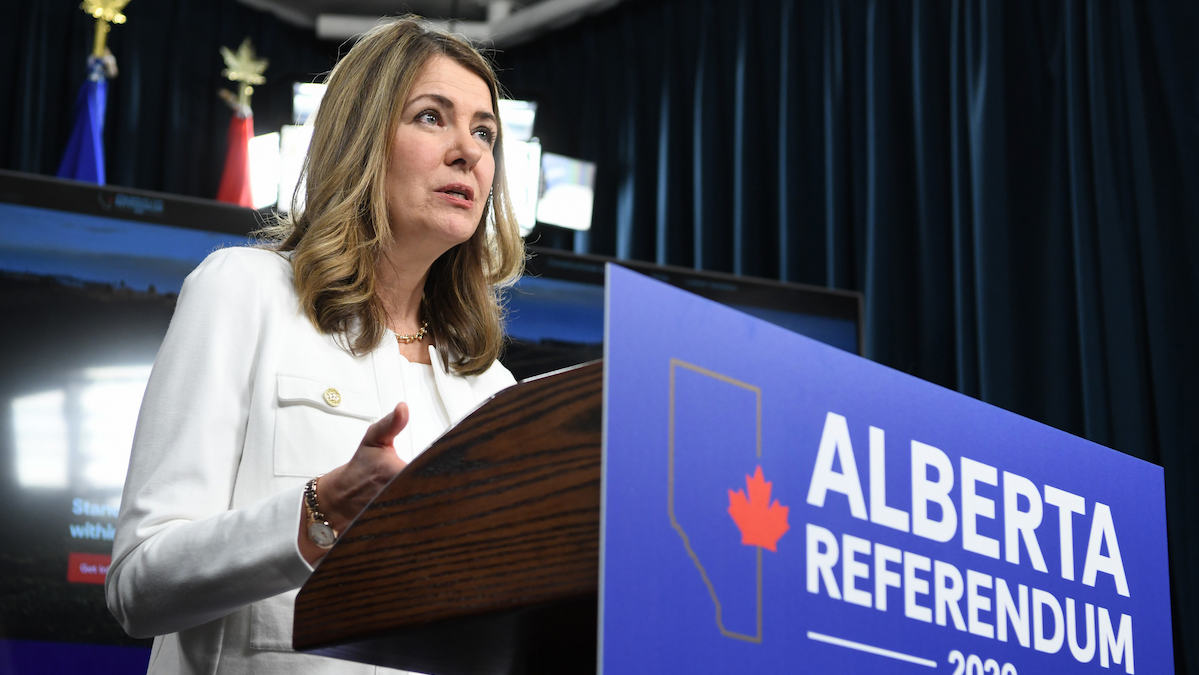
The United Conservative Party (UCP) decision to provide Alberta political parties with a “list of electors” with no electors listed in it for the October 19 referendum vote either “demonstrates a fundamental misunderstanding of the role of election scrutineers or disdain for the role that they play,” says former Alberta election commissioner Lorne Gibson.
Gibson, the official responsible for enforcing Alberta’s election laws from May 2018 to December 2019, described his reaction to the new format voters list described in a cabinet order last Thursday as “confusion and disbelief.”
“In the 28 years I have been involved in organizing and administering elections both domestically and internationally I have never seen a voters list that only contains only the number of registered voters in each municipality and voting area,” Gibson said in an email in response to my query. Gibson’s past experience also includes nine years as Manitoba’s deputy chief electoral officer and just under three years as chief electoral officer in Alberta, from 2006 to 2009.
What Order-in-Council 314/2026 calls a “list of electors,” Gibson explained, “is not a voters list but rather a statistical summary of the number of individuals eligible to vote.”
I guess we could call it Schrödinger’s voters list. Whatever it is, because it lacks essential information, it interferes with the ability of party scrutineers to observe that only qualified voters are able to vote, and that no one votes more than once.
If an individual voter is not on a normal voters list, Gibson explained, “the scrutineer ensures that the election official follows the proper procedure to register the voter before they are issued a ballot.”
“This will not be possible during Alberta’s upcoming referendum because the scrutinizer will not know which individuals have been pre-qualified to vote through the more rigorous voter registration process that Elections Alberta will have followed to determine eligibility,” he said.
Because it is a temporary measure, there is suspicion it is intended specifically to help the separatist side on Oct. 19. That was the accusation made by Opposition House Leader Christina Gray on Friday, who called the idea of a voters list with no names, addresses, or other identifying information an effort by the UCP “to help their separatist friends.”
“We are worried the UCP is opening the door for voter fraud,” Gray stated Friday. “Parties like ours scrutineering the vote won’t have enough information to know who those voters are.” If parties don’t know who hasn’t voted, it also hinders their efforts to get out the vote.
Gibson, who now runs an election management business in Winnipeg, said he understands the concern about voter data security in light of the unprecedented recent leak of 2.9 million Alberta voters’ personal information – the justification provided by Justice Minister Mickey Amery’s office for the cabinet order.
“However, denying registered political parties … access to a list containing the names and addresses of eligible voters nullifies the important role that party scrutineers play in helping to ensure the integrity of the voting process,” he said. “There will be no way to ensure that individuals who present themselves to receive a ballot are, in fact, eligible to vote.”
At a minimum, Gibson said, “the identification required to vote only needs to show the residential address of a given voter. It lets election officials know if an individual is voting in the right voting area.”
“With the unfortunate but legitimate concerns over whether some political party operatives preforming the role of scrutineer will breach confidentiality of the personal information contained on the voters list, the Alberta government could have least seen fit to list voters by their unique identification number rather than by name and address,” he added.
“It would be possible, albeit cumbersome, for scrutineers to cross reference the numbers on the voters list with the names and addresses of voters gleaned from earlier versions of the voters list,” he said, describing this as an imperfect solution because of population growth. Nevertheless, he continued, “this would make the job of the scrutineer much more difficult but would still protect the privacy of voter’s personal information.”
Gibson ended his email with some questions: “If the rationale for this change in the composition of the voters list is out of concern for voter privacy, why is the change only temporary? With the knowledge that some of Alberta’s registered political parties cannot be trusted to maintain the confidentiality of voters’ personal information, why not make this a permanent feature of elections in Alberta? Why does this change only apply to the October referendum?”
Gibson concluded: “I have not been able to solve this riddle.”
Gibson was fired as election commissioner by former UCP premier Jason Kenney in November 2019, supposedly to save money but obviously because he had too effectively enforced the law when he investigated campaign financing violations by some of Kenney’s supporters in the party’s first leadership race.
Support rabble today!
We’re so glad you stopped by! Thanks for consuming rabble content this year.
rabble.ca is 100% reader and donor funded, so as an avid reader of our content, we hope you will consider gifting rabble with a donation during our summer fundraiser today.
Whether it be a one-time donation or a small monthly contribution, your support is critical to keep rabble writers producing the work you’ve come to rely on as a part of a healthy media diet.
Become a rabble rouser — donate to rabble.ca today.
Nick Seebruch, editor