

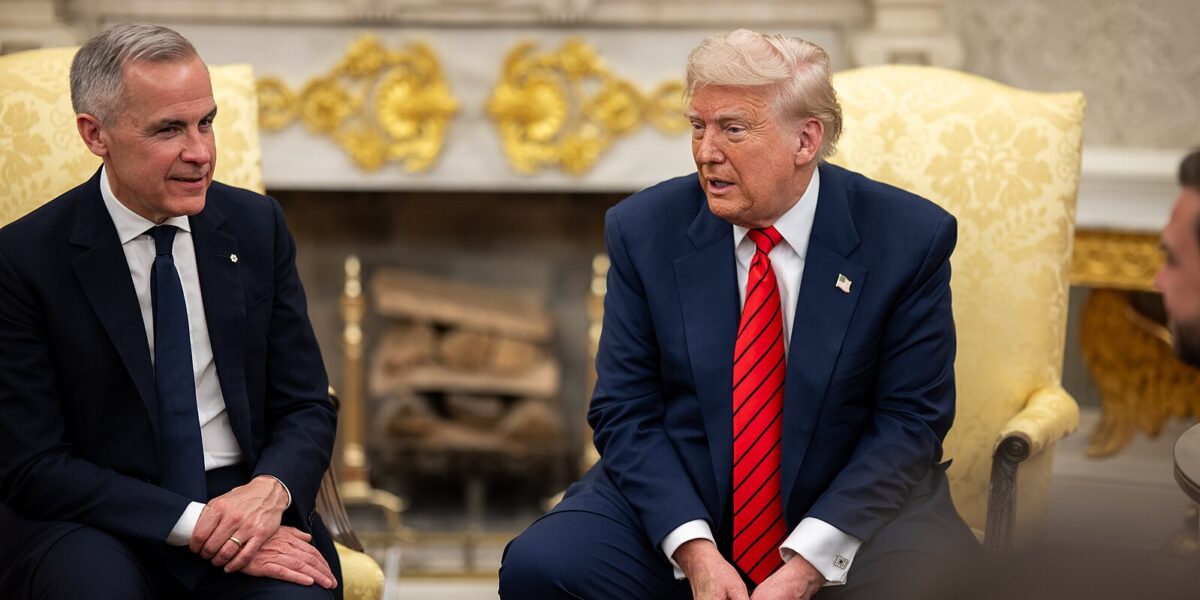
With the widely detested U.S. president out to crush Canada and humiliate our prime minister, it’s not surprising that Mark Carney’s popularity has soared.
As long as Donald Trump hovers menacingly over the country, Carney has enormous leeway to remake Canada in ways that would — under normal circumstances — alarm many Canadians.
Carney’s vision for remaking Canada — on display at this week’s summit in Toronto — embraces the business agenda of privatizing airports and other key infrastructure, slashing corporate taxes, inviting more foreign ownership and control, and ramping up production of fossil fuels — even as the world struggles to transition to cleaner energy in a desperate bid to avert climate catastrophe.
Carney is plowing full-steam ahead with an agenda that business interests on both sides of the border have long dreamed of.
However, it’s not an agenda that most Canadians dream of.
Carney plans to privatize aspects of four major Canadian airports, even though airport privatization proved very unpopular when former prime minister Justin Trudeau floated the idea in 2016. With polls showing only 21 per cent of Canadians supporting it, Trudeau shelved the idea.
But airport privatization keeps resurfacing because there are strong business interests pushing it.
Carney insists Ottawa will retain ownership of airport land and assets. But allowing private companies to operate airports risks driving up costs for passengers — just like the private consortium holding a 99-year lease on Highway 407 has gouged the public through enormous tolls.
Since the idea of private interests owning or controlling our infrastructure is unpopular with Canadians, privatization schemes have been repackaged as “public-private-partnerships” or, as Carney calls them, “nation-building projects.”
Whatever we call them, let’s not forget that global financiers didn’t flock to the Toronto summit to help out Canada; they came because they’re looking for lucrative deals investing in Canadian infrastructure, with its low risks and reliable income stream.
One of the most celebrated financiers at the summit was Larry Fink, chairman of BlackRock, the multi-trillion-dollar asset management fund. Fink has long been keen on Canadian infrastructure.
At the January 2016 gathering in Davos, Fink connected with Justin Trudeau, who had just been elected campaigning on a promise to create an infrastructure bank in which Ottawa’s strong credit rating would help municipalities finance infrastructure at low rates. There’d been no mention of the involvement of Wall Street financiers.
That quickly changed. Under Fink’s guidance, Wall Street became very involved in designing the new bank for Canada, with a BlackRock team working confidentially inside the Trudeau government.
At a glittering event in November 2016 at Toronto’s Shangri-La Hotel — organized by BlackRock and attended by Fink — Trudeau and senior cabinet ministers urged international investors to do deals with the new infrastructure bank.
The mingling of public and private money in such deals raises the prospect that government will get fleeced by razor-sharp Wall Street operators.
Carney is clearly a smart money-man, but so is Fink, who has a track record of getting his way with government. As an article in Vanity Fair documented, Fink became an influential figure shaping Washington’s bailout of Wall Street following the 2008 crash — a bailout widely regarded as a gigantic government giveaway to some of the world’s richest people.
Lots of Canadian taxpayer money is at stake. The Carney government has revealed it will provide $280 billion of Canadian taxpayer money to sweeten deals — offering subsidies, tax breaks and having government (taxpayers) shoulder the risk.
The Star, simplified
Breaking news, interactive polls, video, and voice notes. Star stories you’ll want to share, delivered where you’re already chatting. Follow the Star on WhatsApp.
With massive taxpayer funds directed toward sweetening infrastructure deals — as well as expanding our military — there will be precious little left for truly vital needs like strengthening our public health care and transitioning to clean energy.
This isn’t really about standing up to Trump. Carney is taking advantage of the fear and loathing Canadians feel towards Trump to justify remaking the country in a way that primarily benefits business interests, not the rest of us.
This article was originally published in the Toronto Star.
Support rabble today!
We’re so glad you stopped by! Thanks for consuming rabble content this year.
rabble.ca is 100% reader and donor funded, so as an avid reader of our content, we hope you will consider gifting rabble with a donation during our summer fundraiser today.

Whether it be a one-time donation or a small monthly contribution, your support is critical to keep rabble writers producing the work you’ve come to rely on as a part of a healthy media diet.
Become a rabble rouser — donate to rabble.ca today.
Nick Seebruch, editor
