

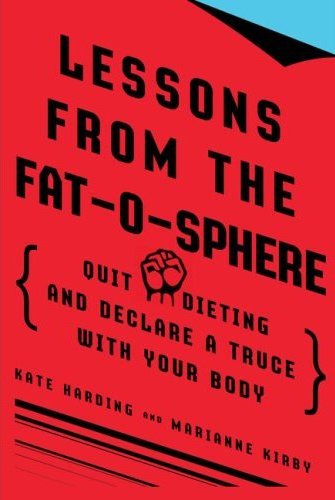

In a perfect world, this book wouldn’t exist. Not because Lessons from the Fat-o-sphere isn’t engaging or informative — on the contrary, it’s a quick and often eye-opening read — but because it reaffirms that we are still a society at war with our bodies.
From breast implants and Botox to skin bleaching and anti-aging creams, a woman’s physical appearance is seen as something to alter and improve upon. Witness the plight of Hollywood starlet Mary-Kate Olsen: For years, fashion magazines maligned her for being too thin. Now that she’s sporting a fuller figure, she stands accused of letting herself go.
But “letting go” is exactly what authors Kate Harding and Marianne Kirby advocate in Lessons from the Fat-o-sphere. They aren’t suggesting readers need to shed pounds, however; they’re dead-set against that very notion, in fact. What they’d rather see is people losing their ridiculous expectations about the perfect body and the perceived happiness that goes along with it.
It’s an insult to one’s intelligence, Harding and Kirby argue, to scrutinize and agonize over one’s figure. Fat is not something to be feared. It is simply a state of being that needs to be understood and ultimately embraced. What’s refreshing is that the authors aren’t the typical proselytizers in this self-help genre: Instead of being muscle-bound fitness gurus who guilt followers into harsh diets and unreasonable exercise regimens, Harding and Kirby are ordinary folk who tried (and failed) to find the thin woman within — an experiment that left them feeling miserable until they made peace with their true selves and their true sizes.
Today, Harding and Kirby are two of the blogosphere’s most popular Fat Acceptance advocates. (They pen Kate Harding’s Shapely Prose and The Rotund, respectively.) Online and in this book, they use their personal experiences to provide the fat perspective on issues related to body acceptance and self-worth. Aspects of physical and mental health are addressed, as are the importance of media awareness and relationship management.
While their words are directed at other fat women (they refuse to employ euphemisms for their particular shape), there is plenty of universally applicable advice. The authors devote the opening chapter to “HAES,” or “Healthy Eating at Every Size” — a philosophy that eschews dieting, encourages intuitive eating and promotes physical activity and self-esteem. Other sections offer frank tips on how to dress your best, how to stay positive on down days and how to end toxic relationships (no one needs frenemies, no matter what size you are).
The chatty delivery, the cutting asides and the liberal use of the f-bomb add a candid and casual tone to the book, but it too often reads like an extended blog entry. This style of prose undercuts the important advice at times, reducing the seriousness of the subject and the credibility of the assertions. It’s amazing how an ill-placed “duh” can suddenly diminish the impact of their enlightening information, particular when discussing health issues.
Another quibble point is the insistence that finding a loving partner is one of the keys to self-acceptance. In “Socializing,” the authors write that “Most of the people we see writing confidently and persuasively about…fat acceptance specifically are married or in solid long-term relationships. There aren’t nearly as many single people doing this, as far as we can tell.” The implication that having a life mate is essential to body acceptance discounts the part of the population who do not rely on this type of relationship to provide their sense of self-worth.
These stumbling blocks, however, are relatively minor. The book is an easy read that’s refreshingly upfront about the fat experience and the challenge of viewing our bodies in a positive light. Harding and Kirby are passionate about this subject and it shows, especially when offering encouragement and perspective: “Giving up on dieting isn’t giving up on yourself-it’s giving up on hurting yourself, starving yourself, and blaming yourself for things you can’t control.”
Perspective, perhaps, is the most important lesson from the fat-o-sphere: Whether we’re fat or thin, it’s the state of our minds — not our waistlines — that make us happy in the end.–Kellee Ngan
Kellee Ngan is a fiction writer, journalist and editor who enjoys all things literary. A Toronto native with a travel addiction, Kellee currently lives and writes in Vancouver.
Support rabble today!
We’re so glad you stopped by! Thanks for consuming rabble content this year.
rabble.ca is 100% reader and donor funded, so as an avid reader of our content, we hope you will consider gifting rabble with a donation during our summer fundraiser today.
Whether it be a one-time donation or a small monthly contribution, your support is critical to keep rabble writers producing the work you’ve come to rely on as a part of a healthy media diet.
Become a rabble rouser — donate to rabble.ca today.
Nick Seebruch, editor
