

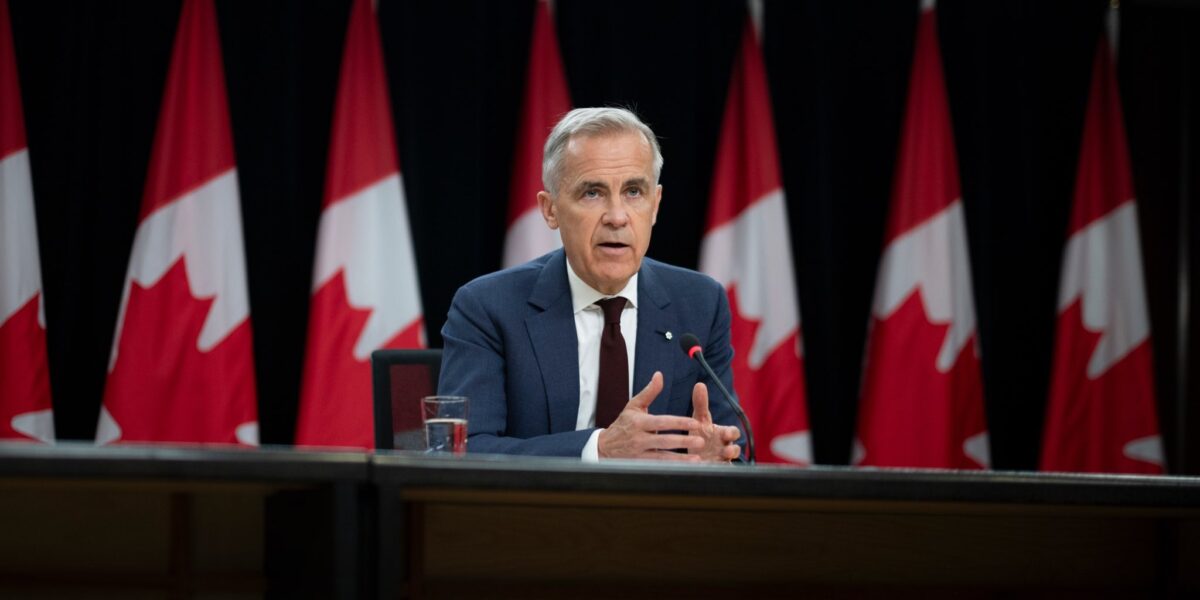
Prime Minister Mark Carney’s decision to walk away from a trade deal with the U.S. seems to have electrified Canadians.
Could it be that he’s awakened a desire for a more independent Canada — a desire that’s been largely dormant in recent years as our political leaders have moved us towards deeper integration and (let’s face it) deeper domination by our powerful neighbour?
We’ve been mostly on this path since former prime minister Brian Mulroney signed the Canada-U. S. Free Trade Agreement, which was highly contentious at the time.
In the final stages of those 1987 free trade talks, our lead negotiator, Simon Reisman, stormed out, because he couldn’t get a deal he thought Canada should sign.
However, Mulroney was so keen for a deal he ended up signing one anyway.
That original free trade deal was hotly contested in the 1988 federal election, with both the Liberals and NDP vigorously opposing it, arguing Canada was giving up too much sovereignty.
But, with the Canadian corporate elite onside, Mulroney’s Conservatives prevailed.
The deal redesigned Canada in many ways, forcing us to give up important levers over our economy and rendering us more dependent on the U.S.
All this has arguably left us more vulnerable — as we face the thuggish U.S. President Donald Trump, who unabashedly seeks to destroy our economy, if not swallow us whole.
So, should we have avoided that “free trade” deal — and subsequent ones that deepened our integration with the U.S.?
To consider this, let’s return to Simon Reisman.
Years before the free trade talks, Reisman was our chief negotiator in the 1965 Canada-U.S. Auto Pact — a very different trade deal that increased our control over our economy.
Key to the auto pact was a “performance requirement.” In essence, the deal was that, for every car U.S. automakers sold in Canada, they had to produce one here.
The pact proved a boon to Canada; auto manufacturing became a thriving industry and the backbone of Ontario’s economy.
But Washington concluded that it preferred “free trade” where its companies wouldn’t be required to perform in ways benefiting Canada.
So, in the early 1980s, when Canadian business interests pushed for more deals like the auto pact, U.S. Trade Rep. Bill Brock wasn’t interested.
But Brock was like a crafty salesman who redirects customers to what he’s selling: No, my friends, you don’t need new windshield wipers; you need a whole new car! Let me show you this Corvette Stingray. Now, there’s a car! It takes a real man to drive that car!
The Canadian businessmen were quickly kicking the tires of the Corvette, and convincing Mulroney to pursue a free trade deal.
Reisman’s different reactions to the two trade deals he negotiated is striking. He was proud of the auto pact, but he broke off the free trade talks because he couldn’t get a deal that he thought benefited Canada, and he was lukewarm to the deal Mulroney finally signed, as he explained in several interviews for my 1991 book “The Quick and the Dead.”
All these years later, the principle behind the auto pact still shines brightly. Economist Jim Stanford argues we need something similar today — a binding requirement that all foreign automakers maintain manufacturing in Canada proportionate to their sales here.
However, following in Mulroney’s footsteps, our political leaders have generally settled for trade deals leaving Americans largely running our economy.
Now Carney’s dramatic rejection of the Trump trade deal appears to have ignited a Canadian desire for more independence.
If so, Canadians may be less excited later this month when Carney hosts an “investment summit” in Toronto, aimed at encouraging foreign investors to buy up key parts of our national infrastructure.
In an independent Canada, do we really want foreigners owning our national infrastructure?
Now that he’s activated our hunger for independence, Carney may find us much more insistent that Canadians are actually in charge of our economy.
This article was originally published in the Toronto Star.
Support rabble today!
We’re so glad you stopped by! Thanks for consuming rabble content this year.
rabble.ca is 100% reader and donor funded, so as an avid reader of our content, we hope you will consider gifting rabble with a donation during our summer fundraiser today.

Whether it be a one-time donation or a small monthly contribution, your support is critical to keep rabble writers producing the work you’ve come to rely on as a part of a healthy media diet.
Become a rabble rouser — donate to rabble.ca today.
Nick Seebruch, editor
