

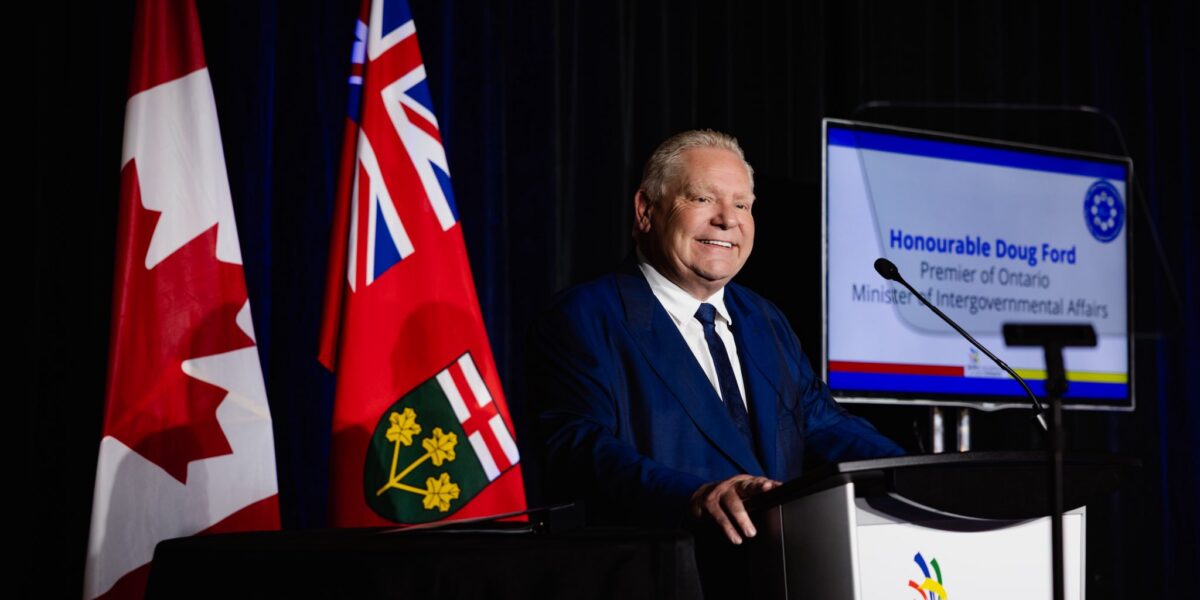
He may not have done it intentionally, but Doug Ford just provided the perfect illustration of why we need a wealth tax.
The Ontario premier has introduced deep cuts to the province’s Student Loan Program — cuts that will make it much more difficult for poor students to lift themselves out of poverty.
Ford’s cuts won’t impact students from well-to-do families. But they’ll be a deal-breaker for hundreds of thousands of poorer kids who, until now, have been able to count on the province’s financial support, with up to 85 per cent of that support delivered in the form of grants.
These changes risk closing the door — indeed, slamming it hard — on young people, condemning them to a future of low-paying jobs in the gig economy.
Clearly, we need more revenue to fund post-secondary education.
But where can we possibly find that revenue? Everybody is already paying a lot of tax. Right?
Well, actually no. It’s true that most Canadians pay a big chunk of their income in tax.
But many at the top pay very little tax; the income tax system doesn’t really touch them. (It taxes people on the basis of income, and the wealthy can avoid generating income by instead borrowing all the money they want, using their fortunes as collateral.)
As a result, there are a small number of very wealthy Canadian families — about 19,500 — with net fortunes of more than $25 million, who are very lightly taxed.
For instance, $10 billion of that extra $40 billion would be enough to mostly eliminate tuition for students across Canada.
If this sounds too good to be true, that’s because a lot of Bay Street professionals (who work for the wealthy) come up with arguments to convince you it’s too good to be true.
One of their key arguments is that, if we raise taxes on the rich, they’ll leave and take their wealth with them.
But the Bay Street professionals always omit a key fact — yes, the wealthy can leave, but they’ll face a hefty exit tax. All their unrealized capital gains are subject to tax when they exit, making their departure potentially very expensive for them.
And moving to the U.S. might not be the answer; the Democrats may well be swept to power in the post-Trump era as part of a backlash against America’s oligarchy.
In California, a campaign by unionized workers to get a billionaire tax on the ballot next November has sufficiently scared the tech crowd that they’ve begun organizing to get a countermeasure on the ballot.
Canadians are fair-minded; we want to live in a society where economic rewards are dispensed — at least to some extent — on the basis of merit.
The notion of a meritocracy has always been difficult to square with the reality of massive wealth concentration, much of it inherited. But the Student Loan Program helped, until Ford slashed it.
We could come closer to being a meritocracy by imposing a wealth tax, which would take a bit from Canada’s grand fortunes so that poorer kids get a chance to live their dreams.
This article was originally published in the Toronto Star.
Support rabble today!
We’re so glad you stopped by! Thanks for consuming rabble content this year.
rabble.ca is 100% reader and donor funded, so as an avid reader of our content, we hope you will consider gifting rabble with a donation during our summer fundraiser today.

Whether it be a one-time donation or a small monthly contribution, your support is critical to keep rabble writers producing the work you’ve come to rely on as a part of a healthy media diet.
Become a rabble rouser — donate to rabble.ca today.
Nick Seebruch, editor
