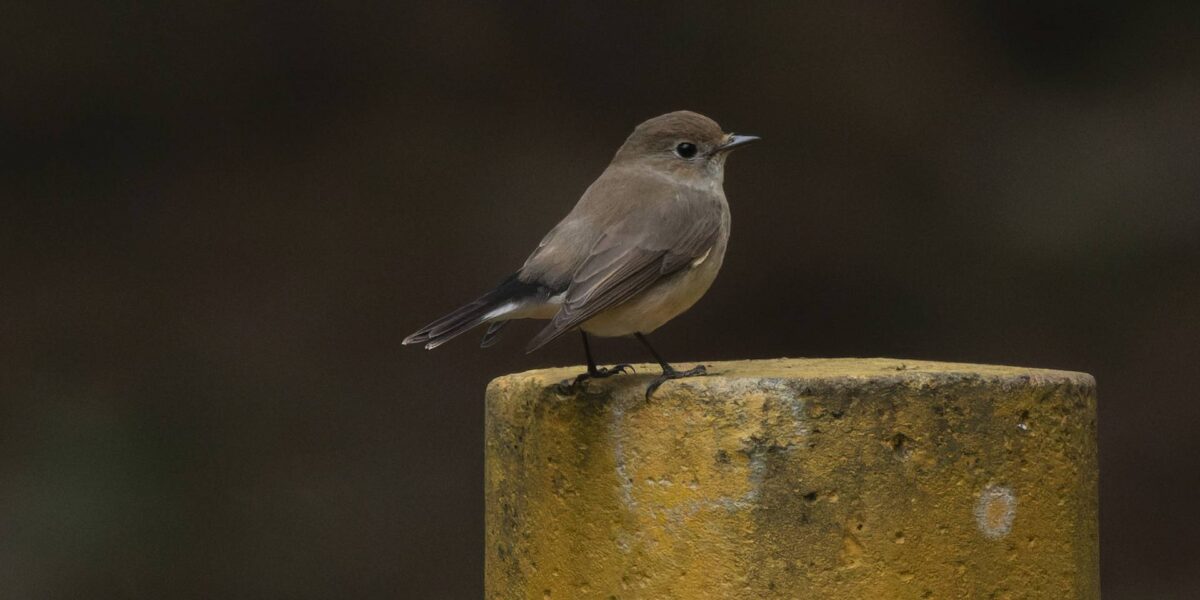
On Christmas day, a taiga flycatcher flew into Vancouver. What’s remarkable about this relatively non-descript bird’s visit is that it was the first record of it appearing in British Columbia and Canada. It should have been spending its winter in southern Asia. It might have arrived here on a ship or perhaps it was blown off course.
What’s even more remarkable is the crowd of enthusiasts from all over Canada and the United States who gathered in Vancouver’s West End to catch a glimpse. Some returned multiple times, many willing to wait for hours to see it.
These birders were motivated by the chance to see this species for the first time in Canada. But the crowd’s enthusiasm also hints at a much deeper connection to nature.
Politicians rarely justify a decision because it’s good for nature. Talk of a new pipeline from the Alberta oilsands to the B.C. coast late last year sparked concerns that it would require overturning a moratorium on oil tankers off the north coast — but most opposition to removing the ban was framed around a spill’s risk to industry, the economy and Indigenous ways of life. Mainstream political parties didn’t defend the moratorium because overturning it would put nature at risk, nor did they mention the importance of conserving local flora and fauna.
American writer and naturalist Henry Beston wrote of the need for “a wiser and perhaps a more mystical concept of animals. … We patronize them for their incompleteness, for their tragic fate of having taken form so far below ourselves. And therein do we err, and greatly err. For the animal shall not be measured by man. In a world older and more complete than ours, they move finished and complete, gifted with the extension of the senses we have lost or never attained.”
We humans are not terribly good at assessing the value of other species, because we largely view them through a human lens.
We’ve already devised ways of quantifying or putting a price on nature — developing systems based on “natural capital accounting” and “biodiversity asset” schemes. However, these measures have not proven effective in reversing decline.
A 2026 report by the United Nations Environmental Programme found that for every dollar invested in protecting nature, US$30 is spent destroying it — despite numerous studies showing the benefits to human health from being in nature, including cognitive, mood and mental health improvements.
Some studies report specifically on the human physical and mental health benefits of birding. For example, a recent study published in the journal Landscape and Urban Planning found that birdwatching reduced blood pressure and heart rate in participants. Self-reported mental wellbeing, as measured by the questionnaires, was also higher after the walks.
But why do we need to put economic and human-centric values on nature for us to value it?
The annual Christmas bird count has been running in North America for more than 125 years. It’s one of the first examples of community science, a movement now engaging thousands of people worldwide in science — thanks largely to technology. The value of the bird count dataset is not only its completeness (many survey points) but also in its longevity (temporal). The data collected each December through January have been used to monitor trends in bird diversity as well as changes in spatial distribution throughout the survey areas.
Enthusiasts often endure freezing winds, rain and snow to properly survey as much of their designated areas as possible to ensure data completeness. The knowledge and passion these dedicated people have is astounding. Their expertise includes how to distinguish between gulls based on subtle differences and how to identify various sparrow species based on their calls.
Last year, more than 83,000 people in Canada, the United States, Latin America and the Caribbean participated in the annual count. These numbers suggest people are passionate about nature. We are not alone; we are a growing force of interested, enthusiastic people who care deeply about what happens to all life forms that share the planet.
We must renew focus on re-building and re-energizing the environmental movement to include multigenerational work that works to halt and reverse what’s happening right now — the largest extinction event in Earth’s history.
David Suzuki is a scientist, broadcaster, author and co-founder of the David Suzuki Foundation. Written with David Suzuki Foundation Nature Director Erin Roger.
Learn more at davidsuzuki.org.
Support rabble today!
We’re so glad you stopped by! Thanks for consuming rabble content this year.
rabble.ca is 100% reader and donor funded, so as an avid reader of our content, we hope you will consider gifting rabble with a donation during our summer fundraiser today.
Whether it be a one-time donation or a small monthly contribution, your support is critical to keep rabble writers producing the work you’ve come to rely on as a part of a healthy media diet.
Become a rabble rouser — donate to rabble.ca today.
Nick Seebruch, editor