

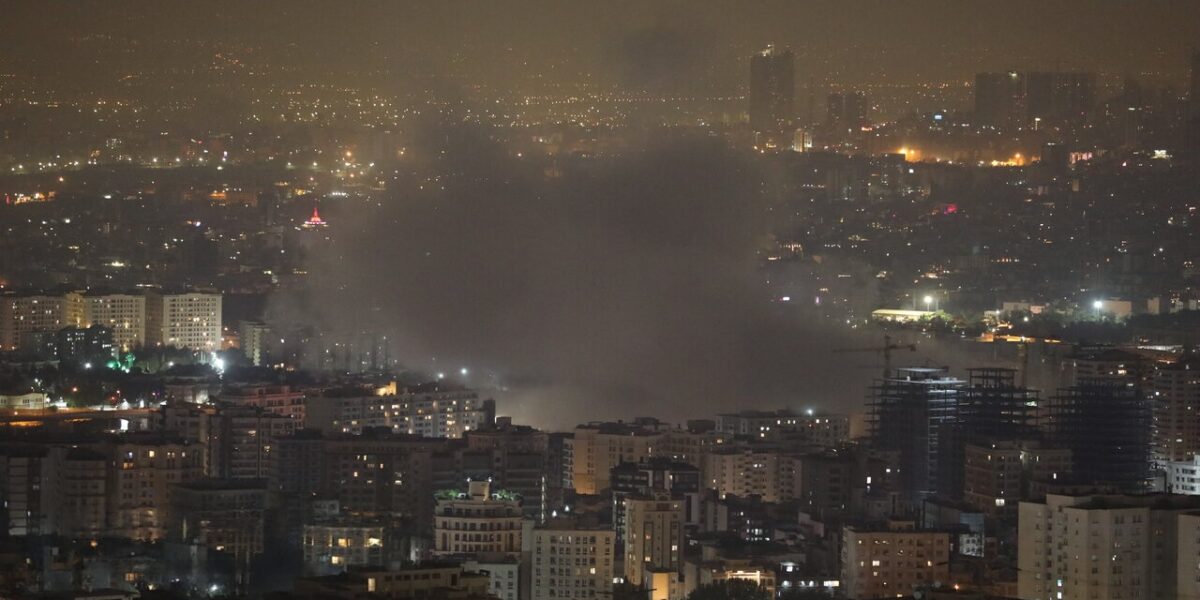
It has been more than a week since the start of persistent warfare between Iran and Israel. It had begun when, on June 12, Israel struck major cities in Iran – including the capital Tehran. At least 224 Iranians have been killed, most of them civilians. Innocent men, women, and children in their own homes.
As Israeli leaders boast of setting Iran’s nuclear program “back a very, very long time”, mainstream coverage fixates on “strategic victories.” But behind these headlines are shattered homes and broken bodies—often those of mothers, daughters, nurses—whose loss is reduced to a footnote. Behind these headlines are also a distressed, grieving, and infuriated diaspora.
And the silence from liberal feminists is deafening.
Not too dissimilar from Palestine, Israel once again wages its wars on feminised life—on homes, hospitals, caretakers—and the world barely blinks. For all its talk of women’s rights, Western liberal feminism has gone silent in the face of mass death— not merely because those suffering are Iranian, but because a Western power is to blame.
When Mahsa Amini was murdered in 2022, the world lit up with righteous outrage. Feminists in the West shared hashtags, chopped off their hair, posted black-and-white portraits of Iranian women like saints. Politicians suddenly cared about women in hijabs. “Women, Life, Freedom” was on everyone’s lips. It was easy to care then—easy to perform sisterhood when it demanded nothing but a selfie, a slogan, and a clear villain in the form of Iran’s morality police.
Now, in 2025, as Israeli bombs rain down on Tehran, Shiraz, Isfahan—killing women in their homes, ripping children from mothers’ arms—there is no global outcry. No hashtags. No candlelight vigils. No “feminist” essays in mainstream outlets mourning the lives of Iranian women reduced to ash. The same feminists who once held signs for Iranian freedom now look away as empire murders those same women. Why? Because this time, the violence comes from a Western ally. This time, caring would mean confronting militarism, settler colonialism, Zionism.
The selective grief for Mahsa Amini wasn’t solidarity—it was branding. A momentary, consumable performance of virtue that collapsed the second it demanded actual politics. If your feminism can’t see the Iranian women being killed right now as worthy of the same rage and mourning—your feminism is worthless.
Turn on any major Western outlet right now and you’ll find military maps, sanitized terms like “precision strikes,” and analysis of Israel’s “strategic objectives.” You’ll hear about targets “neutralized” and nuclear programs “set back a generation.” What you won’t see? The names of the women pulled dead from the rubble. You won’t see their stories. You won’t hear their mothers crying on camera, or their friends describing who they were. Because dead Iranian women don’t make headlines—they make dust.
When Israeli civilians are killed, we get first names, last names, graduation photos, tearful family interviews, stories of dreams cut short. And rightly so. But when it’s Iranian or Palestinian women lying in the morgue, they are nothing more than numbers in a death toll. That is how the media tells you who is human—and who is not. And it is through this silence that war becomes palatable.
This erasure isn’t accidental. It’s a gendered form of propaganda. It’s easier to justify bombs when the victims are faceless brown women. It’s easier to cheer for “surgical strikes” when the clinic that was flattened is never shown, and the nurses who died inside it are never named. The media’s gaze is patriarchal, imperial, and white—it elevates the grief of some and obliterates the existence of others.
And where are the self-proclaimed feminist publications now? The ones that ran Mahsa Amini tributes, that branded themselves with “intersectional” flair? Silent. Because the women dying now can’t be saved with liberal fantasy—they’d need empire to be held accountable. And that’s a line they won’t cross.
If your feminism can’t bear to look at the bodies of bombed Iranian women, it’s not feminism—it’s cowardice. It’s complicity. And it’s time we said so.
What’s unfolding in Iran is not just a geopolitical crisis. It’s a feminist emergency. It is a massacre of women and children, of caregivers, of communities, of the feminised spaces of life—homes, hospitals, neighbourhoods. Yet the world’s self-proclaimed champions of women’s rights are silent, afraid to confront the blood on the hands of their governments and allies.
But some of us are not silent. Some of us refuse a feminism that is selective, spineless, and sold out. We are building something else—an internationalist, anti-imperialist feminism that does not flinch when empire kills. A feminism that mourns Iranian women, Palestinian women, Afghan women, Congolese women—not because it’s trending, not just because your finger can be pointed at non-Western men, but because their lives matter, full stop. No matter who pulled the trigger. No matter which flag the drone flew under.
Support rabble today!
We’re so glad you stopped by! Thanks for consuming rabble content this year.
rabble.ca is 100% reader and donor funded, so as an avid reader of our content, we hope you will consider gifting rabble with a donation during our summer fundraiser today.
Whether it be a one-time donation or a small monthly contribution, your support is critical to keep rabble writers producing the work you’ve come to rely on as a part of a healthy media diet.
Become a rabble rouser — donate to rabble.ca today.
Nick Seebruch, editor


.jpg)