

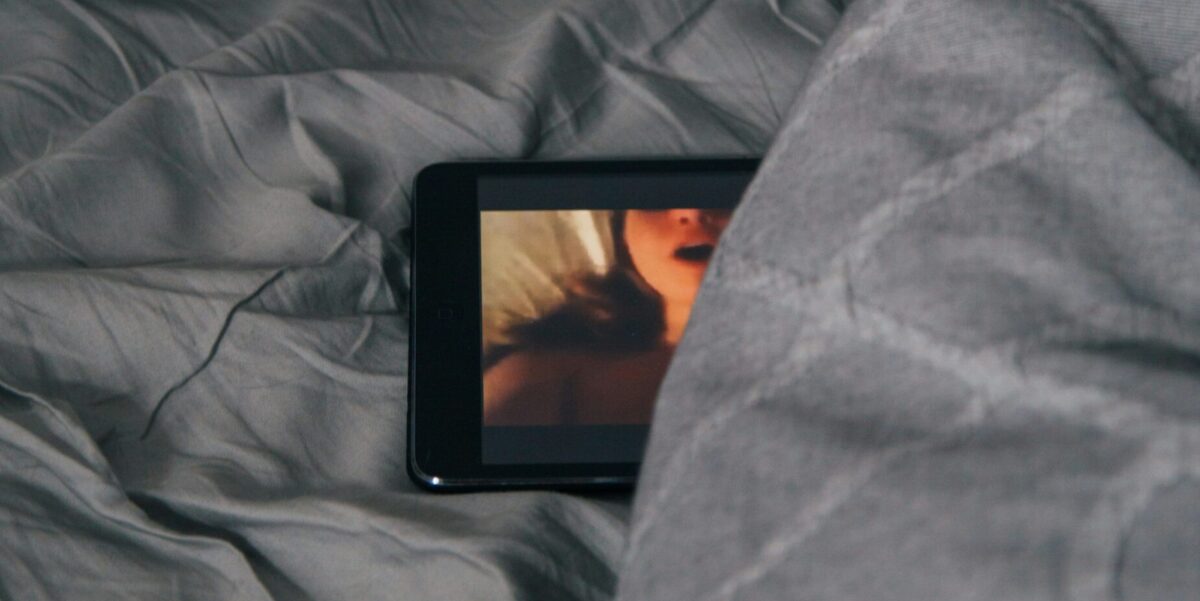
Ongoing discussions about online privacy often exclude this marginalized group: sex workers. Sex workers can be seen as the canary in the coal mine when it comes to data privacy. They’ve seen their rights online eroded in ways that are beginning to affect everyone else.
Non-sex workers, who are referred to as ‘civilians,’ are just now waking up to the fact that Meta and other platforms are overreaching in our online lives. But some sex workers have been sounding the alarm on this for years, seemingly to no avail.
The online crackdown of sex work can be traced back to SESTA/FOSTA in the United States. The Stop Enabling Sex Traffickers Act (SESTA) and Fight Online Sex Trafficking Act (FOSTA) Acts were signed into law by President Donald Trump in 2018. As the name suggests, the act was meant to keep vulnerable populations from falling victim to human trafficking. The act led to the shuttering of several sex worker friendly sites like BackPage and listings on Craig’s List. It was, and still is, heavily criticized by many sex workers.
“I started right when SESTA/FOSTA was being passed in the US,” said Nyla, a sex worker from Toronto. “Back Page, the main advertising platform for sex workers, was shut down. Online platforms for sex workers were being like completely snapped out [of existence] and that changed work for everyone. It became harder to advertise. So, at the time when I got in there, it was during this transition.”
The act’s passing also forced many websites to ‘censor’ sexual content, which further pushed sex workers out of the online realm.
“Accounts are being suspended, which means you lose your followers, you lose your history, your colleague connections and conversations, and it’s harder to network with other workers,” she continued. Her own X account was suspended, with no real way to get it reinstated. It is a reality many online sex workers face.
Neveah May, a Toronto based stripper and sex worker, says that the acts forced many providers into in person sex work – the exact opposite of what it set out to accomplish.
“It’s killing avenues that feel safer for us or that allow us to hold boundaries and choose how we want to do our work,” she explained. “If you’re, say, a creator who doesn’t do show face online, you have no choice with your clients if you’re doing in-person work. For some, that’s inherently scary. That can increase that lack of safety.”
Another concern sex workers have is the push for biometric data and legal names to be tied to social media accounts. Isla Carlisle has noticed the huge difference in online privacy since she began sex work eight years ago.
“For a lot of sex workers, we don’t want our legal name, our ID, any of that connected to these accounts. I’m a face out provider, which means I show my face and all my porn. I post my face in my ads. So, I don’t want my legal name attached to this face for any reason,” she explained.
Sites like X, formerly known as Twitter, and Meta platforms also require many accounts to be ‘verified’ in order to widen their reach. But being verified comes with its own privacy concerns, Carlisle says.
“You have to show your passport or your driver’s license in order to get verified. You have to pay with your card, with your name on it, and then verify that that is you. It’s no longer even just taking a picture of yourself with your ID. There’s like software now that’s scanning your whole face in real time with your ID next to it to be sure that you’re really you,” she said.
Zeta, a Montreal based sex worker, says she has been a sex worker in some capacity for almost a decade.
“When I started, you didn’t need to use biometric data to create an account on OnlyFans, but now you do. You’re entrusting this website with your personal information, and you don’t know what kind of security practises they maintain, or if these websites are giving your information to the government,” she said.
This has become an issue with sex workers and civilians alike, since the U.S. now requires facial recognition for non-citizens upon entry.
“You don’t know if these websites are giving your information to the American government. A lot of my friends were escorts who received lifetime bans from the United States, because they go into the U.S. using biometric face scanning,” said Zeta.
In fact, all the sex workers interviewed for this article either have been directly affected trying to cross the border, or knew a colleague who wasn’t permitted to enter the U.S.
An article by Paige Backman and Corrine Kennedy of Aird & Berlis LLP described the use of biometric systems as ‘fairly untested.’ Meaning, the technology is too new for us to know its wider ramifications. One concern is what happens if that data were to end up in the wrong hands. It’s a fair question in a world where data breaches become more and more common.
“Biometric information is unique to each individual and remains relatively unchangeable. Accordingly, if a security breach results in the theft of biometric information of one individual or thousands, managing the risk of harm to such individual or individuals is not as simple as cancelling a credit card or changing a password,” said Backman and Kennedy.
“It’s almost like the test run,” said Carlisle. All the high surveillance tactics on sex workers because we’re easy to access. And then they hard launch it on civilians. Because what are you gonna do? Tell the police?”
All the sex workers interviewed agreed that the combination of surveillance, lack of privacy, and stern measures being taken against sexual content online, were all making them more vulnerable.
“It makes it harder; it makes it more dangerous. It [the internet] is really supposed to be a place of either exploration or creation. But they basically want to sell your data, right?” said Nyla. “Us internet users deserve to have privacy. I think it should be your choice whether you want to give this information out. The barrier should still be low. I don’t see why you need my ID to use something on the internet when I don’t need my ID to go to the movie theatre.”
May agreed, saying, “It is about monitoring who is actively engaging in this work. It’s a reducing of our freedoms in a very intentional way. And they ask for more things than they necessarily have to. It really is just all a tool for control.”
When asked what she would tell the government if she had the chance, May said, “I really wish that that legislators would actually allow us to build the policy and legislation. Consult us. It affects us. I’d love to see people who’ve been working in this for a long time, actually sat at the table.”
“We’re the ones who should be leading these conversations. You know, not the civilians who’ve never suck dick for money in their life.”
Support rabble today!
We’re so glad you stopped by! Thanks for consuming rabble content this year.
rabble.ca is 100% reader and donor funded, so as an avid reader of our content, we hope you will consider gifting rabble with a donation during our summer fundraiser today.

Whether it be a one-time donation or a small monthly contribution, your support is critical to keep rabble writers producing the work you’ve come to rely on as a part of a healthy media diet.
Become a rabble rouser — donate to rabble.ca today.
Nick Seebruch, editor
