
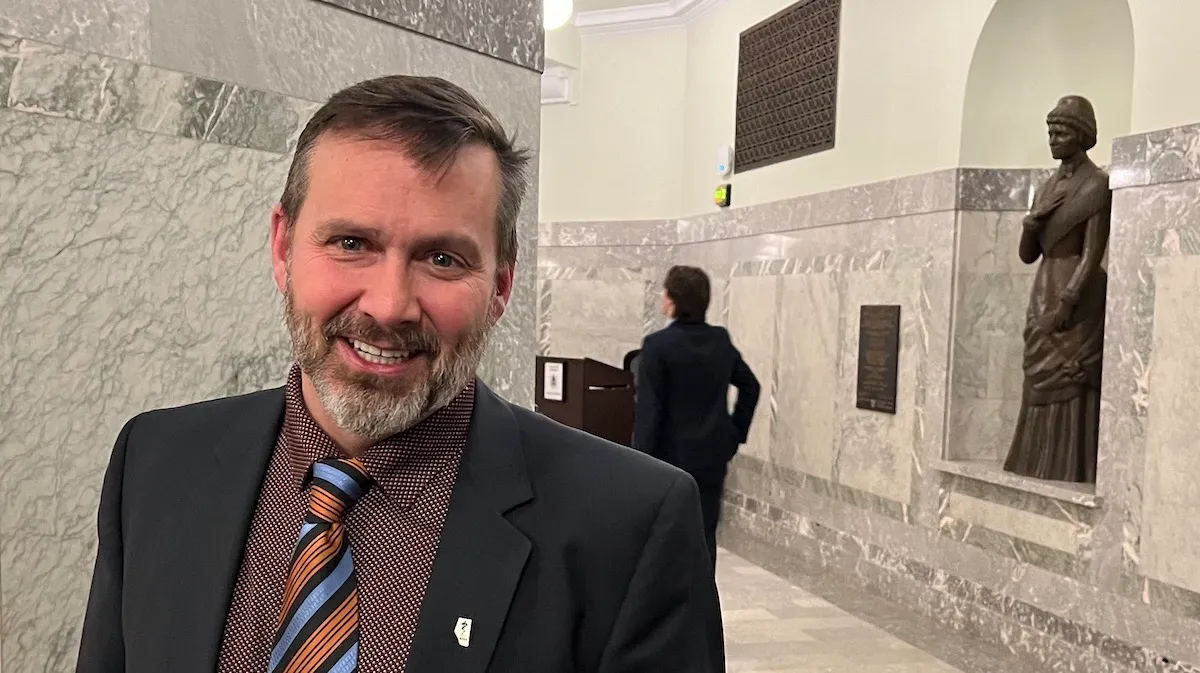
A well-known emergency medicine physician has compiled a list of six patients who died waiting for a doctor to attend to them in Alberta’s packed and chaotic Emergency Rooms over the two weeks at the end of 2025 and the start of 2026.
The list, researched by Medicine Hat ER physician Paul Parks and other doctors, also includes close to 30 “critical near misses” that could easily have resulted in additional deaths and some pithy observations about the horrific state of Alberta’s hospital ERs.
It makes distressing reading. All the more so, the former president of the Alberta Medical Association explained, because the anonymized cases listed “truly are only the tip of the iceberg as to the immense suffering that is occurring.”
Dr. Parks said he collated the list, which has now been widely distributed, “with the hopes of spurring clarity on a shared understanding of the provincial crisis we are in.”
But when his effort proved unable to move senior officials of the United Conservative Party (UCP) including Hospital and Surgical Health Services Minister Matt Jones, one of the UCP’s Gang of Four health ministers, to treat the crisis with appropriate gravity, someone leaked the list to TheBreakdownAB site on Twitter/X, which published it Sunday.
From there it spread like wildfire, and for obvious reasons the resulting headlines yesterday quickly reignited the controversy sparked by the death of Prashant Sreekuma, the 44-year Edmonton man suffering chest pain who died after waiting eight hours to see a doctor on Dec. 22 at the Grey Nuns Hospital.
Contacted by journalists, Dr. Parks confirmed he had created the list. He said on social media that while he did not provide it to The Breakdown, “I fully support whoever did, and understand why they would feel it was important to do so.”
Dr. Parks, who is also president-elect of the Alberta Medical Association’s section of emergency medicine, didn’t mince words in his comments. At one point he called ER hallways and waiting rooms “DEATH ZONES” where “we wonder how many ‘ticking time bombs’ will drop dead when they should be receiving life-saving care in a functional emergency care space.”
And talk about arguing from authority. Dr. Parks quoted a retired charge nurse aged over 100 who had to wait eight hours in Emergency to see a doctor. “She had never seen the health care system like this, including during the time before we had an actual health care system.” (Emphasis added.)
Nurses, probably more than any other medical profession, have seen it all. And a nurse who has lived for more than a century and kept her wits about her has seen even more! Still, this observation begs the question whether Alberta even has an actual health care system any more.
Government spokespeople, predictably, tried to blow off the resulting uproar.
A spokesperson for Acute Care Alberta, the new agency created by the UCP to replace Alberta Health Services’ role administering health care facilities, a move widely seen as setting the stage for privatization of hospitals, told the CBC that “sadly, deaths are not uncommon in the health system.”
“It is erroneous to suggest that all deaths are rooted in system failure,” the statement added – something that, while true, isn’t likely to be the case in the six deaths and multiple close calls cited by Dr. Parks.
Jones’s press secretary, meanwhile, hid behind privacy legislation to avoid commenting on the anonymized revelations.
And while the government has asked for a judge-led fatality inquiry into the death of Sreekumar, it seems unlikely similar inquiries will be struck for the other fatalities, let alone some kind of inquiry into the breakup of AHS by the UCP.
In truth, while it is not fully responsible for the disastrous state of health care in Alberta – which has its roots in decades of neoliberal economics everywhere in Canada and failure to plan for population growth by a succession of Alberta Conservative governments over many years – the UCP nevertheless owns this crisis because it is happening on its watch. (This is an iron law of democratic politics – just ask Rachel Notley about oil prices.)
Nevertheless, the UCP has made the crisis worse with its chaotic “refocusing” of the health care system, particularly the breakup of AHS into multiple silos – which seems to have been motivated principally by the desire of Premier Danielle Smith, who holds strong anti-vaccination views, for Trump-style revenge on the health agency for its role in public health measures during the COVID-19 pandemic.
Meanwhile, on Monday Alberta Medical Association President Brian Wirzba called for the appointment of a single “identified leader with authority to make final decisions on bed management, patient flow, surge activation and transfers across agencies and service providers.”
“Without clear authority, progress will stall when swift decisions are needed most,” Dr. Wirzba accurately said in a statement.
While unlikely to be implemented by the UCP, which is breaking up the health care system for a reason unrelated to its integrated operation – to wit, financialization and marketization of health care to drive profits not health – the sensible suggestions outlined in Dr. Wirzba’s list of priorities would be unlikely to solve this crisis on their own.
It the end, this mess is about capacity – a lack of sufficient beds and medical professionals to serve a population of five million souls. The results of the sustained negligence that led to these shortages could not be fixed overnight even if we had a government that wanted to fix them.
Support rabble today!
We’re so glad you stopped by! Thanks for consuming rabble content this year.
rabble.ca is 100% reader and donor funded, so as an avid reader of our content, we hope you will consider gifting rabble with a donation during our summer fundraiser today.
Whether it be a one-time donation or a small monthly contribution, your support is critical to keep rabble writers producing the work you’ve come to rely on as a part of a healthy media diet.
Become a rabble rouser — donate to rabble.ca today.
Nick Seebruch, editor