For over two months, no aid has been allowed into Gaza. Since Israel’s resumption of its bombing campaign in Gaza on March 18, the situation has become even more dire. Those who survive the bombing may succumb to starvation or disease.
This genocidal campaign has carried on for almost 20 months, with global mainstream media coverage waxing and waning. Yet as the world is focused on the atrocities in Gaza, Israel is accelerating their project of ethnic cleansing and annexation in the West Bank.
Since October 2023, Israel has created increasingly difficult conditions for life in the occupied West Bank. Work permits for Palestinians to enter the 1948 boundaries of the State of Israel have been cancelled. Those who previously held jobs like construction and fruit picking in the area have lost a key source of income, one that tends to be significantly higher than salaries in Palestine. Further blocking their ability to work, Israel has installed countless new checkpoints and gates in the West Bank, bringing the number of checkpoints to almost 900.
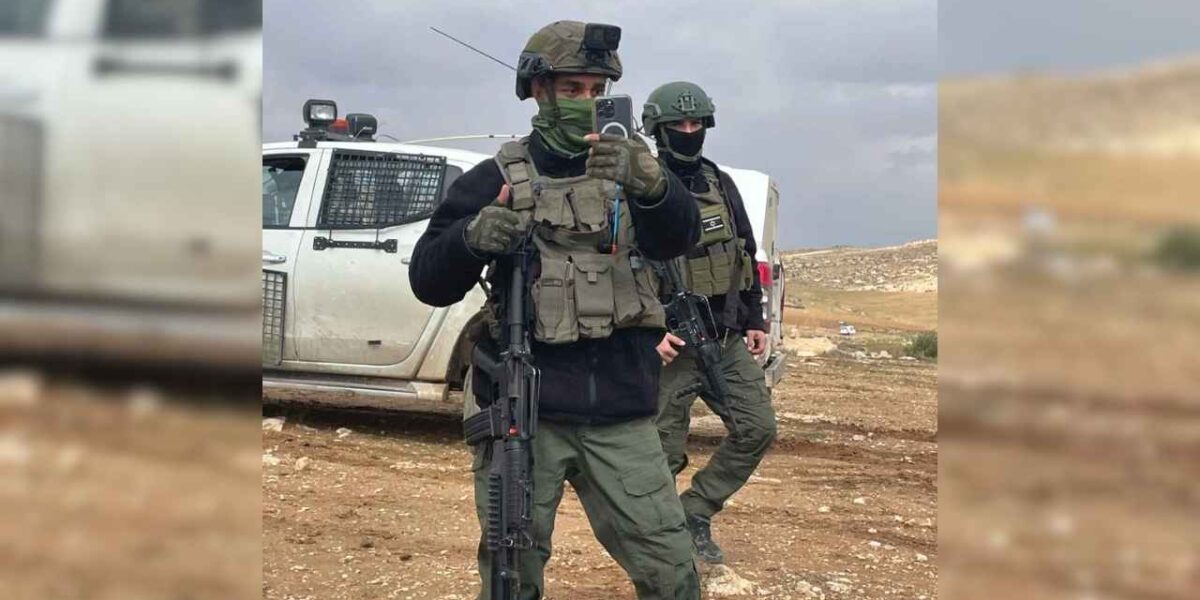
But Palestinians in the West Bank are not even safe remaining in their homes or in their own villages, now that Israel has drafted extremist settlers in the West Bank into the army and provided them with weapons and other equipment such as tractors. For the past 20 months, movement in the West Bank has come to almost a stand still. Those who must risk the drive to go to the market to buy and sell food, or even attend school, risk long waits at checkpoints, arrest, vehicle seizures, and even physical violence.
Ahmad, a young activist from Hebron, lives in Jenin. Though less than 100 miles away from each other, he has been stranded in the north of the West Bank since Israel began an intensive military operation in the region in January 2025 called Operation Iron Wall.
This military campaign has targeted the cities of Jenin and Tulkarm heavily, as well as Tubas and Nablus. As Israel primarily targets refugee camps, formed after the 1948 Nakba, hundreds of Palestinians have been killed and over 40,000 have been displaced, some for the second time. And yet, as this mass displacement occurs, movement around the West Bank is still more dangerous than ever. Ahmad has not been able to return home to Hebron, nor could I safely make the trek to Jenin to interview him in person.
In the regions not experiencing a large-scale military invasion, Palestinians in the West Bank are experiencing an uptick in violent settler attacks. In the South Hebron Hills and the Jordan Valley, attacks have become so violent since October 7, 2023 that many villages have completely abandoned their ancestral homeland for nearby cities like Yatta and Jericho. Just this week, the villagers of Al-Mughayyir packed up their belongings and left their home due to continued settler violence. The village of Khirbet Zanuta, where residents fled after increased settler violence and threats shortly after October 7, 2023, has received Israeli Supreme Court permission to return to their village, but on the ground, state-backed settlers continue to make this return nearly impossible. Many of these settlers come from the nearby outpost that uses the façade of Meitarim Farm.
An Israeli solidarity activist providing accompaniment and documentation support to the Palestinians returning to the village is visibly frustrated when recounting the first days of this attempted return.
“The court ruling has almost made it harder for the residents,” they said.
The activist, who wishes to remain anonymous, explained the ruling. It states that only Palestinians can be inside this village and is used to detain and arrest Israeli and international activists who are there to provide support and documentation. Even some Palestinian activists from neighbouring villages were forced to leave or face arrest. Meanwhile, Jewish settlers inside Zanuta are not forced to leave.
Those who remain often face relentless harassment and violence from nearby Jewish settlers, who are often backed by the Israeli army.
In every violent attack in Masafer Yatta over three months, nearly every incident ended with a Palestinian being arrested.
This dynamic garnered worldwide outrage when shortly after receiving an Academy Award for his joint documentary, No Other Land, director Hamdan Ballal was beaten and arrested at his home. This same state-backed, settler violence is also occurring in the region of the Jordan Valley, the easternmost region of the West Bank, which neighbours Jordan and the Jordan River.
In Area C of the West Bank like the Jordan Valley and Masafer Yatta, most Palestinians live in rural farming villages where Israel has full control of security. Area C also hosts the largest number of illegal Jewish settlements and outposts. Because Israel is responsible for security and welfare of those in Area C, Palestinians often have little recourse from violent incidents except through the very state perpetuating this violence.
One Palestinian activist had to go to the Kiryat Arba settlement to file a police report about the violent attack on his family, which had caused physical harm to two Palestinians. As a Palestinian, he was required to go through a separate entrance than Israelis and internationals. Six hours later, he described being interrogated by the police about the events.
“They will not do anything,” he said.
He explained that he went anyway because he needs a record of these incidents for a lawyer supporting the villagers to bring a complaint to Israeli court. Every attack takes a physical and psychological toll, but also drains immense time from the villagers.
Sometimes it is not the people who settlers attack, but their sheep and source of livelihood. In the village of Rakiz in Masafer Yatta, a settler recently stole 30 sheep. Despite video evidence of this crime, no one has been charged. In the last two years alone, 2,000 sheep have been stolen from the Jordan Valley village of Ras Al-auja. For most of these villagers, sheep and goats are their source of income, not only for dairy products and meat, but also the ability to sell the sheep for additional income. For those raising livestock in these regions, taking their animals out regularly to feed on the land is vital for survival.
Those blocked from their land must resort to buying expensive animal feed, until this becomes untenable and they must leave. This has been the case for over a dozen villages in the region since October 7, 2023. Recently, the village of Umm el-Jimal was ethnically cleansed and in May, 2025, the village of Mughayyir al-Deir also fled.
Also spurring this ethnic cleansing in the West Bank are home demolitions. Often undertaken as official state policy by Israel, including demolitions in Jenin and the surrounding area as part of Operation Iron Wall, tens of thousands have been left homeless in the West Bank.
At the start of May, the Masafer Yatta village of Khallet-A-Dabaa was entirely demolished. One hundred residents were left homeless and barred by Israel from rebuilding. Like images from Gaza where families are forced to walk long distances with whatever belonging they can carry, these scenes are occurring up and down the West Bank as villagers seek to find some place that can offer them physical and financial security.
Some refuse to move, building tents next door or even on top of the rubble. For many, even home demolitions and daily violence will not force them off their land. Alaa Hathaleen’s home in the Masafer Yatta village of Um Al Kheir was demolished this Spring. Still, he assures all who will listen that he will not leave his land. Since this demolition, Alaa has experienced settler and army violence in his village, even sending him to the hospital once. Still, he believes that one day, there will be a Palestine free of occupation. This hope can be hard to muster after a particularly devastating day for these communities, but it helps them remain steadfast in the face of so much injustice.
In Area A of the West Bank, a designation reserved for cities, the Palestinian Authority governs the area. Within these city boundaries, there is often reprieve from the Israeli soldiers and settlers. Rarely, except during moments such as Operation Iron Wall, do Israelis of any background enter these areas. Indeed. It is illegal for an Israeli to be within Area A. Despite these cities being mostly free of Israel and its state, the Palestinian Authority often works in conjunction with the State of Israel to snuff out dissent and resistance within Palestinian cities. Additionally, with increases in checkpoints around cities like Bethlehem and Ramallah, which open and close at Israeli whim, movement beyond cities is time consuming and dangerous.
In places like Bethlehem and Hebron, movement in and out is severely restricted, both by the separation wall and checkpoints. As a city largely dependent on tourism, Bethlehem faces a different form of starvation. As tourism has come to a near standstill, shops, hotels, and transportation services have been forced to shutter their doors.
“[The genocide in] Gaza has stopped people from visiting Bethlehem, even during Christmas and Easter. I can barely buy gas [for my car] or chicken [for my family]. Most nights we eat bread for dinner,” Abu Tarek, a local worker and resident explained.
As bombs continue to reign down on Gaza, another form of ethnic cleansing is happening in tandem. Not only are homes and lives being destroyed by Israel and its state agents, but violence and death is a regular part of life. Many who do not succumb to the bullets or beatings from soldiers and settlers. Particularly for Palestinian men in the West Bank, even children are seen as threats and killed. In the Occupied Palestinian Territories, 40 per cent of males can expect to experience incarceration in their lifetime. Women’s rates are 20 per cent, or one out of every five women. With violent, fascist settlers citing Donald Trump for their renewed zeal, Israel is more than happy to ethnically cleanse and annex the West Bank alongside Gaza.
Support rabble today!
We’re so glad you stopped by! Thanks for consuming rabble content this year.
rabble.ca is 100% reader and donor funded, so as an avid reader of our content, we hope you will consider gifting rabble with a donation during our summer fundraiser today.
Whether it be a one-time donation or a small monthly contribution, your support is critical to keep rabble writers producing the work you’ve come to rely on as a part of a healthy media diet.
Become a rabble rouser — donate to rabble.ca today.
Nick Seebruch, editor