The second installment of the series examining the use of the notwithstanding clause across Canada takes an in‑depth look at how Canada’s western provinces have applied it in relation to 2SLGBTQIA+ rights.
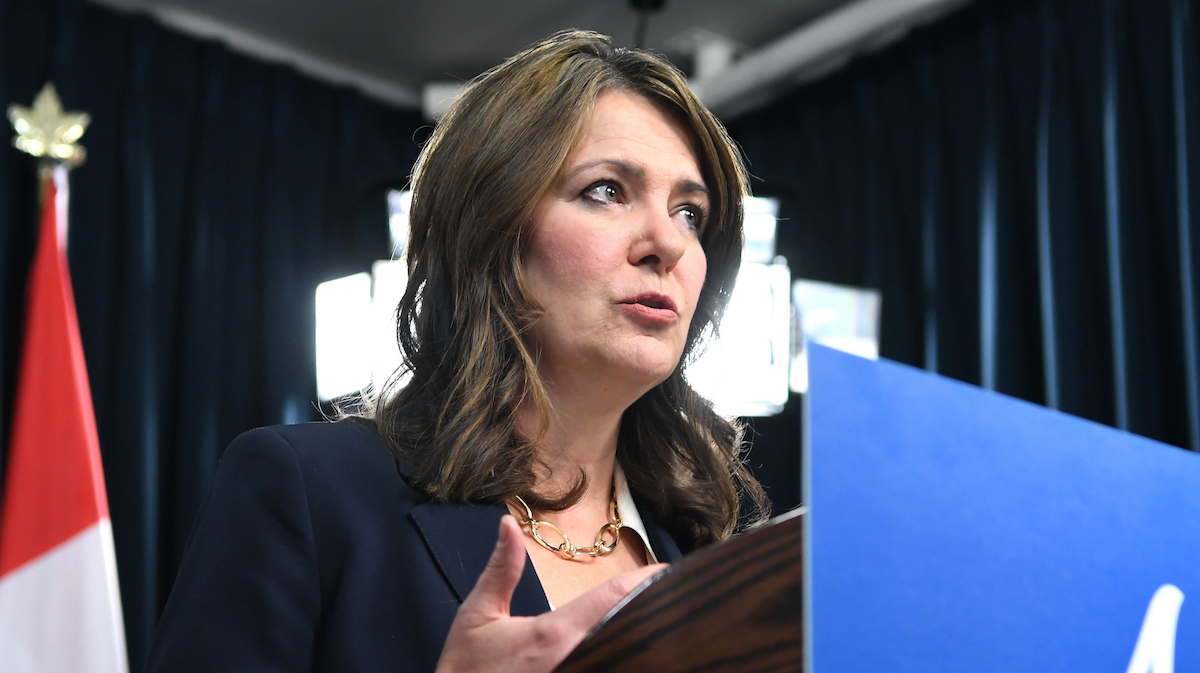
Toward the end of 2025, Alberta’s government, led by Premier Danielle Smith, introduced Bill 9, a piece of legislation designed to shield Bills 26, 27, and 29 from court challenges related to transgender rights.
Bills 26, 27, and 29 restrict access to gender-affirming health care for individuals under 16, ban transgender girls from participating in female sports, and require parental consent for the use of a young person’s chosen pronouns in educational settings.
Similarly, Saskatchewan, in 2023, invoked the notwithstanding clause to pass Bill 137, which requires teachers to obtain parental consent before referring to a student by their preferred pronouns, name, or gender identity if they are under the age of 16.
The concerns of activists
While Premiere Smith has framed the legislation as designed to “protect children” from making consequential decisions at too young of an age, this legislation, along with the government’s use of the notwithstanding clause to enact it, has sparked outrage among activists who fear its consequences for transgender and gender-diverse youth, as well as for the broader health of Canadian democracy.
Aaden Pearson, the trans rights legal fellow with the Canadian Civil Liberties Association, has argued that legislation emerging from both provinces, particularly Alberta, violates Section 15 of the Charter of Rights and Freedoms, which guarantees equality before and under the law without discrimination based on characteristics such as race, sex, gender, religion, and others.
Pearson explains that the gender-affirming health care typically available to transgender youth includes puberty blockers and hormone therapy, not surgical interventions, and that these same treatments are occasionally prescribed to cisgender youth for a range of medical reasons. Under the new legislation in Alberta, however, access to these options is denied to transgender youth specifically.
Pearson adds that the legislation in both Saskatchewan and Alberta is potentially in contravention of Section 7 of the Charter as well, which guarantees the right to life, liberty, and security of the person.
“Transgender people are being denied access to the healthcare they need. This leads to worse mental health outcomes, suicide, and depression,” said Fae Johnstone, the executive director of Queer Momentum in an interview with rabble.ca
Johnstone states that the care transgender youth receive is in consultation with doctors, mental health workers, and families to decide which course of action is best for a particular individual and that removing the ability from youth to access it harms children and takes power away from parents rather than protects them.
Studies by the Stanford University School of Medicine found that those who had access to gender-affirming health care in their youth had better mental health outcomes, were less likely to have suicidal ideations, and were less likely to engage in substance abuse.
Furthermore, there are concerns that requiring parental consent for individuals under 16 to use preferred pronouns in an educational setting could result in “forced outings,” said Pearson, which could negatively impact transgender children who are not in accepting homes.
The opposition of workers to this legislation
In addition to the concerns expressed by activists, medical and teachers’ associations have also voiced their disapproval of this legislation.
The Canadian Medical Association released a statement on Bill 26, the legislation banning gender-affirming care for trans youth, calling it: “an unprecedented government intrusion into the physician-patient relationship that requires doctors to disregard clinical guidelines, the needs of patients, and their own conscience.”
Additionally, the Alberta Teachers’ Association released a statement about Bill 27, the legislation requiring parental consent for pronoun changes, saying:
“These laws inhibit the ability of schools to provide safe, welcoming, caring, and respectful learning environments and will have a chilling effect on schools by reducing the opportunities for all students to learn about diverse families and identities.”
Similarly, dozens of teachers in Saskatchewan signed a petition stating they would not follow Bill 137, the pronoun law, because they felt it was harmful to their transgender students and would force them to be outed.
The increase in use of the notwithstanding clause and the impact on democracy
Though sparingly used, Canada’s western provinces have historically supported the notwithstanding clause’s inclusion in the Charter. It has been seen as a tool to protect provincial autonomy and legislative authority, driven by concerns that Ottawa does not fully reflect or align with their interests.
However, over the last two years, its use in these provinces has increased substantially.
Alberta had invoked the notwithstanding clause one time between in 2000 with regard to same-sex marriage. However, the invocation of the clause was deemed illegitimate because marriage is under federal jurisdiction.
In 2025, Alberta used the notwithstanding clause four times in just a single month to shield legislation concerning workers’ rights and 2SLGBTQIA+ rights from court challenges.
This sharp increase has raised concerns among activists.
“There is an increase in comfort we’re seeing from governments using the notwithstanding clause to target minorities… Normalizing the use of the notwithstanding clause to protect harmful legislation leads to the weakening of our democracy because we’re basically saying some people have rights and some don’t. It signals a government that is willing to place entire communities outside the protection of the Charter,” said Pearson.
The use of the notwithstanding clause with regard to 2SLGBTQIA+ rights “makes it easier for governments to do it again to other communities. This is a means to an end to erode checks and balances and impose ideology,” said Johnstone.
What the future holds for 2SLGBTQIA+ activism
With little room for judicial recourse available, 2SLGBTQIA+ activists are turning towards the political sphere to advance their cause.
Fae Johnstone states she wants to “change the hearts and minds” of the public and get people to view the legislation passed by Danielle Smith’s government as “anti-freedom.”
“This is not about trans people. It is an excuse to weaken rights… It is nobody’s business what healthcare you are using. Politicians shouldn’t tell you what care you should and should not access,” said Johnstone.
Johnstone notes that 2SLGBTQIA+ activists cannot effectively advocate for their cause alone.
“It is time for allies to open their chequebooks and contribute to queer advocacy efforts… allies need to be in the streets supporting us. We are less than one per cent of the population”, said Johnstone.
However, during a period of crackdown on 2SLGBTQIA+ rights, Johnstone remains hopeful for the future.
“The legacy of our movement is the government stigmatizing our rights, but we have still made progress. It is a scary moment, but we will find ways to build a better future,” said Johnstone.
“My agenda is happy and healthy kids who grow up to be happy and healthy adults,” Johnstone added.
Support rabble today!
We’re so glad you stopped by! Thanks for consuming rabble content this year.
rabble.ca is 100% reader and donor funded, so as an avid reader of our content, we hope you will consider gifting rabble with a donation during our summer fundraiser today.
Whether it be a one-time donation or a small monthly contribution, your support is critical to keep rabble writers producing the work you’ve come to rely on as a part of a healthy media diet.
Become a rabble rouser — donate to rabble.ca today.
Nick Seebruch, editor