
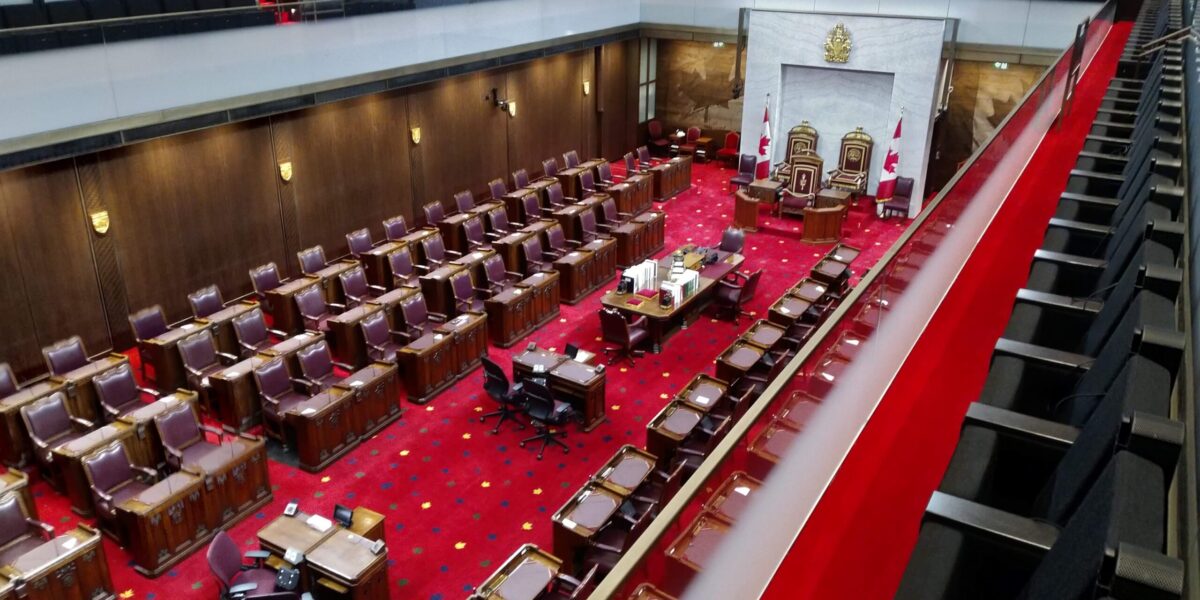
Bill C-12, an act that has been criticized by human rights groups for attacking migrants passed third reading in the Senate last week. This development was described as “devastating” by Amnesty International.
The bill contains a section which would give the government power to block new immigration applications, suspend the processing of existing ones or terminate applications if it is in the “public interest.” The Canadian Council for Refugees criticized the wording of this as being too broad and without any safeguards which could open certain groups up to discrimination. These new powers could impact all sorts of immigration applications, including work permits.
Ontario childcare worker Mehak Kapoor, president of local 5575 of the Canadian Union of Public Employees (CUPE 5575), is calling out how cuts to immigration are hurting the workforce. An immigrant herself, Kapoor has been put in a position where she had to quit her job and prepare to leave Canada after her work permit expired on March 16.
Even before Bill C-12, immigrants were forced into uncertainty in 2024 when the government announced an Immigration Levels Plan that aimed to reduce the population of immigrants.
The union is calling out the government’s past changes to immigration policy for creating conditions where many people have had to leave jobs where they perform valued labour. Kapoor’s workplace, the Learning Enrichment Foundation in Toronto, is one example of how immigration uncertainty affects child care. CUPE said about 20 per cent of the workforce at the foundation are migrant workers on temporary work permits that expire this year. The union also highlighted that the child care sector across Canada relies on migrant labour.
Child care in Canada has allowed more parents, and specifically mothers, to participate in the workforce. But now, child care centres are seeing their workforce wither.
CUPE 2484 President Jess Tomas highlighted that qualified child care workers are being forced to leave due to changes in Canada’s immigration policy.
“We’re so low-staffed. We’re not able to take sick days. We’re not able to take vacation days. And yet these qualified folks who have come here are being sent back,” Tomas said. “And guess what? In five years, they’re going to lure another cohort over here. And we will have another invisible immigrant and migrant workforce that has been used up and spit back out.”
LISTEN: Gabriel Allahdua on Canada’s migrant rights track record
Beyond the impact on the workload for the people left behind, Kapoor said the immigration uncertainty will have an impact on the children who build relationships with childcare providers.
“When you work with children, relationships matter. Children trust their educator. Families trust the people caring for their children,” she said. “It’s so heartbreaking because I don’t want to leave my kids. It’s them saying their first words, them taking their first steps, or them learning my name and calling my name, or when they come in and see me and run for a hug.”
As Bill C-12 inches closer to becoming law, the impact on migrants is sure to compound with the effects of the Immigration Levels Plan. At CUPE Ontario’s annual conference for social service workers, Kapoor and Tomas urged their colleagues in the union to step up for migrant workers. Kapoor said the union was important for her because it provided support and a voice. She added that the work to build solidarity with migrant workers must continue.
“We need to recognize that the people who are working on temporary permit are workers first. Labour rights, workplace protection, and dignity should never depend on somebody’s immigration status,” she said. “We need clear and fair pathways to permanent residency, especially for workers in essential sectors like child care or social services. If someone studies here, works here, and contributes to the community, they should have real opportunity to stay.”
Support rabble today!
We’re so glad you stopped by! Thanks for consuming rabble content this year.
rabble.ca is 100% reader and donor funded, so as an avid reader of our content, we hope you will consider gifting rabble with a donation during our summer fundraiser today.
Whether it be a one-time donation or a small monthly contribution, your support is critical to keep rabble writers producing the work you’ve come to rely on as a part of a healthy media diet.
Become a rabble rouser — donate to rabble.ca today.
Nick Seebruch, editor