
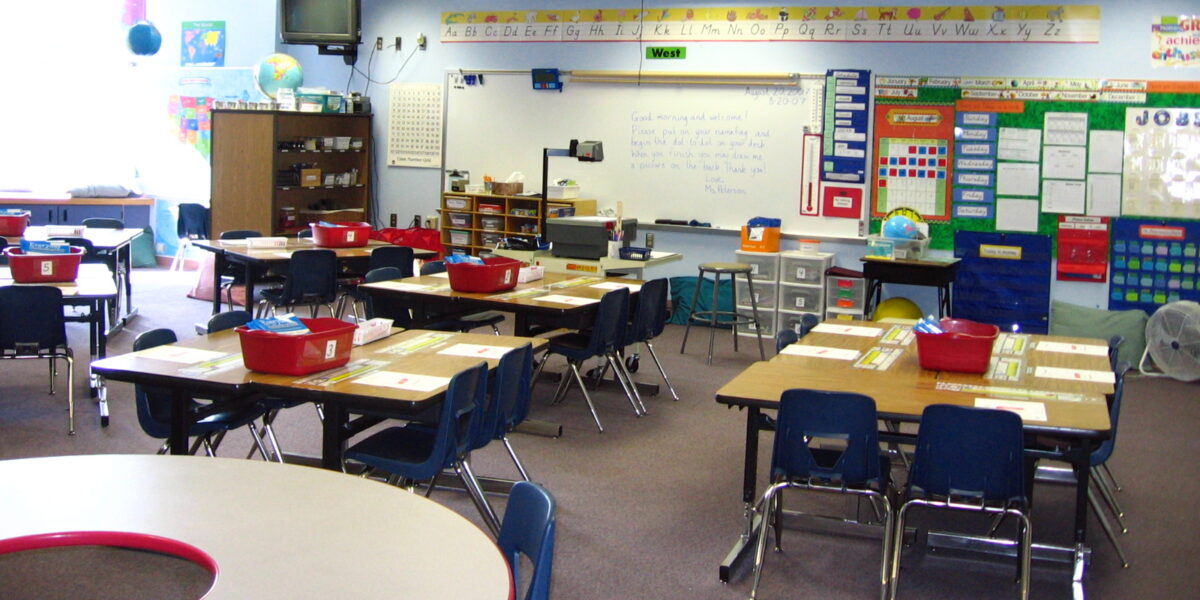
The crisis of violence in schools has increased dramatically. In one year, 80 per cent of educators and education sector workers will experience at least one act or threat of physical violence. More than 80 per cent will experience harassment, according to University of Ottawa professor of psychology, Darcy Santor.
“School is unsafe. It’s unsafe for educators, for education sector workers, for a good number of children who witness instances of violence and harassment not only against each other, but towards the teachers who are responsible for teaching them and keeping them safe,” Santor said at a national panel on school violence on Tuesday. “This is a canary in the coal mine moment when things need to change. They’re only getting worse.”
For leaders in the education field, the eroding safety at schools can be attributed to underfunding of the education system but also lacking support for students during a time of increased instability and economic hardship. In a national panel convened by the Canadian Teachers’ Federation (CTF), educators shared their experiences and highlighted the growing complexity of student needs.
“We know that families are struggling. We know that they have less resources to provide to their kids,” said Sherry-Ann Bowen-Gordon, Provincial Executive Officer of the Ontario Secondary School Teachers’ Federation (OSSTF). “We don’t know what some of these individual kids are going through. We don’t know when a kid has come to school without breakfast. We don’t know when a kid has gone to bed without dinner.”
Bowen-Gordon said the struggles children and families are facing points to problems within the school but also in the surrounding community. While it is true that public education is underfunded, Bowen-Gordon also highlighted the lack of funding for healthcare and social services.
“Educators now are expected to manage trauma, they’re expected to manage mental health, they’re expected to manage complex social challenges, along with everything else that we have to do,” she said.
In response to the increasing violence in schools, the CTF is reinforcing their call to improve teachers’ working conditions. The federation highlighted that workers and students need a maximum teacher-student ratio and a minimum percentage of GDP going towards the provinces for K-12 education.
At the same time, improvement to school conditions will also depend on investment into students’ needs holistically. CTF is also calling for the creation of a federally funded support program for special needs students and a federal transfer similar to the Canadian Health Transfer intended to specifically address mental health.
Abacus Data, on behalf of CTF, polled Canadians’ response to these proposed policy changes and found that more than half of Canadians are supportive. While education is handled by provinces and territories, 77 per cent of Canadians said they believe the federal government has a role.
Norberta Heinrichs, president of the British Columbia School Counsellors’ Association, said if the federal government were to get involved, it is important that provinces use funding to benefit students. A study done by the Fraser Institute in the summer of 2025 showed that there is a funding gap of almost $6,000 per student between Quebec, which spends the most per student in public school, and Alberta, which spends the least.
“We’re working with the vulnerable sector,” Heinrichs said. “That requires us to have the resources and the ability to address the situation of violence and aggression at schools.”
Clint Johnston, president of the CTF, said he hopes people will understand the policy proposals from teachers are not about money, they are about serving the needs of students.
“We’re not actually asking for anything,” he said. “We are conveying the message from children who are showing us every day that they do not have enough.”
Support rabble today!
We’re so glad you stopped by! Thanks for consuming rabble content this year.
rabble.ca is 100% reader and donor funded, so as an avid reader of our content, we hope you will consider gifting rabble with a donation during our summer fundraiser today.
Whether it be a one-time donation or a small monthly contribution, your support is critical to keep rabble writers producing the work you’ve come to rely on as a part of a healthy media diet.
Become a rabble rouser — donate to rabble.ca today.
Nick Seebruch, editor