

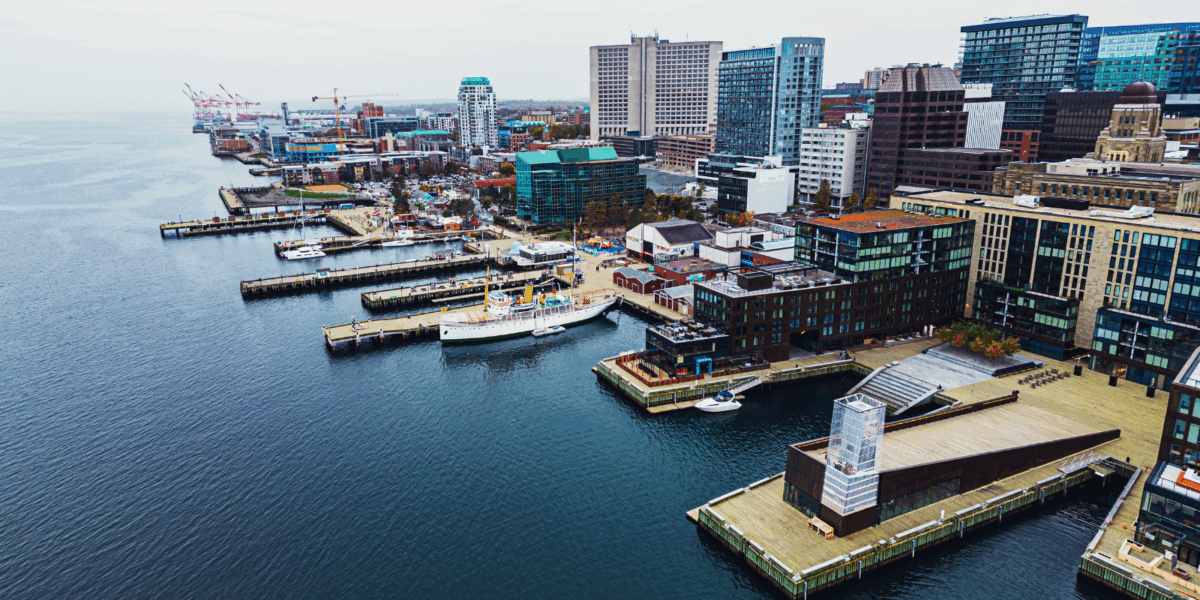
For over 250 years, Halifax, NS has been a vital port city—the largest on Canada’s east coast and a key transit point for weapons shipments, including those to Israel.
Among the cargo the city welcomes is ZIM Integrated Shipping Services Ltd., an Israeli international shipping company that facilitates trade to and from Israel.
The shipping company has faced growing international scrutiny and legal action for facilitating arms shipments to Israel.
In May 2024, Peace Action and the International Peace Information Service (IPIS) revealed that ZIM had transported as much as 246 tons of munitions from Hamburg through the port of Antwerp. This led to a group of human rights organizations to file a criminal complaint against ZIM for alleged violations of Belgium’s Arms Trade Decree.
Hans Lammerant, researcher from the group Vredesactie (Peace Action), says ZIM was transporting munitions without any transit licenses, leading to legal action.
“We noticed there were munitions on the ZIM vessels, while there were no transit licenses asked, and on that basis we made a complaint and a criminal investigation has been started,” said Lammerant.
Customs data are considered confidential in Europe, but Lammerant and his team were able to obtain information by using environmental disclosure laws.
“We asked for the dangerous goods on the ships, which is considered environmental information — that can include chemicals, but also munitions,” Lammerant said.
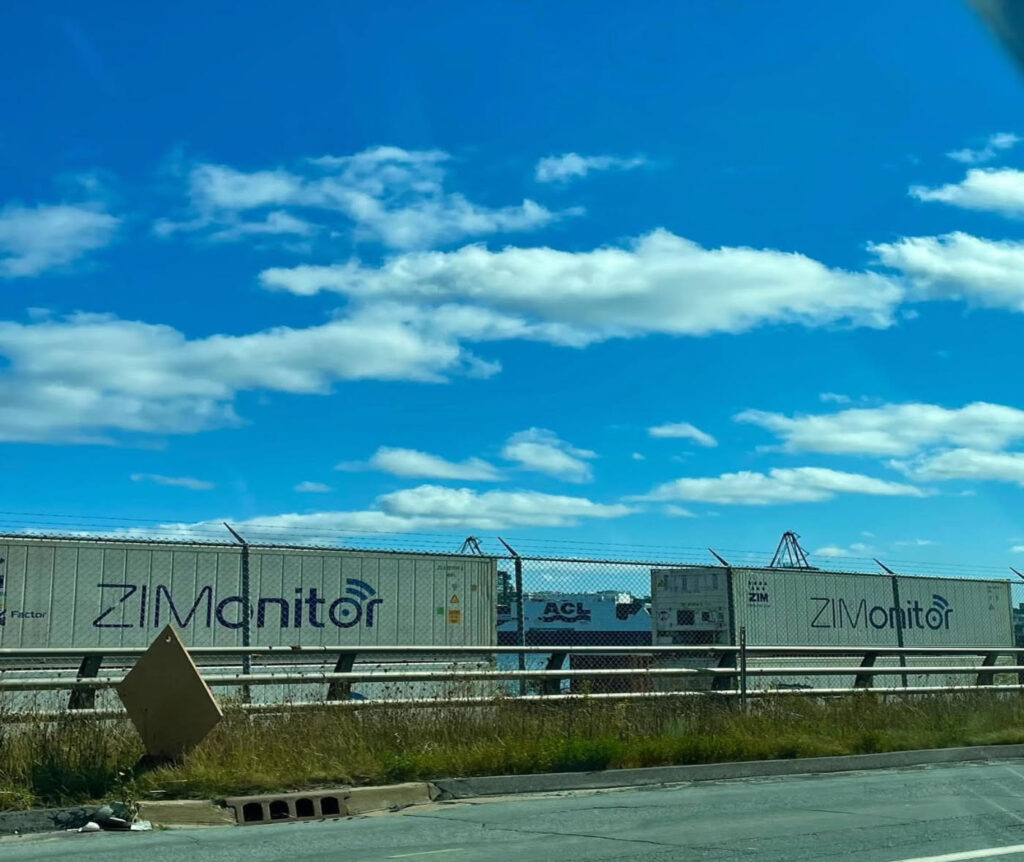
Pro-Palestine activists have organized blockades at ports where ZIM operates, aiming to disrupt its supply routes.
Lammerant notes that since the investigation began, ZIM has not been docking at the port anymore.
“What we noticed in follow-up information is that ZIM doesn’t do the transit anymore; it’s probably clear that if they continue, they risk confiscation of the goods,” he said.
Lammerant said records show the ships were carrying different types of hazardous items.
“What we saw was likely small arms munitions and also detonators, which can be [used] for artillery munitions,” he said. “For example, with the airplanes, we also saw components for F-35s and F-16s — detonators to make sure the bombs can drop.”
In October 2023, as the genocide in Gaza intensified, ZIM CEO Eli Glickman openly declared ZIM’s support for Israel’s military operations in Gaza. He announced that ZIM would dedicate all its ships and infrastructure to Israel’s use — reaffirming the company’s direct role in the Palestinian genocide.
Lammerant said the continued shipment of weapons to Israel raises serious legal and ethical concerns.
“Sending munitions to Israel with the war in Gaza going on, and what’s happening in the occupied territories — what would they otherwise need all that munitions for? It can’t be just to put it in stock,” he said. “From a legal point of view, the concern is the risk that it’s going to be used in war crimes. There is enough happening.”
He said sanctions are a necessary step in stopping the flow of munitions.
“As an organization, we support BDS,” he said. “Sanctions would be a very logical step — just like sanctions against Russia. I don’t see why they wouldn’t do the same with Israel.”
ICJ’s landmark ruling on Israel’s occupation of Palestine
On July 19, 2024, the International Court of Justice (ICJ) issued an advisory opinion declaring Israel’s presence in the occupied Palestinian territories (OPT) unlawful and calling for its immediate stop. The ICJ affirmed that Israel’s continued occupation of the West Bank, East Jerusalem, and Gaza is illegal under international law.
The ICJ also ruled that countries like Canada have a legal obligation to take action in ending Israel’s unlawful occupation. The ICJ determined that countries, including Canada, must regulate their economic relations with Israel in a way that does not support or sustain its illegal presence in the Occupied Palestinian Territories (OPT).
This ruling directly challenges the Canada-Israel Free Trade Agreement.
The Canada-Israel Free Trade Agreement is unique in that it extends to the Occupied Palestinian Territories; however, Palestinians are not party to that deal.
In 2024, Canada’s military exports to Israel reached a record $30.6 million.
Despite Foreign Affairs Minister Mélanie Joly’s announcement in January 2024 that new export permits would be paused, significant gaps allow the continued flow of weapons, including nearly $95 million in active permits for explosives set to be transported to Israel by the end of 2025.
Under the Special Economic Measures Act, Canada must call for a two-way arms embargo.
Local impacts of the global arms trade
Global arms trade not only fuels wars abroad but also reinforces colonial violence locally.
The defence industry in Canada has long raised concerns over violations of Indigenous sovereignty — from weapons testing on Indigenous lands, to the extraction of critical minerals and other forms of land exploitation, along with the violent suppression of Indigenous land defenders resisting projects like the Coastal GasLink pipeline.
Saint Mary’s University social justice and community studies professor Neil Balan said the Atlantic Canadian region plays an important role in the transportation of weapons and the broader military-industrial complex.
“We talk about what gets funded and what doesn’t, how land use is designated, and how lands are industrialized,” Balan said. “The ongoing role of this city (Halifax) in particular, and the Atlantic Canadian region more broadly, is tied to facilitating and servicing industries that directly or indirectly benefit from corporate militarism, the arms trade, and the defense and security sectors.”
The Port of Halifax is a key player in fueling the genocide of the Palestinian people, acting as the first inbound and last outbound major port of call on the continent, as well as one of Canada’s top four container ports in terms of cargo volume.
“If you just look on what’s on the waterfront in a city like Halifax, where you see military bases, the Irving shipyard, the Defence and Research Canada, and you look at the companies that are in the city, like Lockheed Martin, you really see that this is a city that is built on corporate militarism, in particular because it’s a big port city in the Atlantic Seaport,” Balan said.
“I think all of those things are connected to the same companies that are tied into what’s happening in Palestine,” he added.
The responsibility of labour unions to get involved
Labour unions have a significant impact on the global supply chain, particularly when it comes to the movement of military goods.
While unions hold considerable influence, Balan said that too often they view the genocide of Palestinians as an issue too controversial to take a stand on.
Balan said, however, that shouldn’t be the case.
“I don’t know how opposing a settler-colonial apartheid state that’s been doing a genocide and war crimes and crimes against humanity for 80 years is radical. That shouldn’t be radical,” said Balan.
The Port of Halifax’s involvement in the transit and facilitation of military goods remains a key factor in fueling the ongoing Palestinian genocide.
Despite some unions continued complicity in the Palestinian genocide, others have taken a stand.
Unions including the Canadian Union of Postal Workers (CUPW), the Canadian Association of Professional Employees (CAPE), and the Canadian Union of Public Employees (CUPE-ON) Ontario have endorsed the Boycott, Divestment, Sanctions (BDS) campaign.
Everett Thompson, a steering committee member of Labour for Palestine in K’jipuktuk/ Halifax, said the fight for labour rights is deeply connected to the fight for workers rights globally.
“An injury to one is an injury to all,” said Thompson. “Our tax dollars are still funding the genocide of Indigenous peoples from Turtle Island to Palestine, and with Canada being one of Israel’s strongest military, political and economic allies, the fight for workers’ rights here must be connected to the fight for freedom of all workers in Gaza and around the world.”
Labour for Palestine is a cross-country network of labour and union members and organizers who call on Canadian labour to oppose Israel’s apartheid regime and the military-industrial ties that enable it. The group advocates for direct actions like arms embargoes, divestment from Israeli institutions, and work to halt the flow of weapons through Canadian ports.
READ MORE: Vote Palestine platform aims to put Gaza on the ballot
Thompson said applying economic pressure through organized labour action is essential to interrupt the ongoing transfer of weapons to Israel.
“Dockworkers and trade unions played a key role in the Anti-Apartheid movement in 1970s South Africa. Workers today can apply similar economic pressure by building the resistance needed for a total refusal to handle hot cargo, which would include arms shipments and any goods being manufactured or transferred to and from Israel,” they said.
Thompson said, everyday actions in the fight for justice can lead to long term change.
“Sometimes our daily actions have the most impact, long-term,” they said. “Union members can continue speaking out, having conversations with our coworkers, building networks of mutual aid and cross-movement solidarity. One of the best tools at our disposal is the withdrawal of labour, and it’s crucial that unions keep Palestine on the agenda as a labour issue.”
Support rabble today!
We’re so glad you stopped by! Thanks for consuming rabble content this year.
rabble.ca is 100% reader and donor funded, so as an avid reader of our content, we hope you will consider gifting rabble with a donation during our summer fundraiser today.
Whether it be a one-time donation or a small monthly contribution, your support is critical to keep rabble writers producing the work you’ve come to rely on as a part of a healthy media diet.
Become a rabble rouser — donate to rabble.ca today.
Nick Seebruch, editor