
Each year, we here at rabble ask our readers: “What are the organizations that inspire you? Who are the people leading progressive change? Who are the rabble rousers to watch?” Every year, your responses introduce us to a new group of inspiring activists. This is our ‘rabble rousers to watch’ series. Follow our rabble rousers to watch here.
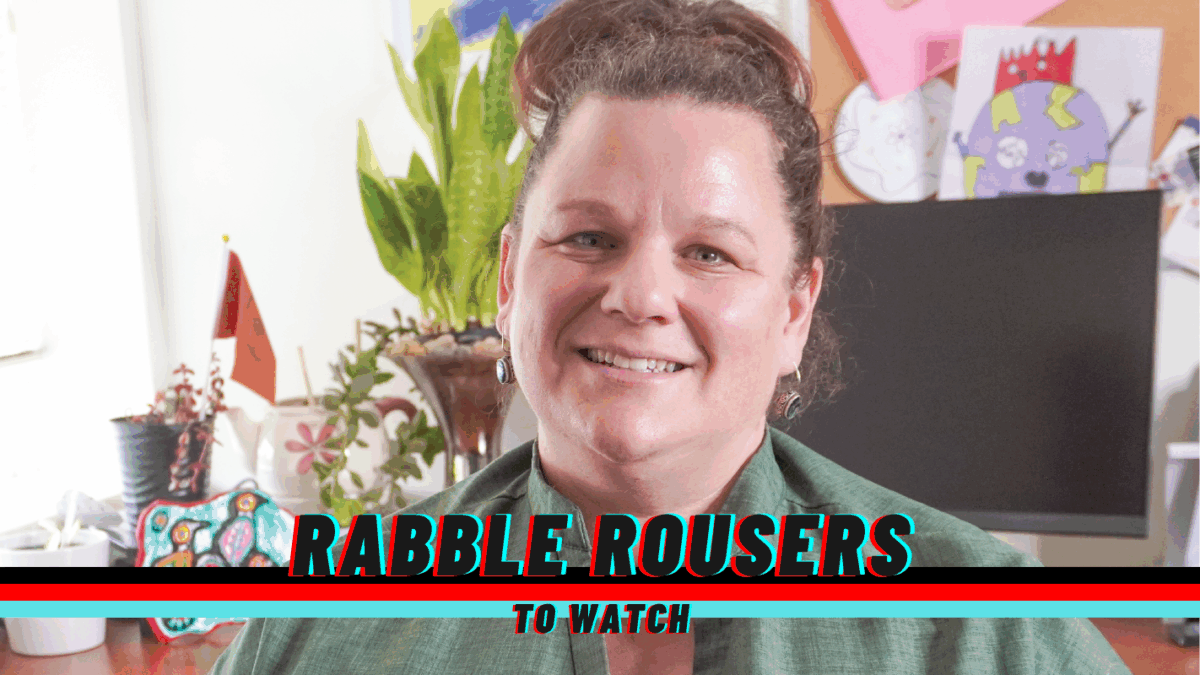
The next individual on our ‘rabble rousers to watch’ list of 2025 is Juliette Labossiere.
Juliette Labossiere is the executive director of United Way Centraide Stormont, Dundas and Glengarry, where she plays a vital role in addressing housing, food security, and mental health challenges in her region.
rabble.ca spoke with Labossiere about her efforts to build partnerships, advocate for systemic change, and design local solutions that reflect the real needs of her community.
A conversation with Juliette Labossiere
rabble.ca: Can you tell us about the work that you’re doing with your organization?
Juliette Labossiere: The United Way Centraide Stormont, Dundas and Glengarry (UWC SDG) is a uniquely positioned organization as we do offer some direct services, but the bulk of our work is a behind the scenes role. This hidden work is our efforts to be a catalyst to change and a coordinator of local efforts to solve identified needs. This type of work necessitates we be very aware and in-tune with the true community needs and then raise awareness of those, advocate for change, and fundraise to support the organisations willing to take on the solutions to these challenges.
Our priorities of work are around housing, food security, and mental health. I, therefore, spend a great deal of my time on local committees, on provincial and national working groups, in learning opportunities to find the solutions that will fit the specific needs of our region. It is like putting the pieces of a puzzle together, where you have an idea what the end result will be, but no roadmap on how to get there.
What comes of this puzzle work… things like the Last Resort Program, a fund that I designed that addresses and fills gaps for people in precarious financial situations or experiencing unforeseen crises that may affect their ability to be safely housed. It provides individuals with a one-time helping hand, in the form of a grant or a low-interest loan, to ensure individuals and families can access or remain in stable and safe housing. We pay things like mortgage or rent arrears, first and last month’s rent, moving costs, etc. Last year alone 304 families utilized this program, of those 14 individuals were completely unhoused prior to accessing this program, and 66 families accessed permanent housing they could sustain thanks to assistance with first and last month’s rent. Can you imagine, we developed a program that has an annual cost similar to an average market-priced single-family home, and yet for that cost we housed hundreds of families in our region.
My work at the UWC SDG also allowed me to collaborate with many community organizations to design the Stepping Stones Project, Cornwall’s first transitional housing project that is operated by the City of Cornwall. This project was designed with wrap-around supports from a variety of service providers in the region. This creates the recipe for success for many residents to transition from living rough, to a successful reintegration into stable housing.
So in short, what do I do? I learn from others, I listen to our community, I brew all of that together to design solutions that fit our communities’ needs and capacity. I am an advocate for dignity. Every solution we are creating to an issue we’ve identified should be one that we would be proud to offer to our own family members.
rabble.ca: How did you first get involved in activism?
JL: It was either my grade 4 or 5 class, in what used to be Jean XXIII school in Cornwall, that brought in the Native North American Travelling College for an activity one day. The presenters showed us some traditional dances and regalia and spoke of some of their teachings and history.
This lesson happened at a time when racism in Cornwall against our neighbouring community of Akwesasne was so palpable that even I, at a young age, could feel the anger and hatred towards ‘those people.’ I had fallen in love that day with a culture and people I had never really known before. I could not reconcile why so many adults around me would despise this beauty and richness. It was from that day on that I vowed to always take a deeper look into why certain people were ostracised, labelled a certain way, or not accepted in society.
I participated in student government and in various protests all throughout my high school and university years. I made Indigenous studies my minor at Trent University and was fortunate to work with a research group in my fourth year that assisted the community of Tyendinaga in a battle to maintain their rights to fishing.
I continue today in my work to uphold those activist values. Locally I do so with my involvement in the IDEA coalition that is motivating over 40 non-profits to dig in and do the hard work of becoming anti-oppressive service providers and work environments. Also through my work, but on a national level, having been recognized by my peers of possessing Etuaptmumk values, I co-chair United Way’s National Indigenous Sharing Circle that gives Indigenous staff and volunteers of the network a safe space to feel supported and work together to innovate the network to be more considerate and inclusive of Indigenous communities across our great land.
Also in my work, I am proud to have made the changes to the UWC SDG’s board of directors to integrate our first ever youth representatives to the board. In its second year, our board has two active youth (aged between 16-18) who advise the board on all the issues the board is discussing and how that impacts their fellow youth today and in future. In addition, these youth have launched a stream of funding specifically for youth, by youth. Our Youth Investing in Community Grants allow for any youth group, be it school, sport, or other, to apply for a small grant that will impact other youth. These youth representatives are demonstrating how activism can be attainable for anyone that has a dream about their community. Just this year, our youth representatives mobilized 162 youth to plan and execute various events that impacted another 2641 youth across our region.
In my personal life, I am proud to say that I am the aunt who brought her nieces to their first protests, their first powwows, and have encouraged my own children to volunteer in local organizations and events, as well participate in rallies and speak out at city council meetings when they were not in agreement to bylaw changes that affected them.
rabble.ca: What does being nominated as a ‘rabble rouser to watch’ mean to you?
JL: It is a real honour to be nominated. The work of bringing forward authentic anti-oppressive environments is not popular. It’s hard, it’s behind the scenes mostly, and it is a constant learning curve, even for those of us that are leading this change. To me, to be nominated means that some of the desired change is finally bubbling up, people are noticing, and momentum is building.
rabble.ca: How do you take care of yourself and find the drive to keep going?
JL: The drive to keep going is easy, I am an empath, and it is easy for me to imagine those individuals’ experiencing discrimination or hardship, ‘could have been me’ if I didn’t have the family, the network, the chances I have had in my life. I don’t think that anyone should be excluded or miss out on anything because they weren’t born in the right place at the right time.
Taking care of myself is definitely a work in progress, but I have three main go-to activities: my dogs, my garden, and the spa. My dogs are both Tollers, an active breed that forces me to stop every day and get them outside and moving. I can feel the difference physically and emotionally if I don’t move and so I am fortunate to have double the trouble that motivates me. Clifford, the youngest of my two dogs, is also a certified pet therapy dog with the local St John’s Ambulance chapter, so he and I play hooky from work one hour a week to volunteer at a local rehabilitation centre. My boys and I are avid gardeners. We grow lots of flowers and food. Getting my hands dirty and being humbled by tiny little pests that can destroy all your work if you ignore the signs or neglect the necessary care keeps me grounded. But there is also nothing better than sitting down to a nice spaghetti supper with a sauce that 100 per cent comes from the garden, and a glass of mojito from my own garden mint.
Lastly, my friends are excellent in demanding spa days when we notice that one of us needs some self-care and some time away. One day at the Scandinavian thermal spa with them and it feels like I’ve been gone for a week.
rabble.ca: What is one goal you have in the next year?
JL: In the next year I hope to assist the UWC SDG in fundraising enough money to firmly move into tackling affordable housing with other nonprofits in the region. I believe that the housing issue is a deeply complex one and so the solutions to solve it have to be multi-faceted and include non-profit housing solutions. I hope that these fundraising efforts will allow us to continue investing in the community and the partners that are running the front-line programs for our communities, but I also hope that there will be some funds to support staffing in our office. We are only four full time employees, and my staff gives their heart, souls, sweat and blood into this work. It would be great to see how much further we could go if we could just secure a few more grants or donations and grow our team to enhance the work we do and start spreading our wings to do even more.
rabble.ca: What do you wish people knew about the organizing you do?
JL :Some of the organizing, convening and leadership roles we do are reactionary: there is an issue, we solve it. If someone is hungry, we feed them. However, so much more of the organizing, convening and leadership work is about going upstream to find the root cause to the problem.
As Desmond Tutu once said “There comes a point where we need to stop just pulling people out of the river. We need to go upstream and find out why they’re falling in.” We can’t always be just feeding people, it will never stop, we need to understand why people can’t feed themselves and fix that problem. To do that, it takes time, research and creativity. Most of this stems from organizing to have the right people and the right data together. When you see staff time as overhead, you forget that staff time is the time we need to innovate and create the solutions that will actually make real systemic change.
Support rabble today!
We’re so glad you stopped by! Thanks for consuming rabble content this year.
rabble.ca is 100% reader and donor funded, so as an avid reader of our content, we hope you will consider gifting rabble with a donation during our summer fundraiser today.
Whether it be a one-time donation or a small monthly contribution, your support is critical to keep rabble writers producing the work you’ve come to rely on as a part of a healthy media diet.
Become a rabble rouser — donate to rabble.ca today.
Nick Seebruch, editor