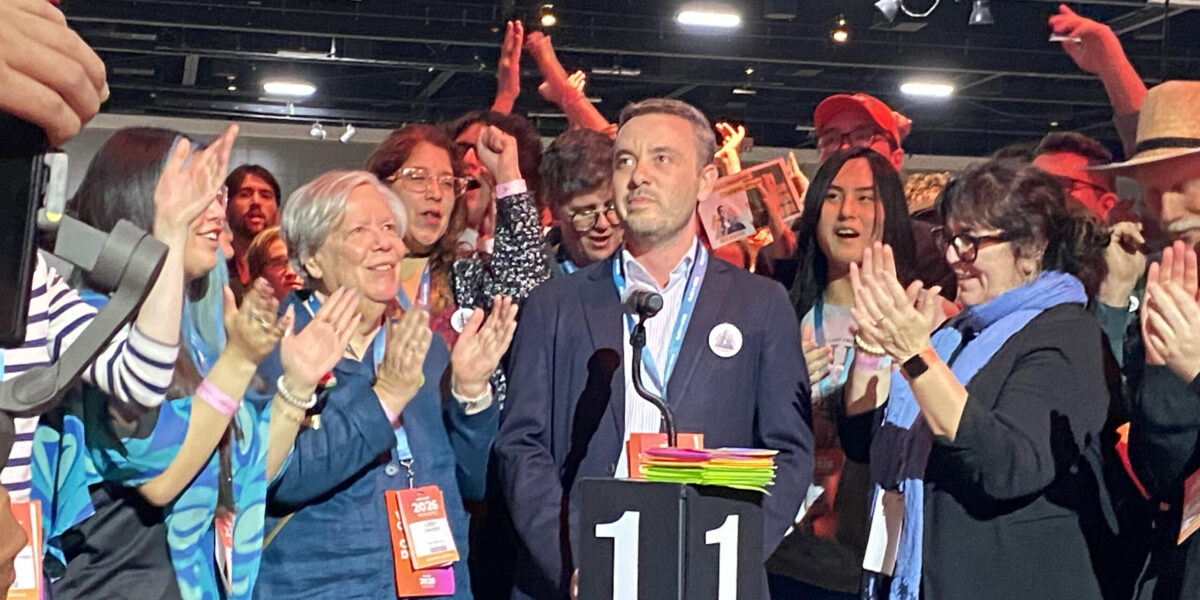
The NDP has a new Executive Committee led by Niall Ricardo, Libby Davies, and Keira Gunn who were elected president, vice-president, and treasurer respectively on the second day of the national convention in Winnipeg on Saturday, March 28.
Ricardo, Davies, and Gunn ran as a unified slate of candidates.
In an interview with rabble.ca, Ricardo, a Montreal-based lawyer and labour organizer, said his experience running as a candidate in the last election made him want to re-invigorate the party.
“What we actually need is ground organizers. That’s where we excel and that’s where we can win,” he said.”When you look at regions like Northern Ontario or Vancouver Island that have this strong tradition with the NDP it is because labour unions were involved in organizing the NDP and organizers were involved in labour unions.”
“Without a ground game, there is no game for the NDP,” he added.
Ricardo said as president of the executive committee he would use the committee as an organizing tool.
“That means if you have a seat on the federal council for Quebec, then that person should be an organizer for Quebec, and Atlantic Canada, same thing,” Ricardo said.
Ricardo said he also wanted to support local electoral district associations (EDAs), something that has been echoed by leadership candidate Avi Lewis.
“Too much money went to the national campaign budget, not enough to the local riding associations,” he said of how the party allocated its money in the 2025 federal election.
A permanent organizing model
Prior to the vote, newly elected vice-president Libby Davies, who formerly hosted rabble’s Off the Hill political panel series, told rabble.ca that changing how the NDP approached organizing for elections would be transformative for the party.
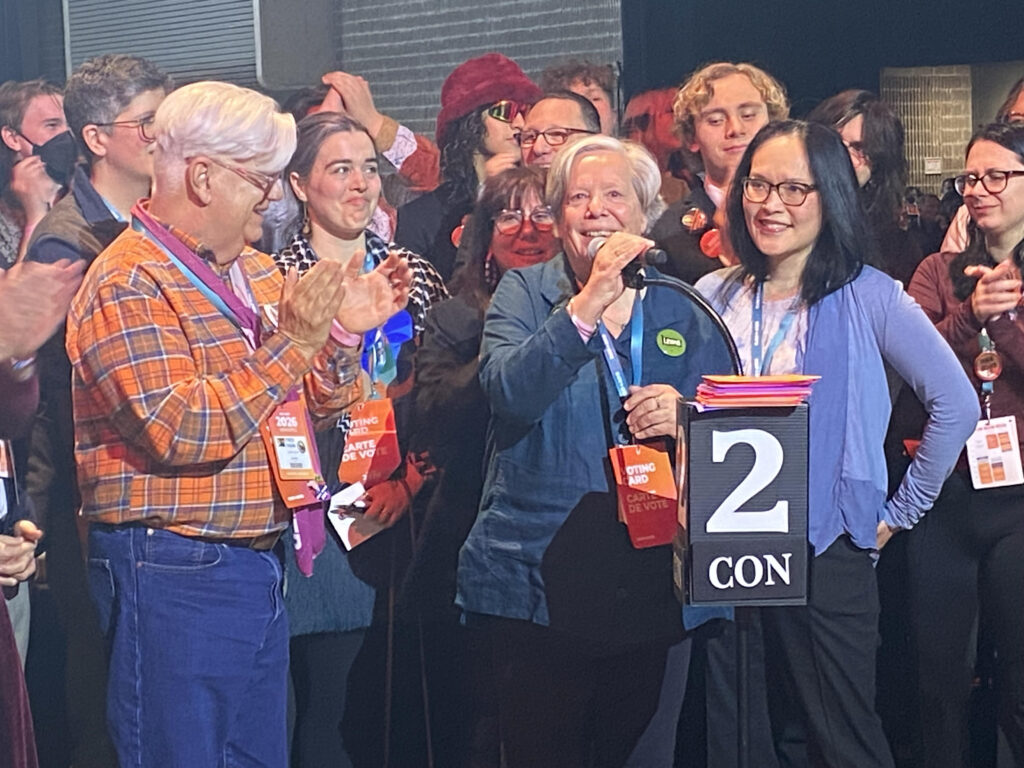
“The first resolution that was passed was to adopt a permanent organizing model. That’s really important. That’s a big shift,” said Davies. “This idea that we can’t just be an electoral machine at election time. We need to be an active party between elections. We need to be organizing and out in the community with labour allies, the queer movement, anti-racism and Indigenous activists. There is a strong feeling that that needs to happen and I feel I can contribute to that.”
Davies, a former NDP MP and party deputy leader until 2015 said that her experience would help bring forward change in the party.
“I’ve got history. I’ve got experience and I think we can be a part of the change we need to make. I have the experience to help bring that forward,” she said.
Davies endorsed Avi Lewis for the NDP leadership early in the campaign, and Lewis was right beside Davies and the rest of the new executive committee team after their victory was announced.
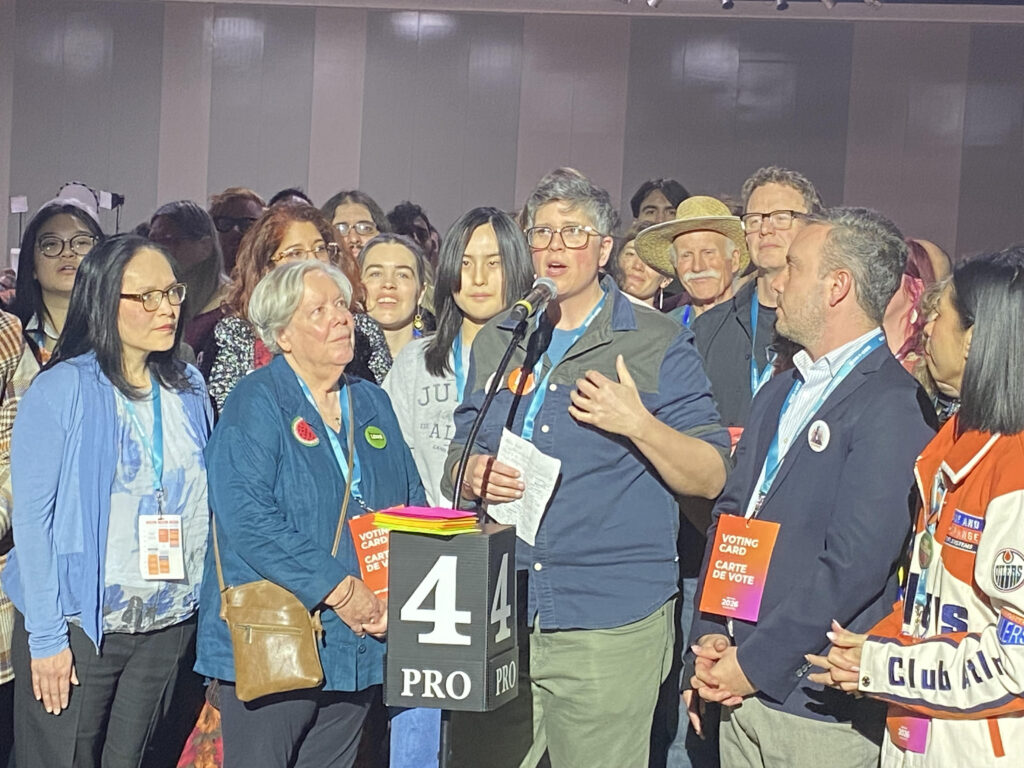
The executive committee’s new treasurer, Kiera Gunn, likewise wanted to see the NDP leadership more directly support the party’s EDAs.
“I never aspired to leadership, in fact I am terrified of public speaking, but I got activated because I live in Alberta and I had to,” said Gunn. “We have to allocate our resources out to the EDAs, out to our organizers … we have to build up our ridings in places like Calgary, places like the Maritimes, places where we have to eventually win, because we eventually have to form government.”
A passionate field of strong candidates
Each position had at least two candidates competing for the position. The slate of Ricardo, Davies, and Gunn won out over another slate that seemed to have strong support on the floor of the convention.
Malcolm Lewis-Richmond, Laurie Antonin, and Susanne Skidmore were running together, for president, vice-president and treasurer respectively, with Antonin and Skidmore running for re-election.
This second slate of candidates had strong union support. Antonin has been a Board member of the Canadian Labour Congress (CLC) and the CLC’s National Representative for Anti-Racism and Human Rights. Skidmore is the president of the BC Federation of Labour. All three candidates had prominent members of the labour movement standing next to them as they lobbied the convention for votes, including CLC president Bea Bruske, Canadian Union of Public Employees President Mark Hancock, Public Service Alliance of Canada president Sharon DeSousa and others.
NDP’s rules around language parity play role in executive committee election
The NDP’s rules around the make-up of the leadership committee did play into the result of the vice-president election. The NDP requires that if their president is an anglophone, then their vice-president must be Francophone, and vice-versa if the opposite is true.
Davies and Antonin were the only two candidates running for the position of vice-president, with Davies being an English speaker, and Antonin being a French speaker. Ricardo was the only Francophone in the race for president, so, with his victory, under the NDP’s rules around the composition of its executive committee, Davies was acclaimed vice-president.
Support rabble today!
We’re so glad you stopped by! Thanks for consuming rabble content this year.
rabble.ca is 100% reader and donor funded, so as an avid reader of our content, we hope you will consider gifting rabble with a donation during our summer fundraiser today.
Whether it be a one-time donation or a small monthly contribution, your support is critical to keep rabble writers producing the work you’ve come to rely on as a part of a healthy media diet.
Become a rabble rouser — donate to rabble.ca today.
Nick Seebruch, editor