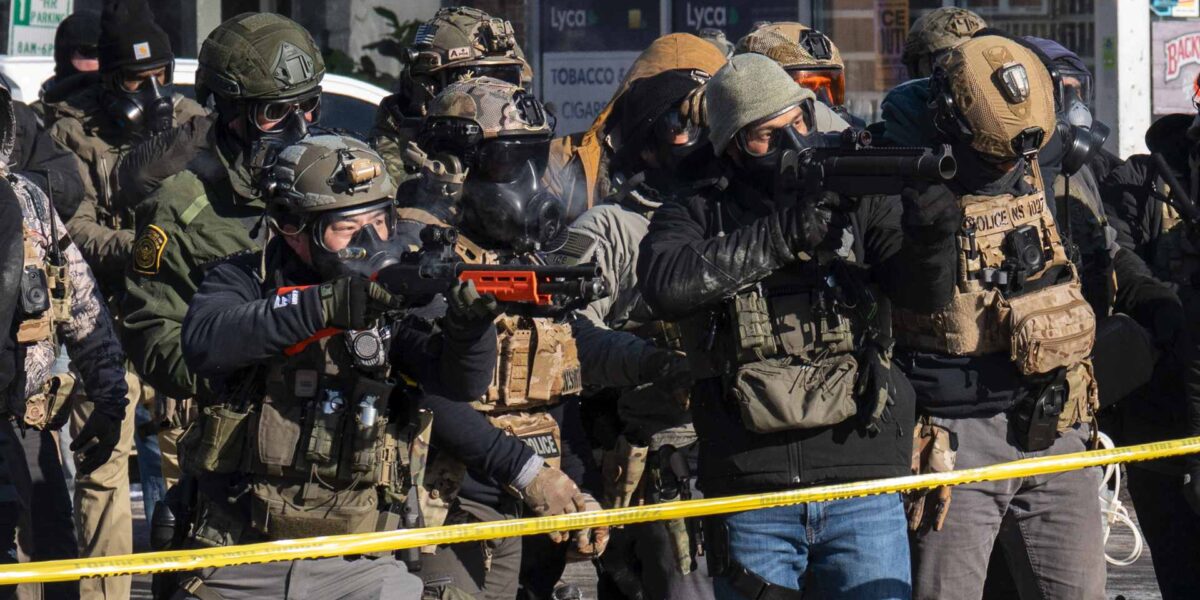
In 2024, U.S. Immigration and Customs Enforcement (ICE) announced its deployment of 1,600 body-worn cameras to select agents in line with a 2022 executive order issued by then President Joe Biden expanding body cameras to federal law enforcement personnel.
A Trump executive order issued in early 2025 rescinded the requirement that federal agents wear body cameras. ICE was reportedly one of the first agencies to ditch the devices. Democratic legislators maintain that ICE wear body cameras. A funding bill that allocates $20 million for ICE body cameras is scheduled to be debated this week in the U.S. Senate.
In October, following violent tactics used by ICE agents in Chicago, a federal judge there ordered agents in the city to wear and activate body cameras and to keep the devices on during all law enforcement operations. It is widely believed that the devices will bring accountability and transparency to ICE operations. Chicago Alderman Jessie Fuentes asserted, “these body cams will allow us to ensure that the real story’s being told and that there is transparency.”
Transparency is characterized by visibility but also, and equally as important, trust in the federal government. In the U.S., public trust in government has been declining for decades and is among the lowest it has been in nearly seventy years. In 2025, the Pew Research Center revealed that just nine per cent of Democrats report trust in the federal government.
The “real story” if there ever was one, can no longer be assumed moving forward. This month the White House released a digitally manipulated image depicting the arrest of an activist and civil rights attorney alongside a federal agent.
The White House has regularly shared AI generated images that are very obviously not real, a muscular Trump wielding a Star Wars lightsaber is one example. The doctored image of the ICE arrest, however, is unlike the others in its presumably intended realism. The White House referred to the image as a “meme,” and indicated that more would follow.
What this indicates moving forward is that the public cannot trust the authenticity of visual documentation of federal law enforcement activities shared by the U.S. government which includes evidence from body camera footage. Will digitally manipulated body camera recordings be used as evidence in a courtroom? Who knows.
Trust in law enforcement has of course never been universally shared with respect to body camera evidence.
Consider public outrage over a police shooting in Kansas City in 2022. In response, the local prosecutor released a still image taken from body camera footage to confirm to the public that the suspect was armed. The image, however, was met with skepticism and unsubstantiated accusations — including by a local pastor — that the authorities had photoshopped a gun into the suspect’s hand to justify the shooting. Local authorities denied such claims.
The latest image released by the White House, however, leaves no doubt of its inauthenticity and is a fundamental departure from institutional norms concerning the handling of evidence. Any transparency pertaining to the “real story” that draws from federally released evidence such as body camera footage henceforth is ostensibly irrelevant. This single action of the White House could also jeopardize public trust in body camera footage released by other police agencies.
As we discuss in our book Police Body-Worn Cameras: Media and the New Discourse of Police Reform, bystander videos of police violence unjustly enacted upon people have arguably done more to bring accountability and transparency than body cameras. The bystander recorded ICE shooting and killings of Renee Good and Alex Pretti in Minneapolis this month are clear examples. Videos of these killings were quickly shared online and brought immediate transparency.
Recording devices will of course not be present during all ICE operations, and filming ICE has certain risks, but continuing to do so whenever possible will contribute more to increased transparency and accountability, especially given that the public cannot assume that the federal government will share footage or trust if what is shared has not been manipulated.
Previous attempts have been made to restrict the recording of law enforcement activities and ICE has claimed that it is illegal to record agents (it is not). Instead of ongoing efforts to equip federal agents with body cameras, focus should instead be directed at continuing to safeguard and ensure that recording ICE continues to remain a lawfully protected right in the U.S.
Support rabble today!
We’re so glad you stopped by! Thanks for consuming rabble content this year.
rabble.ca is 100% reader and donor funded, so as an avid reader of our content, we hope you will consider gifting rabble with a donation during our summer fundraiser today.
Whether it be a one-time donation or a small monthly contribution, your support is critical to keep rabble writers producing the work you’ve come to rely on as a part of a healthy media diet.
Become a rabble rouser — donate to rabble.ca today.
Nick Seebruch, editor