

Having stood in St. James Park as part of Occupy Toronto, travelled by transport truck, train and over an ice road, the Mongolian yurt is ready to be assembled in Attawapiskat.
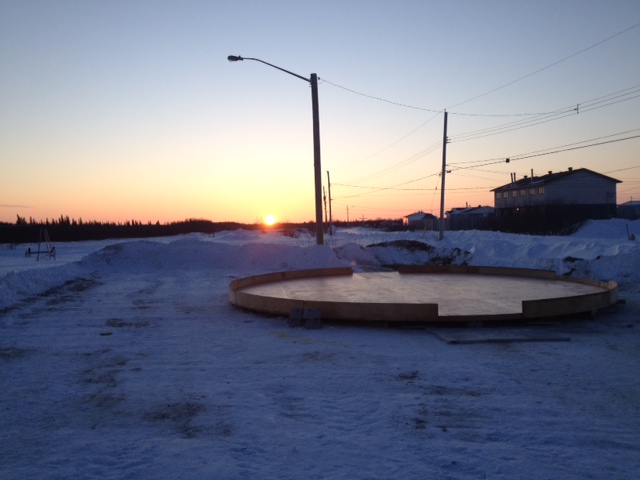
After meetings with the community, the location for the yurt was decided upon, and we set upon the assembly of the yurt.
By the end of the first day of building, we had set up the base.

With the freezing temperatures, short days and the rush to set up the yurt, we called it “extreme yurt-building.”

The walls are six sections of flexible lattice work. Sinew is used instead of nails.

Gord Longhi bracing the wall from the wind.

In Mongolia, the door faces the south. The door is facing east in keeping with the First Nation culture.

The centre piece of the yurt is called a toono.

The toono raising.

The toono is up!

The shell is done. Next step is two layers of sheep-felt insulation and the outer canvas.
Support rabble today!
We’re so glad you stopped by! Thanks for consuming rabble content this year.
rabble.ca is 100% reader and donor funded, so as an avid reader of our content, we hope you will consider gifting rabble with a donation during our summer fundraiser today.
Whether it be a one-time donation or a small monthly contribution, your support is critical to keep rabble writers producing the work you’ve come to rely on as a part of a healthy media diet.
Become a rabble rouser — donate to rabble.ca today.
Nick Seebruch, editor