

“We cannot solve our problems with the same thinking we used when we created them” – Albert Einstein.
As global climate negotiations in Barcelona enter into the last week of talks before December’s Copenhagen summit, there continues to be more aggravation than agreement amongst negotiators.
Despite the litany of warnings about the devastation a failure in Copenhagen will cause — mass migrations, floods, worsening hunger and elimination of entire small island states — the most powerful countries in the world have failed to significantly reduce emissions, let alone commit to new targets or adequate funds to pay for adaptation. Unwilling to muster collective political will to dramatically reduce consumption, wealthy countries are looking for ways to continue business as usual.
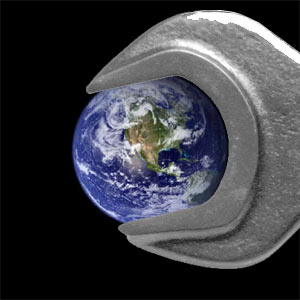
The surprising announcement that the U.S. Congressional Committee on Science and Technology will be holding hearings on geoengineering in Washington later this week has some participants in Barcelona wondering if the lack of collective political will on the part of industrialized countries has something to do with Plan B moving a whole lot faster than we thought. Plan B is geoengineering: the intentional, large-scale plans to modify the climate and related systems.
Geoengineering technologies include, for example, schemes to simulate a volcanic eruption by shooting sulphur particles into the stratosphere to reflect the sun’s rays back to outer space. Other technologies whiten clouds to make them more reflective. Some geoengineers propose dumping iron particles in the oceans to feed algae that might soak up CO2. Others want to change hurricane paths and rainfall patterns.
This is not science fiction. In just the last year, high-profile and influential scientific bodies, including the U.S. National Academies and the UK Royal Society, have begun evaluating the pros and cons of different technological fixes. The UK Parliament has already held hearings on geoengineering, new research institutes are opening and public funds are being allocated to geoengineering research.
In a bewildering turnaround, former opponents of action on climate change like the self-described “skeptical environmentalist” Bjørn Lomborg in Denmark and Lee Lane of the American Enterprise Institute have now jumped on the geoengineering spaceship, calling not only for more research but also for experimentation and deployment of these extreme techno-fixes.
While these developments remain below the public’s radar, we need to pay attention. Ties are tight between the research, corporate, and political players in geoengineering. To cite one example, Steven Koonin — the current Under Secretary for Science in the U.S. Department of Energy and former Chief Scientist at the world’s second largest oil company (BP) — recently led a group of ten scientists in thinking through the “technicalities” of shooting sulphates into the stratosphere. Such high-risk interventions are being contemplated and global permission is unlikely to be asked in the current regulatory vacuum for geoengineering.
Geoengineering is not part of the ongoing negotiations at the UN Framework Convention on Climate Change — at least, not yet — but we must question the strategies of those refusing to make progress on a post-Kyoto plan. Are they waiting for conditions to ripen for a rollout of geoengineering? Was Gordon Brown disingenuous or just badly briefed when he said there was “no plan B” on climate change? His own Royal Society recently recommended the UK government invest £100 million for geoengineering research, assessing the possibilities precisely as “Plan B.”
The belief that technology will save the world from climate change runs deep amongst government delegates in Barcelona. Technology is virtually the only negotiating topic where some progress has been displayed, albeit with all the familiar battles over intellectual property. And it is quite possible that the spin doctors will try to portray some modest agreement on technology in Copenhagen as a “success,” while the thornier issues of emission targets and money are set aside for “later.”
We need to make sure that whatever comes out of Copenhagen strengthens the struggle for real climate justice and a sustainable path forward. If geoengineering becomes a silver bullet distraction, rich countries will have not only walked away from the Kyoto Protocol, they will have begun to abandon any semblance of a multilateral approach to the climate crisis.
Diana Bronson is a member of the Board of Directors of rabble.ca and a researcher with ETC Group, a civil society organization that monitors new technologies. For more information on ETC Group’s work on geoengineering, visit their website.
Support rabble today!
We’re so glad you stopped by! Thanks for consuming rabble content this year.
rabble.ca is 100% reader and donor funded, so as an avid reader of our content, we hope you will consider gifting rabble with a donation during our summer fundraiser today.

Whether it be a one-time donation or a small monthly contribution, your support is critical to keep rabble writers producing the work you’ve come to rely on as a part of a healthy media diet.
Become a rabble rouser — donate to rabble.ca today.
Nick Seebruch, editor
