

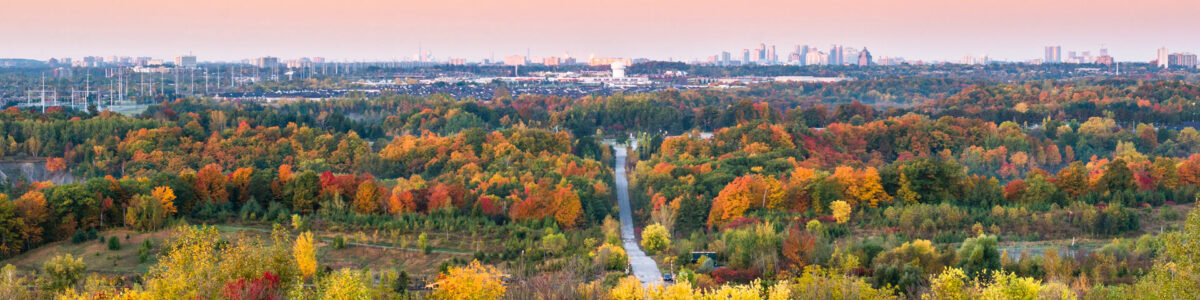
On March 31, Prime Minister Carney launched a new nature strategy. Two of the commitments are creating 15 national urban parks by 2030, and launching an Expert Taskforce on Natural Capital Accounting and Nature Financing this spring.
The Taskforce “will explore how to better account for the value of nature” and will “develop recommendations aimed at mobilizing private capital for nature positive outcomes.”
Natural capital accounting–valuing ecosystem services such as wild capture fisheries, insect pollination of food crops, and forest carbon sequestration—can in theory inform trade-offs between the economy and environment, avoid the collapse of key economic sectors, and encourage businesses in these sectors to invest in nature.
But it also raises ethical concerns. “Financialization” of nature has led to discredited mechanisms such as carbon trading. Measuring and valuing natural capital has proven to be costly, imprecise and subject to abuse.
A February 2026 article, ”Putting a price tag on nature failed. Can radical tactics save it?,” recommends an alternative: a “biodiversity justice” approach. Scientists working to conserve nature should unite with social movements, Indigenous peoples, and farmers. Recognition of the rights of nature can further expand biodiversity justice to our non-human relatives.
Before retiring from Environment Canada, I worked on the 2012 Canadian Nature Survey. At that time, Canadians were making an estimated $41.3 billion in nature-related expenditures within Canada. These include transportation, accommodations, food, equipment, fees, supplies, investments in land for conservation purposes, and donations to conservation groups. More recently, a white paper from the Canadian Parks and Wilderness Society estimated that Canada’s protected areas alone generated $10.9 billion in GDP in the 2023–24 fiscal year
Neither study examined the degree to which urban real estate values are enhanced by access to nature and green spaces. A study in Denmark found that proximity to parks and lakes created a large price premium. Sport fields and farm fields had no effect. A real estate expert suggests an eight per cent-to–20 per cent premium here in Canada, depending on city and type of green space.
Statistics Canada estimated the total value of Canada’s residential real estate at $4.1 trillion in 2024. This creates a strong argument for the new Expert Taskforce, charged with mobilizing private capital, to prioritize creation of national urban parks.
In July 2024, Parks Canada created an interim National Urban Parks Policy, with seven guiding principles. A “nature and climate” principle includes halting and reversing the loss of biodiversity, restoring degraded ecosystems, increasing resilience to the impacts of climate change, and enhancing climate change mitigation and adaptation. An “Indigenous stewardship” principle calls for “recognition and respect for Aboriginal and treaty rights.” Another principle is to be “fiscally responsible,” ensuring long-term financial sustainability.
The Policy also requires that a national urban park meet a planning and management standard. Parks Canada itself would not necessarily be the manager—it could be other organizations or governments, singly or in partnership—but consistent branding and regular engagement with other parks are required. A requirement to “connect nature with people” would include no entry fees and accessibility by public transportation. And as one would hope, the Policy includes a requirement to conserve nature: explore opportunities to expand the area, strengthen conservation effectiveness, and ensure no reduction in protection measures or size.
Park-related commercial establishments would be allowed (this will require careful consideration). The commitment to advance reconciliation with Indigenous peoples could include business opportunities aligned with overall park objectives.
Some thoughts: Creating 15 national urban parks by 2030 is ambitious, particularly with no funding earmarked in the new Nature Strategy. The new Taskforce and the private sector will have to step up, or this commitment will go the way of the two billion trees pledge.
If national urban parks are considered as part of Canada’s education and health care systems, endowments can be created for each park–much like for universities and hospitals. There is a wealth of evidence that time spent in nature improves health outcomes.
Although a Parks Canada guiding principle is being “flexible,” carefully drafted legislation would create clarity about common requirements. A national urban parks act could include a rewording of section 8(2) of the Canada National Parks Act: “Maintenance or restoration of ecological integrity, through the protection of natural resources and natural processes, shall be the first priority when considering all aspects of the management of national urban parks.”
National urban parks should be places where nature holds sway. Prioritize restoration of native vegetation. Put nature first, not commercial establishments. Create natural parks, not playgrounds. Allow mountain bike and pedestrian use only on designated trails. Limit anthropogenic noise and artificial lighting.
There will be a need for boots on the ground. Inevitably, there will be issues–homeless encampments, trash, off-trail use, e-bikes, unleashed dogs–but education can reduce the need for enforcement. Consider expanding the Indigenous Guardians program to urban parks.
When the national urban park program was launched in Saskatoon by then-environment minister Jonathan Wilkinson, in collaboration with the Meewasin Valley Authority, an intent was to consider a park along the South Saskatchewan River. Watercourses and floodplains are prime candidates for protection, noting their value for climate adaptation as well as biodiversity.
Existing natural areas in Canada’s cities are often isolated parcels, so parks may consist of multiple units. Larger properties more distant from the urban core should receive consideration. Efforts should be made to create a linked network through walking and cycling trails
A national urban park system that includes all of Canada’s major metropolitan areas would be an unparalleled nature legacy.
Support rabble today!
We’re so glad you stopped by! Thanks for consuming rabble content this year.
rabble.ca is 100% reader and donor funded, so as an avid reader of our content, we hope you will consider gifting rabble with a donation during our summer fundraiser today.

Whether it be a one-time donation or a small monthly contribution, your support is critical to keep rabble writers producing the work you’ve come to rely on as a part of a healthy media diet.
Become a rabble rouser — donate to rabble.ca today.
Nick Seebruch, editor
