
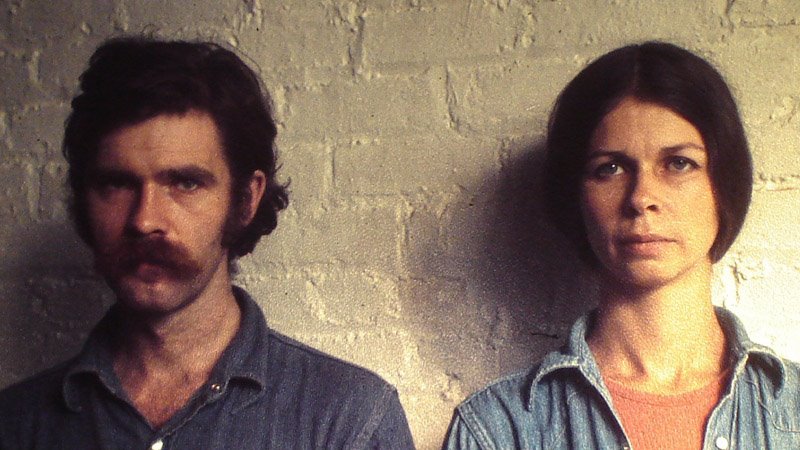
The Workers Arts and Heritage Centre (WAHC) in Hamilton has just been gifted a historic donation from artist and activist Karl Beveridge on behalf of his late partner, Carole Condé who passed away on July 19, 2024 at the age of 84.
Beveridge and Condé became involved with the labour movement in the early 1980s after being exposed to protests while living in New York City from 1969 to 1977.
By 1983, a small gathering of folks interested in labour arts held a small conference at the Steelworkers Hall in Toronto where three goals were named including the need for a celebration of labour arts; a permanent heritage center or art center; and secure funding for artists.
By the late 1980s, Ontario Workers Arts and Heritage Centre (OWAHC) had been established separate and apart from Mayworks which was developed in the 1980s with its first festival held in 1986. Beveridge and Condé were integral to both endeavours.
In 1990, Mayworks got the NDP government interested in their plan and employed consultants to conduct a feasibility study in order to secure provincial funding for OWAHC.
Helping to build arts a home in Hamilton
Folks from labour, academia, arts and culture and members of the Indigenous community worked together while the Ontario NDP government committed $10 million to redevelop a section of Barton St. in Hamilton into an artist village in the early 1990s.
The provincial government assigned $5 million for an investment fund along with an additional $5 million to purchase buildings to create live-work space for artists.
Long story short, Progressive Conservative Mike Harris killed the plan when he was elected and sworn in as premier in June 1995. When the Barton St. project ended, Renee Wetselaar was laid off.
Because of her involvement with the Barton St, redevelopment project, the Hamilton arts scene and NDP, Westelaar was OWAHCs first hire and things started to take shape by November 1995.
Before leaving office, the Ontario NDP government decided to give OWAC funding to purchase the old custom house in Hamilton’s North End for about $450,000 and an additional $1 million for renovations. By November 1996, the Workers Arts and Heritage Centre (WAHC) opened, becoming Canada’s only labour history museum and multidisciplinary art centre providing exhibitions and programing that continues to be free to the public.
That was how Wetselaar first met Karl Beveridge and Carol Condé.
“Meeting Karl and Carole was transformative for Hamilton, for me, for WAHC. Because at the time there was a real question, do we establish this place in Toronto or do we come to Steeltown? And so, there was a lot of back and forth. But it turned out that it seemed to fit for Hamilton and certainly having this wonderful building put at their feet was like, okay, let’s go for it ,” Wetselaar told rabble.ca via zoom.
Beveridge and Condé had been doing a lot of work in the labour movement and were really pioneers when it came to arts and labour development including involving community and recognizing cultural activities as being really important to workers and integral to the working-class movement. They questioned what is art? Who makes it? Whose voice is it? And ultimately, who owns it?
Wetselaar maintains they started transforming their work and learned how to tell stories using art, how to go beyond just how to tell stories using art and how to go beyond just using banners as an artistic expression.
Exhibits in the early days
When it came time to create the WAHCs first exhibits, folks like Craig Heron, Darcy Martin, Beveridge and Condé created the first exhibits including the Hamilton 1946 steel strike under the banner, “What We Fought For.”
It really wasn’t a big topic in history programming at the time. However, it soon became personal for Wetselaar after learning about the scabs from town that took over the steelworker plants and finding out her grandfather was one of those scabs.
“I had long talks with him about, well, we had to put food on the table. You know, we were very poor living in the North End of Hamilton. And what are you going to do? It was terrible, right? People threw rocks at our houses all the time. But I had many mouths to feed,” Wetselaar recalls her grandfather sharing.
This project turned into a learning curve with all kinds of nuances. In the end, Wetselaar became a unionist and within three years had unionize WAHC workers. That is the impact Beveridge and Condé had on individuals, organizations and broader communities.
Beveridge and Condé then went on to work with Wetselaar and others to create brilliant exhibits at WAHC while continuing to travel across Canada doing their own projects including work with migrant workers as well as globalization and workers in the service industry like department stores and clothing manufacturing.
Beveridge was on the WAHC board first and when he stepped away, Condé came onto the board of directors.
Through them Wetselaar learned about Paulo Freire, the Brazilian philosopher whose work revolutionized thought on education by emphasizing dialogue, critical consciousness, as well as reflection and action in order to empower the oppressed and transform their reality.
Wetselaar also learned a lot about Chilean tapestries utilizing hidden messages to tell untold stories about people being disappeared. In fact, in 2005, WAHC helped Wetselaar get her master’s in globalization and the human condition countering Hamilton’s generally Eurocentric vision.
Sharing labour history
After Condé died on July 19, 2024, Beveridge decided to donate their extensive union button and ephemera collection to WAHC continuing their 30-year commitment not only to workers, unions, the custom house, but also the neighbourhood of North Hamilton.
“I used to joke that this was the one place where private and public sector unions could leave their fights at the door and come together on something common and that they could work on together,” said Wetselaar.
And, that’s what happened. Folks from UFCW, CUPE, CEP, which is now part of Unifor, steelworkers and autoworker came together to look at their shared history, narrative and sense of creativity, exploring who folks are and how folks are valued and seen in Hamilton and Canada.
By documenting, photographing and interpreting workers’ stories through their lens to make sure working people really understand that they’re valued, Beveridge and Condé created a cultural movement that is still impacting folks today.
Pairing history with contemporary art
WAHC is not just about heritage, but also contemporary arts. That means, WAHC has been doing more around the arts than around heritage.
“Carol and I were the ones who pushed the art quite a bit [but] also through our own work were collecting union ephemera and memorabilia. How that came about is when we were doing historic images, we were looking for props so we’d go to antique stores, flea markets and lawn sales picking up props or different images because we did a history of women from the turn of the century up to the present day, doing each decade in the image of a woman worker. And of course, we had to build the sets because we set them all in kitchens to talk about the double workload,” Beveridge told rabble.ca.
Beveridge and Condé had a hand in designing many of the buttons, ribbons and banners that trace the histories of global union membership, campaigns, and labour movements from the 1880s to the present.
“WAHC’s Condé Memorial Collection contains 460 labour heritage objects and artworks donated in 2024 by Karl Beveridge in memory of his partner in life and art, Carole Condé. Karl and Carole were two of the founders of WAHC, so this is a meaningful continuation of their decades-long relationship with the space. As a labour heritage centre, this donation provides WAHC the opportunity to preserve and activate an array of unsung workers’ histories from Turtle Island and beyond,” Ada Bierling, Interim Programming and Exhibitions Specialist at WAHC told rabble.ca via email.
Bierling catalogued the Condé Memorial Collection while completing a Young Canada Works (YCW) contract as the Collections Coordinator at WAHC. Through accessioning and documenting the artefacts with a focus on accessibility, the collection has been, and will continue to be, used to inform WAHC programming both digitally and in onsite heritage exhibits.
Wetselaar reminds Hamiltonians: “Part of their work, and their hearts are really embedded in these pieces. They’re of cultural significance, social, historical significance. And, I really hope that Hamilton overall, recognizes what a treasure we have here because they could have gone anywhere but Karl and Carole decided it’s time for them to come home.”
It seems, the times, they are a changin’ once again. Unions are being diminished. The nature of work is changing with artificial intelligence and technology taking away wages, people’s identity and their ability to feel part of something bigger.
Beveridge’s donation signifies what we need to return to the unions, work, community and yes, the museums that record the history and remind us of the common cause we have been fighting together for.
“Without WAHC, over time, a lot of people won’t remember [the history] if we didn’t have that cultural resource in our town. One of the Hamilton’s first community gardens was in the backyard of WAHC. The symbol of WAHC is the bread and roses piece and all those kinds of symbols are very important. We’re very lucky,” said Wetselaar.
Thirty for Thirty, featuring a variety of Beveridge and Condé’s work and collection, was featured at WAHC in December.
View the digitized Condé Memorial Collection online here. Find out more about WAHC here.
Support rabble today!
We’re so glad you stopped by! Thanks for consuming rabble content this year.
rabble.ca is 100% reader and donor funded, so as an avid reader of our content, we hope you will consider gifting rabble with a donation during our summer fundraiser today.
Whether it be a one-time donation or a small monthly contribution, your support is critical to keep rabble writers producing the work you’ve come to rely on as a part of a healthy media diet.
Become a rabble rouser — donate to rabble.ca today.
Nick Seebruch, editor