
Senator Wanda Thomas Bernard is calling on the government to stop ignoring her committee’s recommendations and end the inhumane practice of solitary confinement.
Dr. Bernard is a highly regarded social worker, educator, researcher, community activist and advocate of social change who has worked in mental health at the provincial level and in rural community practice at the municipal level.
At the national level, Dr. Bernard has served as a member of the National Coalition of Advisory Councils on the Status of Women. She has served as an expert witness in human rights cases and has presented at many local, national, and international forums.
In 2016, Dr. Bernard was named to the Senate of Canada by Prime Minister Justin Trudeau to sit as an independent. She is the first African Nova Scotian woman to serve in the Senate Chamber.
Senator Bernard was deputy chair of the Human Rights Committee until the government was prorogued on January 6 and all committees ceased to exist.
In June 2021 the committee released a comprehensive report including 71 urgent recommendations. Senator Bernard and members of that committee are deeply disturbed by the federal government’s continued refusal to end draconian and cruel and unusual solitary confinement practices in Canadian prisons.
The response from Prime Minister Trudeau and his Cabinet to the report was not only inadequate, it neglected key issues raised by the committee. Relevant Ministers refused to appear before the Committee, and when the Committee turned to Trudeau for a meaningful response, they received a four-paragraph note referring them back to Public Safety Minister Dominic LeBlanc.
The Committee pointed out this persistent inaction is a violation of human rights that also poses a real threat to public safety because eventually most prisoners will return to society.
That committee report, called Human Rights of Federally Sentenced Persons, was the product of a five-year study that heard from 150 witnesses including correctional staff, prisoners and former prisoners.
Senator Bernard told rabble.ca, “We never talked to a prisoner who said, you know, I shouldn’t be here. I was impressed with them owning the mistakes that they made, owning what led them to prison in the first place. And we heard repeatedly, all we want is to be treated as human.”
“Punishment for a crime, when you receive a federal sentence or any sentence, the punishment is that you receive that sentence, not that you stop being human, not that you stop having the expectation of being treated as human,” she added.
The 71 recommendations were intended to stem abusive and discriminatory practices that dehumanize prisoners and inhibit their rehabilitation and community integration. Senator Bernard believes the response from government indicates a lack of political will to treat prisoners as human beings and to ensure their fundamental human rights.
The day the report was introduced in the Senate chamber, Senator Bernard remembers someone commenting: “Study of prisoners’ human rights. What rights would they have? They’re in prison because they committed a crime. What is this study about and why are we wasting the government’s money on such a study?”
The horrifying statistics behind solitary confinement
On their tours of prisons, committee members visited prisoners in solitary confinement. At the East Coast Forensic Hospital in Darmouth, Nova Scotia, committee members met a woman who had spent over 20 years in custody including ten years in solitary confinement. Eventually, she was diagnosed with schizophrenia and finally placed in the mental health system.
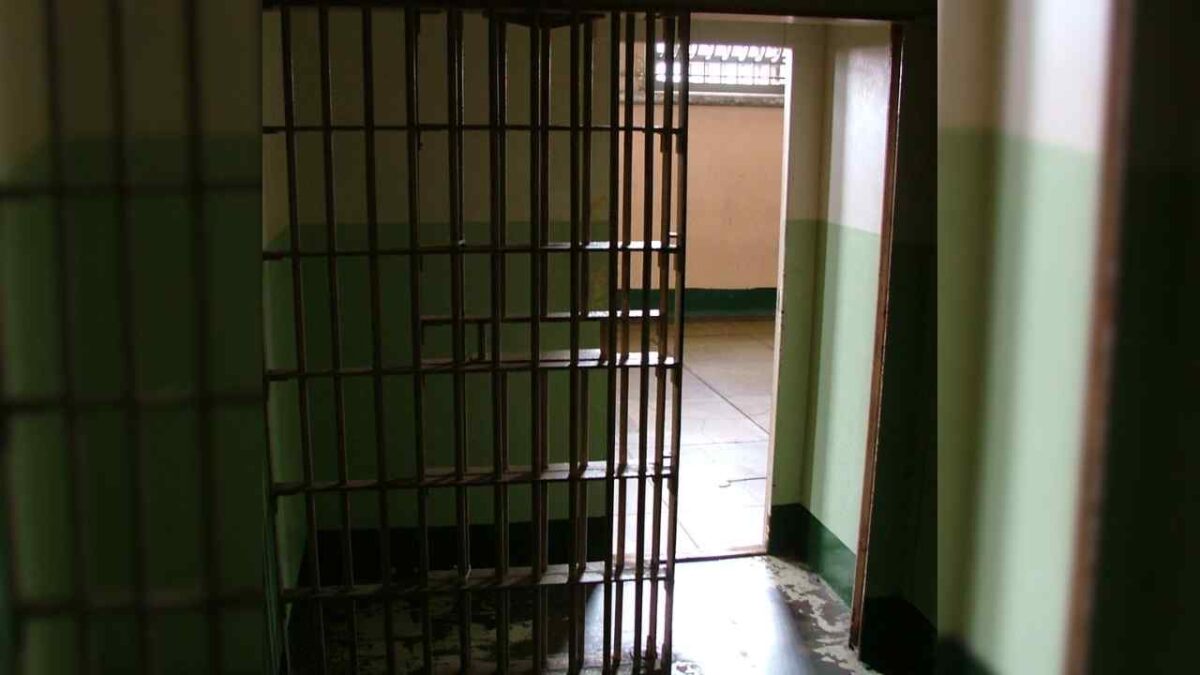
Solitary confinement means spending 22 or more hours a day in a 1.8 m by 2.7m cell with a bed, sink and toilet. When prisoners are allowed out, they are not allowed to mix with the general population.
The study found Indigenous prisoners, Black prisoners and prisoners with mental health issues were more likely to be in solitary confinement and more likely to spend longer periods of time there.
It has been well established that solitary confinement can not only actually exacerbate mental health issues, but also create mental health issues.
“Human beings weren’t meant to have that amount of time alone in such confined space with very little to occupy your mind, very little to give you hope of anything better, anything different. And, so, you can imagine, you’re playing the same songbook over and over and over, but there’s no music. So, whatever negative thoughts you had, they would tend to play over and over and over and over,” Senator Bernard observed.
Solitary confinement by another name
In response to 2019 appellate court decisions in Ontario and British Columbia, the federal government claimed to have ended the use of solitary confinement. Instead, it was replaced by administrative segregation which uses structured intervention units (SIUs).
SIUs were supposed to guarantee prisoners a basic levels of care, human contact, and time outside their cell. They still confine people for long periods of time in very small spaces depriving them of human contact and basic care which leads to mental health issues.
The third annual report of the Government Structured Intervention Unit Advisory Panel (2024), drew the same conclusion as previous reports indicating there was no meaningful or consistent improvement in operations over four years.
According to Senator Bernard, a lot of what goes on in prisons is managing and warehousing. There’s no rehabilitation and no emphasis on really helping people deal with the root causes that led them to be in prison.
Despite agreeing to meet with the committee to discuss the government’s response, Public Safety Minister LeBlanc subsequently declined. Justice Minister Arif Firani and former government leader Steve McKinnon did not respond to the recommendations relating to their areas of responsibility.
The racial factor of Canada’s carceral system
Despite representing just five per cent of Canadia’s population, Indigenous peoples account for over 32 per cent of the people serving federal sentences. Indigenous women make up 50 per cent of federally sentenced women. Black people account for 4.3 per cent of Canada’s population, but about nine per cent of the federally sentenced population. And, all are overrepresented in solitary confinement.
Senator Bernard sees a clear school to prison pipeline as well as a child welfare to prison pipeline. She also acknowledges a dearth of programming to address the root causes as well as education to improve the social determinants of health as well as the social determinants of crime. That ensures prisoners remain disconnected and disenfranchised when they are released back into society
One way to impede those pipelines would be to make it easier for Canadians to make ends meet. That would reduce the number of people breaking the law out of desperation preventing both first-time convictions as well as recidivism. A simple way to achieve that would be implementing a guaranteed livable income (GLI).
“The advocacy for a guaranteed livable income has been on the books for decades, but we’re no closer to making that happen. Because again, there isn’t the political will. The people who would benefit from a guaranteed livable income are not the people who are going to sway votes,” stated Senator Bernard.
Once Parliament was prorogued, anything that was on the table ended. That means the senators sitting on the Senate Human Rights Committee are not guaranteed a place when new committees are established after the election.
Senator Bernard is committed to keeping this invaluable work alive and will be exploring opportunities including advocacy within the prisons, around mental health issues and its criminalization, and to support private bills around a GLI.
Senator Bernard adamantly maintains, “I want to err on the side of rehabilitation. I want to err on the side of creating conditions that will help people help themselves. I don’t want to be on the side of ignoring our problems that we know will lead to more problems.”
Support rabble today!
We’re so glad you stopped by! Thanks for consuming rabble content this year.
rabble.ca is 100% reader and donor funded, so as an avid reader of our content, we hope you will consider gifting rabble with a donation during our summer fundraiser today.
Whether it be a one-time donation or a small monthly contribution, your support is critical to keep rabble writers producing the work you’ve come to rely on as a part of a healthy media diet.
Become a rabble rouser — donate to rabble.ca today.
Nick Seebruch, editor