
Iran is bleeding. Thousands have been killed or injured. The scale and intensity of the protests suggest that the Islamic regime may be at a breaking point: It has lost legitimacy, faces economic collapse, fractures within its elite, growing international isolation, and threats of military attacks by the US. Even if it survives this moment, the Iranian regime will never fully recover.
While attention is now on the nation’s unrest and future, it will turn at some point to the lives of minorities and how these could be improved after the collapse of the Iranian regime.
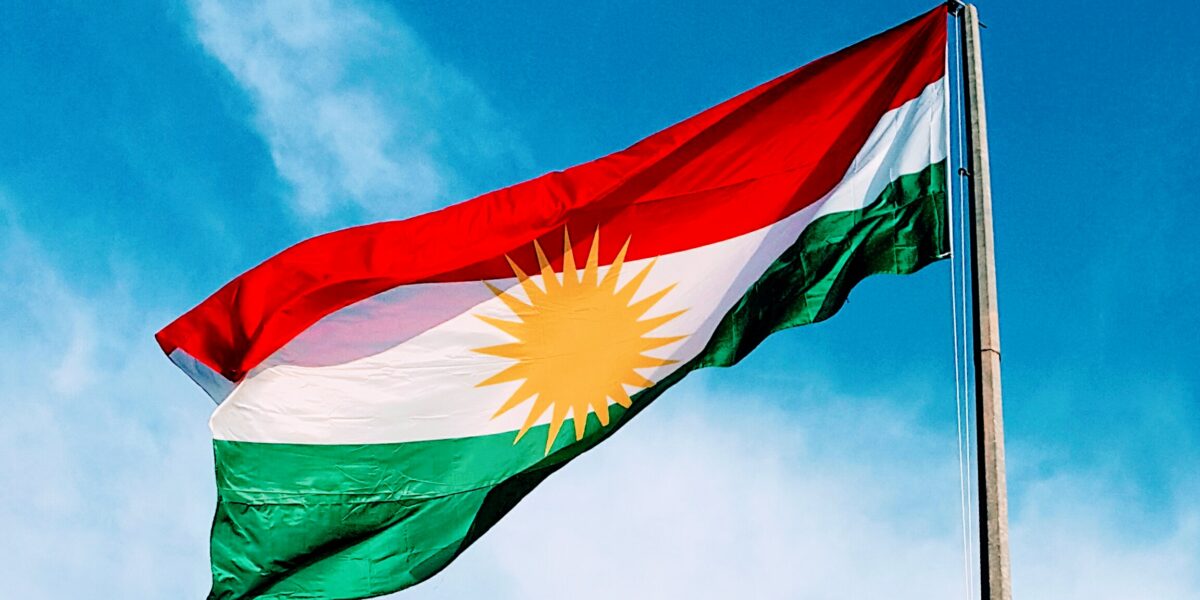
Much international news coverage, including mainstream Canadian media, focuses on inflation and compulsory dress codes. But protests by Kurds, around eight-to-10 million, roughly 10 per cent of Iran’s population, are about far more than economic hardship or freedom of expression. These issues are most acute in Kurdistan, in western Iran and parts of North Khorasan, where decades of political and cultural repression have compounded the struggle.
While some voices in the diaspora debate restoring the Shah or preserving the current system, Kurds reject both, having been marginalized by each. They have faced systematic discrimination under both the monarchy and the Islamic Republic, with political exclusion, cultural repression, and targeted violence. For Kurds, this moment is about more than economic justice; it is about long-unmet demands for equality, self-rule, and cultural freedom.
To understand the Kurdish experience in Iran, it is necessary to revisit the country’s modern history. It has been exactly a century since Reza Shah Pahlavi took power and ruled from 1925 to 1941, followed by his son Mohammad, who ruled from 1941 to 1979. Under both reigns, Kurds faced systematic repression and forced assimilation into Persian culture. They were denied education in their mother tongue, and Kurdish place-names were changed to Persian, erasing local history. Local self-rule was banned, political movements crushed, and discrimination limited employment and political participation. Kurdish regions suffered economic neglect, poor infrastructure, limited industry, heavy militarization, and repeated crackdowns. Cultural expression, including festivals, publications, and media in Kurdish, was tightly restricted, while land and resources were often appropriated or mismanaged.
Despite expanding the monarchy’s policies of Farsi‑ization and centralized control, the Islamic Republic (1979–present) has continued to repress Kurdish communities. Political activism remains tightly restricted, with Kurdish parties and civil society organizations frequently banned or attacked, and protests in Kurdish areas met with deadly force, such as during the 2005 and 2016 uprisings in Mahabad. Kurdish language education is limited, cultural expression monitored, and local self-rule denied. Economic neglect persists, and the regime has killed many kolbers, border porters forced to carry goods on foot across the Iran–Iraq mountains.
The regime intensified Shi’a Islam as the state ideology, marginalizing Sunni Kurds and Yarsanis, while closely monitoring or banning cultural and political activities that oppose its principles.
The Islamic Republic mirrors the Pahlavi monarchy: Both are centralized, authoritarian regimes that have systematically oppressed Kurds, denying them political, cultural, and economic rights.
Kurds, more than many others, watch the protests with cautious hope, seeing a chance for change after decades of repression. But decades of trauma, especially since 1979, make them wary of what a new regime might bring. Yet their vision is clear. They want a democratic Iran that protects the rights of all citizens. Ethnic and religious minorities should enjoy equality, education in their mother tongue, and cultural and religious freedom. They call for local self-rule and fair political representation. They demand economic justice, human rights protections, and environmental fairness.
For all Iranians, inside the country and in the diaspora, a future of real freedom and stability depends on this: Only a democratic system that respects the rights of Kurds and other minorities can prevent the repetition of past failures. Canadian media can play a vital role by reporting directly from those communities, giving voice to their experiences and aspirations, and helping the public understand the challenges and hopes of people across Iran.
Support rabble today!
We’re so glad you stopped by! Thanks for consuming rabble content this year.
rabble.ca is 100% reader and donor funded, so as an avid reader of our content, we hope you will consider gifting rabble with a donation during our summer fundraiser today.
Whether it be a one-time donation or a small monthly contribution, your support is critical to keep rabble writers producing the work you’ve come to rely on as a part of a healthy media diet.
Become a rabble rouser — donate to rabble.ca today.
Nick Seebruch, editor